
Die Geburt der Tragödie: Versuch einer Selbstkritik
by Friedrich Wilhelm Nietzsche
"Die Geburt der Tragödie: Versuch einer Selbstkritik" by Friedrich Wilhelm Nietzsche is a philosophical work published in 1872. Nietzsche challenges the classical view of ancient Greeks as purely cheerful, revealing instead a tragic worldview. He introduces his theory of two opposing artistic forces embodied by the gods Apollo and Dionysus—the harmonious versus the ecstatic. Through analyzing Greek tragedy's birth and decline, the young philology professor presents bold cultural and aesthetic ideas that distanced him from traditional scholarship and influenced twentieth-century thought.
Summary written by Project Gutenberg, by machine.
- Language
- German (Deutsch)
- On Project Gutenberg since
- 1 January 2005
- Read in the last 30 days
- 1,080 times at Project Gutenberg
More by Friedrich Wilhelm Nietzsche
See all: More by Friedrich Wilhelm Nietzsche
Index of the Project Gutenberg Works of Friedrich Nietzsche

We Philologists

The Case of Wagner, Nietzsche Contra Wagner, and Selected Aphorisms.

Thus Spake Zarathustra: A Book for All and None

Beyond Good and Evil
The Genealogy of Morals
The Twilight of the Idols; or, How to Philosophize with the Hammer. The Antichrist
Ecce Homo
The Birth of Tragedy; or, Hellenism and Pessimism
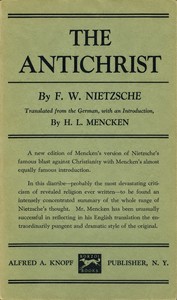
The Antichrist

The Joyful Wisdom ("La Gaya Scienza")

Human, All Too Human: A Book for Free Spirits
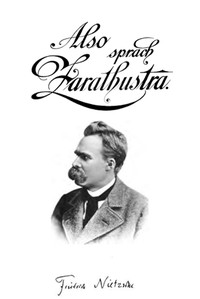
Also sprach Zarathustra: Ein Buch für Alle und Keinen
The Will to Power: An Attempted Transvaluation of All Values. Book III and IV

The Dawn of Day
The Will to Power: An Attempted Transvaluation of All Values. Book I and II
Human, All-Too-Human: A Book for Free Spirits, Part 1
The Joyful Wisdom ("La Gaya Scienza")

Human, All-Too-Human: A Book for Free Spirits, Part 2
Thoughts Out of Season, Part II
More from the shelf “Philosophy”
See all: More from the shelf “Philosophy”
The Prince

Second Treatise of Government
Thus Spake Zarathustra: A Book for All and None
Beyond Good and Evil
The Republic

On Liberty

Apology

The Nicomachean ethics of Aristotle

The Problems of Philosophy

The Critique of Pure Reason

The Communist Manifesto

The Poetics of Aristotle

Ethics

Discourse on the Method of Rightly Conducting One's Reason and of Seeking Truth in the Sciences

Democracy and Education: An Introduction to the Philosophy of Education

Utilitarianism

An Enquiry Concerning Human Understanding

Tractatus Logico-Philosophicus

A System of Logic, Ratiocinative and Inductive