
Ethics
Translated by R. H. M. Elwes
"Ethics" by Benedictus de Spinoza is a philosophical treatise written between 1661 and 1675. Using Euclid's geometric method, Spinoza constructs a radical philosophical system from definitions and axioms, deriving propositions about God, nature, mind, and human emotion. He argues that God and the universe are one, that mind and body are unified, and that human beings lack free will. Through logical demonstration, Spinoza presents a deterministic vision where everything follows necessarily from the nature of existence itself.
Summary written by Project Gutenberg, by machine.
- Language
- English
- On Project Gutenberg since
- 1 February 2003
- Read in the last 30 days
- 10,513 times at Project Gutenberg
Listen to it

More by Benedictus de Spinoza
See all: More by Benedictus de Spinoza
The Philosophy of Spinoza

On the Improvement of the Understanding

Theologico-Political Treatise — Part 1

Ethics — Part 1

A Theological-Political Treatise [Part IV]

Theologico-Political Treatise — Part 2

Ethics — Part 3

A Theological-Political Treatise [Part III]

Ethics — Part 5

Ethics — Part 4

Ethics — Part 2

Ethica
More from the shelf “Philosophy”
See all: More from the shelf “Philosophy”
The Prince

Second Treatise of Government
Thus Spake Zarathustra: A Book for All and None
Beyond Good and Evil
The Republic

On Liberty

Apology
The Nicomachean ethics of Aristotle

The Problems of Philosophy
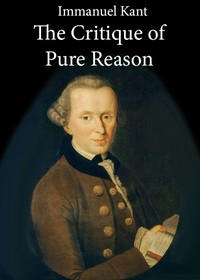
The Critique of Pure Reason

The Communist Manifesto

The Poetics of Aristotle
Discourse on the Method of Rightly Conducting One's Reason and of Seeking Truth in the Sciences

Democracy and Education: An Introduction to the Philosophy of Education

Utilitarianism
An Enquiry Concerning Human Understanding
Tractatus Logico-Philosophicus
A System of Logic, Ratiocinative and Inductive
The Antichrist