
The Dawn of Day
by Friedrich Wilhelm Nietzsche
Translated by J. M. Kennedy
"The Dawn of Day" by Friedrich Wilhelm Nietzsche is a philosophical work published in 1881. Nietzsche himself described this as the book where his "campaign against morality begins." Through aphorisms, he challenges Christian morality and biblical interpretation, emphasizing the pursuit of power over pleasure as humanity's driving force. The work develops his moral and cultural relativism while critiquing traditional religious teachings. Written in a polemical, informal style, it contains early versions of ideas he would expand in later writings.
Summary written by Project Gutenberg, by machine.
- Language
- English
- On Project Gutenberg since
- 9 June 2012
- Read in the last 30 days
- 3,725 times at Project Gutenberg
More by Friedrich Wilhelm Nietzsche
See all: More by Friedrich Wilhelm Nietzsche
Index of the Project Gutenberg Works of Friedrich Nietzsche

We Philologists

The Case of Wagner, Nietzsche Contra Wagner, and Selected Aphorisms.
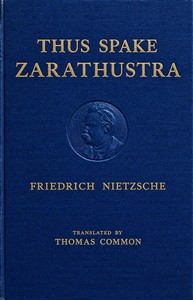
Thus Spake Zarathustra: A Book for All and None

Beyond Good and Evil
The Genealogy of Morals
The Twilight of the Idols; or, How to Philosophize with the Hammer. The Antichrist
Ecce Homo
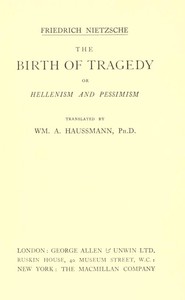
The Birth of Tragedy; or, Hellenism and Pessimism
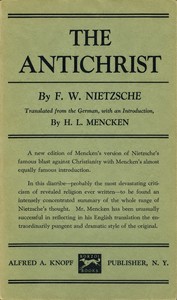
The Antichrist

The Joyful Wisdom ("La Gaya Scienza")

Human, All Too Human: A Book for Free Spirits
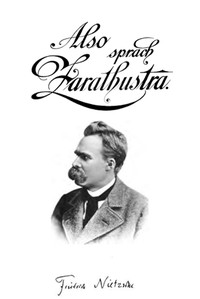
Also sprach Zarathustra: Ein Buch für Alle und Keinen

The Will to Power: An Attempted Transvaluation of All Values. Book III and IV
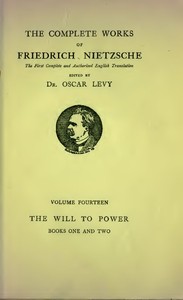
The Will to Power: An Attempted Transvaluation of All Values. Book I and II

Human, All-Too-Human: A Book for Free Spirits, Part 1
The Joyful Wisdom ("La Gaya Scienza")

Human, All-Too-Human: A Book for Free Spirits, Part 2
Thoughts Out of Season, Part II