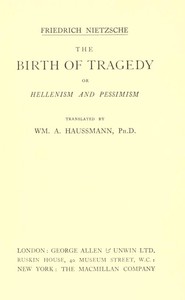
The Birth of Tragedy; or, Hellenism and Pessimism
by Friedrich Wilhelm Nietzsche
Edited by Oscar Levy · Translated by William A. Haussmann
"The Birth of Tragedy; or, Hellenism and Pessimism" by Friedrich Wilhelm Nietzsche is a work of dramatic theory published in 1872. Nietzsche introduces a bold dichotomy between the Dionysian and Apollonian forces—disorder versus order—that he believed shaped ancient Greek tragedy. He argues that Greek tragedy achieved art's highest form by uniting these opposing elements, allowing audiences to experience the full human condition. Nietzsche traces tragedy's decline through rationalism and suggests Richard Wagner's operas might revive this lost balance.
Summary written by Project Gutenberg, by machine.
- Language
- English
- On Project Gutenberg since
- 4 March 2016
- Read in the last 30 days
- 8,830 times at Project Gutenberg
Listen to it: 2 recordings


More by Friedrich Wilhelm Nietzsche
See all: More by Friedrich Wilhelm Nietzsche
Index of the Project Gutenberg Works of Friedrich Nietzsche

We Philologists

The Case of Wagner, Nietzsche Contra Wagner, and Selected Aphorisms.

Thus Spake Zarathustra: A Book for All and None

Beyond Good and Evil
The Genealogy of Morals
The Twilight of the Idols; or, How to Philosophize with the Hammer. The Antichrist
Ecce Homo
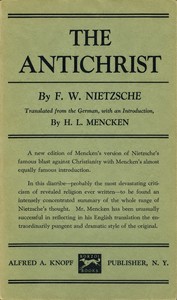
The Antichrist

The Joyful Wisdom ("La Gaya Scienza")

Human, All Too Human: A Book for Free Spirits

Also sprach Zarathustra: Ein Buch für Alle und Keinen

The Will to Power: An Attempted Transvaluation of All Values. Book III and IV

The Dawn of Day
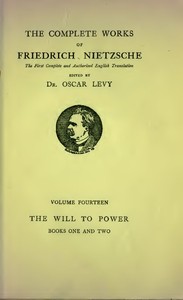
The Will to Power: An Attempted Transvaluation of All Values. Book I and II
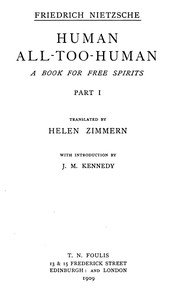
Human, All-Too-Human: A Book for Free Spirits, Part 1
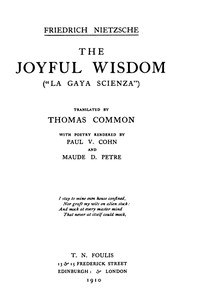
The Joyful Wisdom ("La Gaya Scienza")

Human, All-Too-Human: A Book for Free Spirits, Part 2
Thoughts Out of Season, Part II