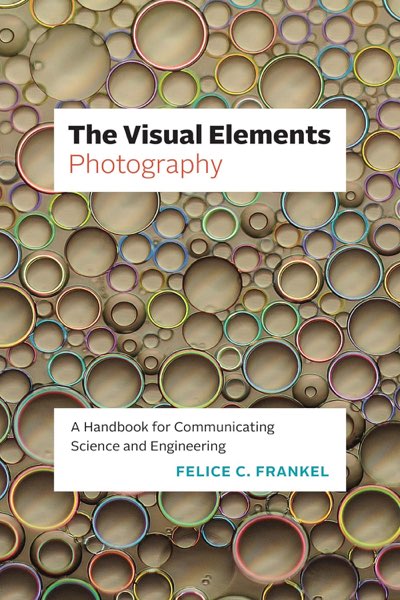
CourseRES.10-00139 lectures4 h 53 min
Making Science and Engineering Pictures: A Practical Guide to Presenting Your Work
Felice C. Frankel · Massachusetts Institute of Technology
About
In this course you will learn the basics of photography and gain an intriguing new perspective into the visual world. We will begin with a gentle introduction to the tools, and after that, we start in earnest.
Although we will emphasize photographing science and engineering, most of the material will easily apply to other kinds of macro photography. The course’s video tutorials will be accompanied by assignments using a camera, a flatbed scanner, and mobile devices. You will discover how subtle changes in lighting, composition, and background contribute to creating more effective images. You will also learn to think graphically and present your photographs for journal figures, covers, and grant submissions. We will also host interviews with notable image makers and art directors.
In 2026, Felice Frankel updated the course with a video where she discusses AI and its role in generating images. Felice brings our attention to the pitfalls and ethics of using generative AI models to document research and outlines the necessary guardrails to ensure the production of honest and communicative images.
About the Instructor
Felice Frankel is an award-winning science photographer and research scientist in the Department of Chemical Engineering at the Massachusetts Institute of Technology. Felice’s images have been internationally published in books, journals, and magazines, including The New York Times, Nature, Science, National Geographic, and Discover. She is a fellow of the American Association for the Advancement of Science, a Gugghenheim Fellow, has received awards and grants from NSF, NEA, the Alfred P. Sloan Foundation, and was a senior research fellow in Harvard University’s Faculty of Arts and Sciences.
Acknowledgements
The production of these videos is supported by OpenCourseWare, MITx, the Center for Materials Science and Engineering and the following departments: Chemical Engineering, Materials Science and Engineering and Mechanical Engineering.
Lectures
Week 1: Flatbed Scanner
- Video 1: Using a Flatbed Scanner
- Video 2: Placing Objects on the Scanner
- Video 3: Transmitted and Reflected Light
- Video 4: Enhancing the Scanned Image
Week 2: Camera Basics
- Video 5: Camera and Lens
- Video 6: Setting the Exposure
- Video 7: Aperture
- Video 8: Composition
- Video 9: Backgrounds
- Video 10: Point of View
Week 3: Light
Week 4: Mobile Devices and Video
- Video 14: Using a Smartphone
- Video 15: Imaging with a Tablet Camera
- Video 16: "Beautiful Chemistry"
- Video 17: Looking at Videos
Week 5: Presenting Your Work
- Video 18: Designing Graphics
- Video 19: Time and Scale
- Video 20: Cover Submissions
- Video 21: Image Enhancement
- Video 22: Speaking to the Public
Week 6: Case Studies
- Video 23: Liquid Battery Case Study
- Video 24: Fuel Cells for Mobile Batteries Case Study
- Video 25: A Solar Thermophotovoltaic System (STVP) Case Study
- Video 26: Microneedles Case Study
- Video 27: Soft Lithography Case Study
- Video 28: Chemical Vapor Deposition Case Study
- Video 29: Analytical Microreactor Case Study
- Video 30: Stretchable Sensors Case Study
- Video 31: Solar Cell Case Study
How-To-Do-It Tutorials
- How-To-Do-It: Sharpen an Image
- How-To-Do-It: Digitally Replace a Background
- How-To-Do-It: Convert an Image from Horizontal to Vertical
- How-To-Do-It: Set Your Scanner
- How-To-Do-It: Fix Mobile Distortion
Guest Interviews
Syllabus and materials
At MIT OpenCourseWare, as the course publishes them.
Credits and licence
- Institution
- Massachusetts Institute of Technology
- Department
- Chemical Engineering
- Teacher
- Felice C. Frankel
- Term
- Spring 2026
- Level
- Undergraduate
- Language
- English
- Subjects
- Physics, Chemistry, Biology, Medicine and health, Computer science, Engineering, Art, architecture and design, Teaching and learning
- Source
- MIT OpenCourseWare
- Licence
- CC BY-NC-SA 4.0, as MIT OpenCourseWare states it. Non-commercial use only. MIT OpenCourseWare's terms
- Attribution
- Felice C. Frankel. Making Science and Engineering Pictures: A Practical Guide to Presenting Your Work. Spring 2026. Massachusetts Institute of Technology: MIT OpenCourseWare, https://ocw.mit.edu/. License: Creative Commons BY-NC-SA.
- Who can watch
- MIT OpenCourseWare gives no rating. Invisible Network shows it to Teens profiles and older, judged from what the source says about it. How courses are placed
More like this
 Course
Matrix Methods in Data Analysis, Signal Processing, and Machine Learning
34 lectures · Video
 Course
Computational Science and Engineering I
50 lectures · Video
 Course
Engineering Dynamics
223 lectures · Video
 Course
Becoming the Next Bill Nye: Writing and Hosting the Educational Show
132 lectures · Video
 Course
Introduction to Nuclear Engineering and Ionizing Radiation
34 lectures · Video
 Course
Thermodynamics of Materials
38 lectures · Video
 Course
Introduction to Solid-State Chemistry
38 lectures · Video
 Course
Introduction to Solid State Chemistry
62 lectures · Video
 Course
Symmetry, Structure, and Tensor Properties of Materials
43 lectures · Video
 Course
Biological Chemistry I
75 lectures · Video
 Course
Biological Chemistry II
49 lectures · Video
 Course
Principles of Chemical Science
36 lectures · Video