
Course22.0134 lectures31 h 38 min
Introduction to Nuclear Engineering and Ionizing Radiation
Prof. Michael Short · Massachusetts Institute of Technology
About
This course provides an introduction to nuclear science and its engineering applications. It describes basic nuclear models, radioactivity, nuclear reactions, and kinematics; covers the interaction of ionizing radiation with matter, with an emphasis on radiation detection, radiation shielding, and radiation effects on human health; and presents energy systems based on fission and fusion nuclear reactions, as well as industrial and medical applications of nuclear science.
Lectures
Video Lectures
- Lecture 1: Radiation History to the Present—Understanding the Discovery of the Neutron
- Lecture 2: Radiation Utilizing Technology
- Lecture 3: Nuclear Mass and Stability, Nuclear Reactions and Notation, Introduction to Cross Section
- Lecture 4: Binding Energy, the Semi-Empirical Liquid Drop Nuclear Model, and Mass Parabolas
- Lecture 5: Mass Parabolas Continued, Stability, and Half-Life
- Lecture 6: The Q-Equation—The Most General Nuclear Reaction
- Lecture 7: Q-Equation Continued and Examples
- Lecture 8: Radioactive Decay—Modes, Energetics, and Trends
- Lecture 10: Radioactive Decay Continued
- Lecture 11: Radioactivity and Series Radioactive Decays
- Lecture 12: Numerical Examples of Activity, Half-Life, and Series Decay
- Lecture 13: Practical Radiation Counting Experiments—Solid Angle, Count Rates, Uncertainty, and Hands-On Gamma Counting and Nuclear Activation Analysis
- Lecture 14: Photon Interactions with Matter I—Interaction Methods and Gamma Spectral Identification
- Lecture 15: Photon Interaction with Matter II—More Details, Shielding Calculations
- Lecture 16: Nuclear Reactor Construction and Operation
- Lecture 17: Ion-Nuclear Interactions I—Scattering and Stopping Power Derivation, Ion Range
- Lecture 18: Ion-Nuclear Interactions II—Bremsstrahlung, X-Ray Spectra, Cross Sections
- Lecture 19: Uses of Photon and Ion Nuclear Interactions—Characterization Techniques
- Lecture 20: How Nuclear Energy Works
- Lecture 21: Neutron Transport
- Lecture 22: Simplifying Neutron Transport to Neutron Diffusion
- Lecture 23: Solving the Neutron Diffusion Equation, and Criticality Relations
- Lecture 24: Transients, Feedback, and Time-Dependent Neutronics
- Lecture 25: Review of All Nuclear Interactions and Problem Set 7 Help
- Lecture 26: Chernobyl—How It Happened
- Lecture 27: Nuclear Materials—Radiation Damage and Effects in Matter
- Lecture 28: Chernobyl Trip Report by Jake Hecla
- Lecture 29: Nuclear Materials Science Continued
- Lecture 30: Radiation Dose, Dosimetry, and Background Radiation
- Lecture 31: Frontiers in Nuclear Medicine, Where One Finds Ionizing Radiation
- Lecture 32: Chemical and Biological Effects of Radiation, Smelling Nuclear Bullshit
- Lecture 33: Long-Term Biological Effects of Radiation, Statistics, Radiation Risk
- Lecture 34: Radiation Hormesis
- Lecture 35: Food Irradiation and Its Safety
Syllabus and materials
At MIT OpenCourseWare, as the course publishes them.
Credits and licence
- Institution
- Massachusetts Institute of Technology
- Department
- Nuclear Science and Engineering
- Teacher
- Prof. Michael Short
- Term
- Fall 2016
- Level
- Undergraduate
- Language
- English
- Subjects
- Physics, Engineering
- Source
- MIT OpenCourseWare
- Licence
- CC BY-NC-SA 4.0, as MIT OpenCourseWare states it. Non-commercial use only. MIT OpenCourseWare's terms
- Attribution
- Prof. Michael Short. Introduction to Nuclear Engineering and Ionizing Radiation. Fall 2016. Massachusetts Institute of Technology: MIT OpenCourseWare, https://ocw.mit.edu/. License: Creative Commons BY-NC-SA.
- Who can watch
- MIT OpenCourseWare gives no rating. Invisible Network shows it to Tweens profiles and older, judged from what the source says about it. How courses are placed
More like this
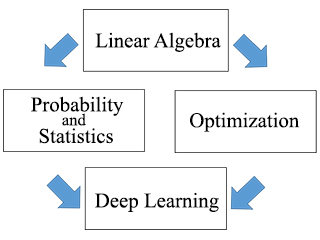 Course
Matrix Methods in Data Analysis, Signal Processing, and Machine Learning
34 lectures · Video
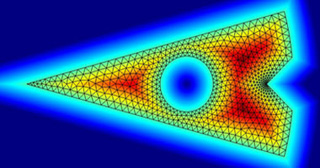 Course
Computational Science and Engineering I
50 lectures · Video
 Course
Engineering Dynamics
223 lectures · Video
 Course
Becoming the Next Bill Nye: Writing and Hosting the Educational Show
132 lectures · Video
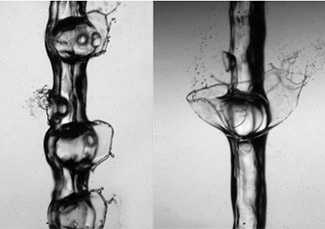 Course
Thermodynamics of Materials
38 lectures · Video
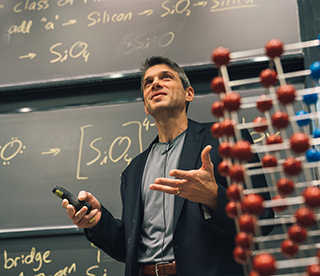 Course
Introduction to Solid-State Chemistry
38 lectures · Video
 Course
Introduction to Solid State Chemistry
62 lectures · Video
 Course
Symmetry, Structure, and Tensor Properties of Materials
43 lectures · Video
 Course
Thermodynamics & Kinetics
36 lectures · Video
 Course
Computation Structures
35 lectures · Video
 Course
Introduction to Algorithms
47 lectures · Video
 Course
Introduction to Electrical Engineering and Computer Science I
54 lectures · Video