Course18.065 / 18.065134 lectures
Matrix Methods in Data Analysis, Signal Processing, and Machine Learning
Prof. Gilbert Strang · Massachusetts Institute of Technology
About
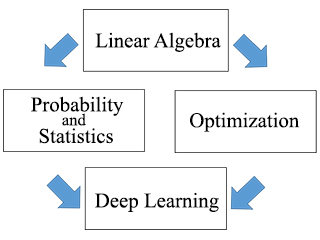
Linear algebra concepts are key for understanding and creating machine learning algorithms, especially as applied to deep learning and neural networks. This course reviews linear algebra with applications to probability and statistics and optimization–and above all a full explanation of deep learning.
Lectures
Video Lectures
- Lecture 1: The Column Space of A Contains All Vectors Ax
- Lecture 2: Multiplying and Factoring Matrices
- Lecture 3: Orthonormal Columns in Q Give Q’Q = I
- Lecture 4: Eigenvalues and Eigenvectors
- Lecture 5: Positive Definite and Semidefinite Matrices
- Lecture 6: Singular Value Decomposition (SVD)
- Lecture 7: Eckart-Young: The Closest Rank k Matrix to A
- Lecture 8: Norms of Vectors and Matrices
- Lecture 9: Four Ways to Solve Least Squares Problems
- Lecture 10: Survey of Difficulties with Ax = b
- Lecture 11: Minimizing ‖x‖ Subject to Ax = b
- Lecture 12: Computing Eigenvalues and Singular Values
- Lecture 13: Randomized Matrix Multiplication
- Lecture 14: Low Rank Changes in A and Its Inverse
- Lecture 15: Matrices A(t) Depending on t, Derivative = dA/dt
- Lecture 16: Derivatives of Inverse and Singular Values
- Lecture 17: Rapidly Decreasing Singular Values
- Lecture 18: Counting Parameters in SVD, LU, QR, Saddle Points
- Lecture 19: Saddle Points Continued, Maxmin Principle
- Lecture 20: Definitions and Inequalities
- Lecture 21: Minimizing a Function Step by Step
- Lecture 22: Gradient Descent: Downhill to a Minimum
- Lecture 23: Accelerating Gradient Descent (Use Momentum)
- Lecture 24: Linear Programming and Two-Person Games
- Lecture 25: Stochastic Gradient Descent
- Lecture 26: Structure of Neural Nets for Deep Learning
- Lecture 27: Backpropagation: Find Partial Derivatives
- Lecture 30: Completing a Rank-One Matrix, Circulants!
- Lecture 31: Eigenvectors of Circulant Matrices: Fourier Matrix
- Lecture 32: ImageNet is a Convolutional Neural Network (CNN), The Convolution Rule
- Lecture 33: Neural Nets and the Learning Function
- Lecture 34: Distance Matrices, Procrustes Problem
- Lecture 35: Finding Clusters in Graphs
- Lecture 36: Alan Edelman and Julia Language
Syllabus and materials
At MIT OpenCourseWare, as the course publishes them.
Credits and licence
- Institution
- Massachusetts Institute of Technology
- Department
- Mathematics
- Teacher
- Prof. Gilbert Strang
- Term
- Spring 2018
- Level
- Undergraduate
- Language
- English
- Subjects
- Mathematics, Computer science, Engineering
- Source
- MIT OpenCourseWare
- Licence
- CC BY-NC-SA 4.0, as MIT OpenCourseWare states it. Non-commercial use only. MIT OpenCourseWare's terms
- Attribution
- Prof. Gilbert Strang. Matrix Methods in Data Analysis, Signal Processing, and Machine Learning. Spring 2018. Massachusetts Institute of Technology: MIT OpenCourseWare, https://ocw.mit.edu/. License: Creative Commons BY-NC-SA.
- Who can watch
- MIT OpenCourseWare gives no rating. Invisible Network shows it to Tweens profiles and older, judged from what the source says about it. How courses are placed
More like this
 Course
The Analytics Edge
35 lectures · Video
 Course
Single Variable Calculus
35 lectures · Video
 Course
Multivariable Calculus
35 lectures · Video
 Course
Linear Algebra
35 lectures · Video
 Course
Linear Algebra
158 lectures · Video
 Course
Computational Science and Engineering I
50 lectures · Video
 Course
Engineering Dynamics
223 lectures · Video
 Course
Becoming the Next Bill Nye: Writing and Hosting the Educational Show
132 lectures · Video
 Course
Introduction to Nuclear Engineering and Ionizing Radiation
34 lectures · Video
 Course
Thermodynamics of Materials
38 lectures · Video
 Course
Introduction to Solid-State Chemistry
38 lectures · Video
 Course
Introduction to Solid State Chemistry
62 lectures · Video