CourseRES.9-00352 lectures40 h 11 min
Brains, Minds and Machines Summer Course
Prof. Tomaso Poggio and Prof. Gabriel Kreiman · Massachusetts Institute of Technology
About
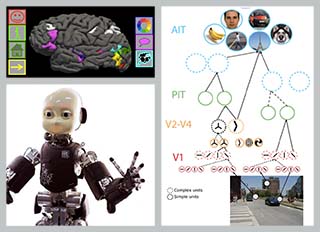
This course explores the problem of intelligence—its nature, how it is produced by the brain and how it could be replicated in machines—using an approach that integrates cognitive science, which studies the mind; neuroscience, which studies the brain; and computer science and artificial intelligence, which study the computations needed to develop intelligent machines. Materials are drawn from the Brains, Minds and Machines Summer Course offered annually at the Marine Biological Laboratory in Woods Hole, MA, taught by faculty affiliated with the Center for Brains, Minds and Machines headquartered at MIT. Elements of the summer course are integrated into the MIT course, 9.523 Aspects of a Computational Theory of Intelligence.
Contributors
This course includes the contributions of many instructors, guest speakers, and a team of iCub researchers. See the complete list of contributors.
Lectures
Introduction
Unit 1. Neural Circuits of Intelligence
- Lecture 1.1: Nancy Kanwisher - Human Cognitive Neuroscience
- Lecture 1.2: Gabriel Kreiman - Computational Roles of Neural Feedback
- Lecture 1.3: James DiCarlo - Neural Mechanisms of Recognition Part 1
- Lecture 1.4: James DiCarlo - Neural Mechanisms of Recognition Part 2
- Lecture 1.5: Winrich Freiwald - Primates, Faces, & Intelligence
- Lecture 1.6: Matt Wilson - Hippocampus, Memory, & Sleep Part 1
- Lecture 1.7: Matt Wilson - Hippocampus, Memory, & Sleep Part 2
- Seminar 1: Larry Abbott - Mind in the Fly Brain
Unit 2. Modeling Human Cognition
- Lecture 2.1: Josh Tenenbaum - Computational Cognitive Science Part 1
- Lecture 2.2: Josh Tenenbaum - Computational Cognitive Science Part 2
- Lecture 2.3: Josh Tenenbaum - Computational Cognitive Science Part 3
Unit 3. Development of Intelligence
- Lecture 3.1: Liz Spelke - Cognition in Infancy Part 1
- Lecture 3.2: Liz Spelke - Cognition in Infancy Part 2
- Lecture 3.3: Alia Martin - Developing an Understanding of Communication
- Lecture 3.4: Laura Schulz - Childrens' Sensitivity to Cost and Value of Information
- Seminar 3: Jessica Sommerville - Infants' Sensitivity to Cost and Benefit
- Lecture 3.5: Josh Tenenbaum - The Child as Scientist
- Unit 3 Debate: Tomer Ullman & Laura Schulz
Unit 4. Visual Intelligence
- Lecture 4.1: Shimon Ullman - Development of Visual Concepts
- Lecture 4.2: Shimon Ullman - Atoms of Recognition
- Lecture 4.3: Aude Oliva - Predicting Visual Memory
- Seminar 4.1: Eero Simoncelli - Probing Sensory Representations
- Seminar 4.2: Amnon Shashua - Applications of Vision
Unit 5. Vision and Language
- Lecture 5.1: Boris Katz - Vision and Language
- Lecture 5.2: Andrei Barbu - From Language to Vision and Back Again
- Lecture 5.3: Patrick Winston - Story Understanding
- Seminar 5: Tom Mitchell - Neural Representations of Language
Unit 6. Social Intelligence
- Lecture 6.1: Nancy Kanwisher - Introduction to Social Intelligence
- Lecture 6.2: Ken Nakayama - The Social Mind
- Lecture 6.3: Rebecca Saxe - MVPA: Window on the Mind via fMRI Part 1
- Lecture 6.4: Rebecca Saxe - MVPA: Window on the Mind via fMRI Part 2
Unit 7. Audition and Speech
- Lecture 7.1: Josh McDermott - Introduction to Audition Part 1
- Lecture 7.2: Josh McDermott - Introduction to Audition Part 2
- Lecture 7.3: Nancy Kanwisher - Human Auditory Cortex
- Lecture 7.4: Hynek Hermansky - Auditory Perception in Speech Technology Part 1
- Lecture 7.5: Hynek Hermansky - Auditory Perception in Speech Technology Part 2
- Unit 7 Panel: Vision and Audition
Unit 8. Robotics
- Lecture 8.1: Russ Tedrake - MIT's Entry in the DARPA Robotics Challenge
- Lecture 8.2: John Leonard - Mapping, Localization, & Self-Driving Vehicles
- Lecture 8.3: Tony Prescott - Control Architecture in Mammals and Robots
- Lecture 8.4: Stefanie Tellex - Human-Robot Collaboration
- Lecture 8.5: Giorgio Metta - Introduction to the iCub Robot
- Lecture 8.6: iCub Team - Overview of Research on the iCub Robot
- Unit 8 Panel: Robotics
Unit 9. Theory of Intelligence
- Lecture 9.1: Tomaso Poggio - iTheory: Visual Cortex & Deep Networks
- Seminar 9: Surya Ganguli - Statistical Physics of Deep Learning
- Lecture 9.2: Haim Sompolinsky - Sensory Representations in Deep Networks
Projects
Syllabus and materials
At MIT OpenCourseWare, as the course publishes them.
Credits and licence
- Institution
- Massachusetts Institute of Technology
- Department
- Brain and Cognitive Sciences
- Taught by
- Prof. Tomaso Poggio, Prof. Gabriel Kreiman
- Term
- Summer 2015
- Level
- Graduate
- Language
- English
- Subjects
- Biology, Medicine and health, Computer science, Engineering, Psychology and the brain, Society and politics
- Source
- MIT OpenCourseWare
- Licence
- CC BY-NC-SA 4.0, as MIT OpenCourseWare states it. Non-commercial use only. MIT OpenCourseWare's terms
- Attribution
- Prof. Tomaso Poggio, Prof. Gabriel Kreiman. Brains, Minds and Machines Summer Course. Summer 2015. Massachusetts Institute of Technology: MIT OpenCourseWare, https://ocw.mit.edu/. License: Creative Commons BY-NC-SA.
- Who can watch
- MIT OpenCourseWare gives no rating. Invisible Network shows it to Teens profiles and older, judged from what the source says about it. How courses are placed
More like this
 Course
Matrix Methods in Data Analysis, Signal Processing, and Machine Learning
34 lectures · Video
 Course
Computational Science and Engineering I
50 lectures · Video
 Course
Engineering Dynamics
223 lectures · Video
 Course
Becoming the Next Bill Nye: Writing and Hosting the Educational Show
132 lectures · Video
 Course
Introduction to Nuclear Engineering and Ionizing Radiation
34 lectures · Video
 Course
Thermodynamics of Materials
38 lectures · Video
 Course
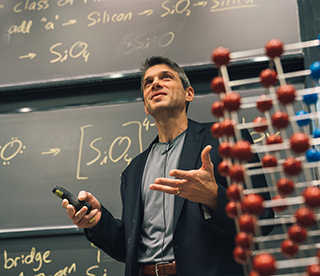
Introduction to Solid-State Chemistry
38 lectures · Video
 Course
Introduction to Solid State Chemistry
62 lectures · Video
 Course
Symmetry, Structure, and Tensor Properties of Materials
43 lectures · Video
 Course
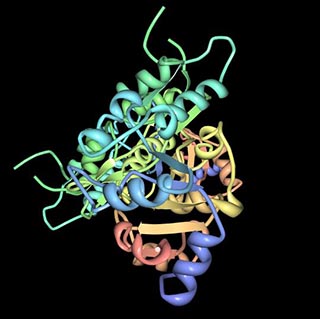
Biological Chemistry I
75 lectures · Video
 Course
Biological Chemistry II
49 lectures · Video
 Course
Computation Structures
35 lectures · Video