
Course3.054 / 3.3620 lectures
Cellular Solids: Structure, Properties and Applications
Lorna Gibson · Massachusetts Institute of Technology
About
This course reviews the processing and structure of cellular materials as they are created from polymers, metals, ceramics, glasses, and composites, develops models for the mechanical behavior of cellular solids, and shows how the unique properties of honeycombs and foams are exploited in applications such as lightweight structural panels, energy absorption devices and thermal insulation. The applications of cellular solids in medicine include increased fracture risk due to trabecular bone loss in patients with osteoporosis, the development of metal foam coatings for orthopaedic implants, and designing porous scaffolds for tissue engineering that mimic the extracellular matrix. Modelling of cellular materials applied to natural materials and biomimicking is explored. Students taking the graduate version of the class are required to complete additional assignments.
Lectures
Video Lectures
- Lecture 1: Introduction and Overview
- Lecture 2: Processing of Cellular Solids
- Lecture 3: Structure of Cellular Solids
- Lecture 4: Honeycombs: In-plane Behavior
- Lecture 5: Honeycombs: Out-of-plane Behavior
- Lecture 6: Natural Honeycombs: Wood
- Lecture 7: Natural Honeycombs: Cork; Foams: Linear Elasticity
- Lecture 8: Foams: Non-linear Elasticity
- Lecture 9: Foams: Thermal Properties
- Lecture 10: Exam Review
- Lecture 11: Trabecular Bone and Osteoporosis
- Lecture 12: Osteoporosis and Evolution
- Lecture 13: Tissue Engineering Scaffolds: Processing and Properties
- Lecture 14: Tissue Engineering: Osteochondral Scaffold; How To Write a Paper
- Lecture 15: Cell-scaffold Interactions; Energy Absorption
- Lecture 16: Applications: Energy Absorption in Foams
- Lecture 17: Sandwich Panels
- Lecture 18: Natural Sandwich Structures; Density Gradients
- Lecture 19: Biomimicking
- Lecture 20: How I Became a Professor
Syllabus and materials
At MIT OpenCourseWare, as the course publishes them.
Credits and licence
- Institution
- Massachusetts Institute of Technology
- Department
- Materials Science and Engineering
- Teacher
- Lorna Gibson
- Term
- Spring 2015
- Level
- Undergraduate
- Language
- English
- Subjects
- Biology, Engineering
- Source
- MIT OpenCourseWare
- Licence
- CC BY-NC-SA 4.0, as MIT OpenCourseWare states it. Non-commercial use only. MIT OpenCourseWare's terms
- Attribution
- Lorna Gibson. Cellular Solids: Structure, Properties and Applications. Spring 2015. Massachusetts Institute of Technology: MIT OpenCourseWare, https://ocw.mit.edu/. License: Creative Commons BY-NC-SA.
- Who can watch
- MIT OpenCourseWare gives no rating. Invisible Network shows it to Tweens profiles and older, judged from what the source says about it. How courses are placed
More like this
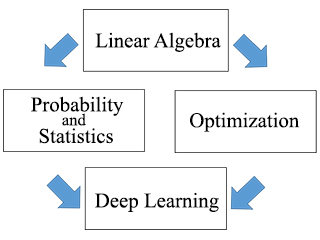 Course
Matrix Methods in Data Analysis, Signal Processing, and Machine Learning
34 lectures · Video
 Course
Computational Science and Engineering I
50 lectures · Video
 Course
Engineering Dynamics
223 lectures · Video
 Course
Becoming the Next Bill Nye: Writing and Hosting the Educational Show
132 lectures · Video
 Course
Introduction to Nuclear Engineering and Ionizing Radiation
34 lectures · Video
 Course
Thermodynamics of Materials
38 lectures · Video
 Course
Introduction to Solid-State Chemistry
38 lectures · Video
 Course
Introduction to Solid State Chemistry
62 lectures · Video
 Course
Symmetry, Structure, and Tensor Properties of Materials
43 lectures · Video
 Course
Biological Chemistry I
75 lectures · Video
 Course
Biological Chemistry II
49 lectures · Video
 Course
Computation Structures
35 lectures · Video