Ecce homo, Wie man wird, was man ist
by Friedrich Wilhelm Nietzsche
"Ecce homo, Wie man wird, was man ist" by Friedrich Nietzsche is a philosophical work written in 1888. In this audacious self-examination, Nietzsche offers his own interpretation of his life, works, and significance through provocatively titled chapters like "Why I Am So Wise" and "Why I Write Such Good Books." Part philosophical defense, part self-portrait, the book presents Nietzsche's vision of what it means to become who you truly are, while reviewing his major works and challenging conventional morality and Christianity with characteristic boldness.
Summary written by Project Gutenberg, by machine.
- Language
- German (Deutsch)
- On Project Gutenberg since
- 1 January 2005
- Read in the last 30 days
- 1,401 times at Project Gutenberg
More by Friedrich Wilhelm Nietzsche
See all: More by Friedrich Wilhelm Nietzsche
Index of the Project Gutenberg Works of Friedrich Nietzsche
We Philologists
The Case of Wagner, Nietzsche Contra Wagner, and Selected Aphorisms.
Thus Spake Zarathustra: A Book for All and None
Beyond Good and Evil
The Genealogy of Morals
The Twilight of the Idols; or, How to Philosophize with the Hammer. The Antichrist
Ecce Homo
The Birth of Tragedy; or, Hellenism and Pessimism
The Antichrist
The Joyful Wisdom ("La Gaya Scienza")
Human, All Too Human: A Book for Free Spirits
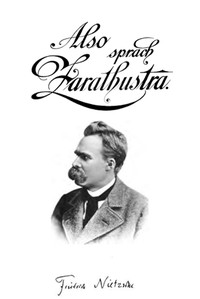
Also sprach Zarathustra: Ein Buch für Alle und Keinen
The Will to Power: An Attempted Transvaluation of All Values. Book III and IV
The Dawn of Day
The Will to Power: An Attempted Transvaluation of All Values. Book I and II
Human, All-Too-Human: A Book for Free Spirits, Part 1
The Joyful Wisdom ("La Gaya Scienza")

Human, All-Too-Human: A Book for Free Spirits, Part 2
Thoughts Out of Season, Part II
More from the shelf “DE Prosa”
See all: More from the shelf “DE Prosa”
Die Verwandlung

Aus dem Leben eines Taugenichts: Novelle
Buddenbrooks: Verfall einer Familie

Bahnwärter Thiel
Effi Briest

Seelenverkäufer: Das Schicksal einer Deutsch-Amerikanerin

Der Untertan

Siddhartha: eine indische Dichtung

Der Dunkelgraf

Die Verwirrungen des Zöglings Törleß

Der Gehülfe
In Stahlgewittern, aus dem Tagebuch eines Stoßtruppführers

Die Liebe der Erika Ewald: Novellen

Der kleine Herr Friedemann: Novellen

Das Urteil: Eine Geschichte

Die Leiden des jungen Werther — Band 1

Caspar Hauser; oder, Die Trägheit des Herzens, Roman

Der Spaziergang

Die Stadt ohne Juden: Ein Roman von übermorgen