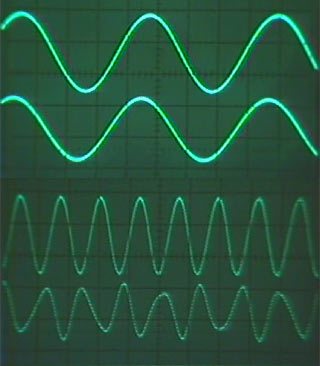
CourseRES.6-00822 lectures15 h 21 min
Digital Signal Processing
Prof. Alan V. Oppenheim · Massachusetts Institute of Technology
About
This course was developed in 1987 by the MIT Center for Advanced Engineering Studies. It was designed as a distance-education course for engineers and scientists in the workplace.
Advances in integrated circuit technology have had a major impact on the technical areas to which digital signal processing techniques and hardware are being applied. A thorough understanding of digital signal processing fundamentals and techniques is essential for anyone whose work is concerned with signal processing applications.
Digital Signal Processing begins with a discussion of the analysis and representation of discrete-time signal systems, including discrete-time convolution, difference equations, the z-transform, and the discrete-time Fourier transform. Emphasis is placed on the similarities and distinctions between discrete-time and continuous-time signals and systems. The course proceeds to cover digital network and nonrecursive (finite impulse response) digital filters. Digital Signal Processing concludes with digital filter design and a discussion of the fast Fourier transform algorithm for computation of the discrete Fourier transform.
Lectures
Video Lectures
- Demonstration 1: Sampling, Aliasing, and Frequency Response, Part 1
- Demonstration 2: Sampling, Aliasing, and Frequency Response, Part 2
- Lecture 1: Introduction
- Lecture 2: Discrete-Time Signals and Systems, Part 1
- Lecture 3: Discrete-Time Signals and Systems, Part 2
- Lecture 4: The Discrete-Time Fourier Transform
- Lecture 5: The z-Transform
- Lecture 6: The Inverse z-Transform
- Lecture 7: z-Transform Properties
- Lecture 8: The Discrete Fourier Series
- Lecture 9: The Discrete Fourier Transform
- Lecture 10: Circular Convolution
- Lecture 11: Representation of Linear Digital Networks
- Lecture 12: Network Structures for Infinite Impulse Response (IIR) Systems
- Lecture 13: Network Structures for Finite Impulse Response (FIR) Systems and Parameter Quantization Effects in Digital Filter Structures
- Lecture 14: Design of IIR Digital Filters, Part 1
- Lecture 15: Design of IIR Digital Filters, Part 2
- Lecture 16: Digital Butterworth Filters
- Lecture 17: Design of FIR Digital Filters
- Lecture 18: Computation of the Discrete Fourier Transform, Part 1
- Lecture 19: Computation of the Discrete Fourier Transform, Part 2
- Lecture 20: Computation of the Discrete Fourier Transform, Part 3
Syllabus and materials
At MIT OpenCourseWare, as the course publishes them.
Credits and licence
- Institution
- Massachusetts Institute of Technology
- Department
- Electrical Engineering and Computer Science
- Teacher
- Prof. Alan V. Oppenheim
- Term
- Spring 2011
- Level
- Graduate
- Language
- English
- Subjects
- Computer science, Engineering
- Source
- MIT OpenCourseWare
- Licence
- CC BY-NC-SA 4.0, as MIT OpenCourseWare states it. Non-commercial use only. MIT OpenCourseWare's terms
- Attribution
- Prof. Alan V. Oppenheim. Digital Signal Processing. Spring 2011. Massachusetts Institute of Technology: MIT OpenCourseWare, https://ocw.mit.edu/. License: Creative Commons BY-NC-SA.
- Who can watch
- MIT OpenCourseWare gives no rating. Invisible Network shows it to Tweens profiles and older, judged from what the source says about it. How courses are placed
More like this
 Course
Matrix Methods in Data Analysis, Signal Processing, and Machine Learning
34 lectures · Video
 Course
Computational Science and Engineering I
50 lectures · Video
 Course
Engineering Dynamics
223 lectures · Video
 Course
Becoming the Next Bill Nye: Writing and Hosting the Educational Show
132 lectures · Video
 Course
Introduction to Nuclear Engineering and Ionizing Radiation
34 lectures · Video
 Course
Thermodynamics of Materials
38 lectures · Video
 Course
Introduction to Solid-State Chemistry
38 lectures · Video
 Course
Introduction to Solid State Chemistry
62 lectures · Video
 Course
Symmetry, Structure, and Tensor Properties of Materials
43 lectures · Video
 Course
Computation Structures
35 lectures · Video
 Course
Introduction to Algorithms
47 lectures · Video
 Course
Introduction to Electrical Engineering and Computer Science I
54 lectures · Video