
Course9.1435 lectures
Brain Structure and Its Origins
Prof. Gerald E. Schneider · Massachusetts Institute of Technology
About
This course provides an outline of vertebrate functional neuroanatomy, aided by studies of comparative neuroanatomy and evolution, and by studies of brain development. Topics include early steps to a central nervous system, basic patterns of brain and spinal cord connections, regional development and differentiation, regeneration, motor and sensory pathways and structures, systems underlying motivations, innate action patterns, formation of habits, and various cognitive functions. In addition, lab techniques are reviewed and students perform brain dissections.
Lectures
Audio Lectures
- 1. Introduction: brain orientation, primitive cellular activities
- 2. Introduction: methods and primitive cellular activities
- 3. Steps to the CNS of chordates, part 1
- 4. Steps to the CNS of chordates, part 2
- 5. Specializations in the evolving CNS, part 1
- 6. Specializations in the evolving CNS, part 2
- 7. Spinal cord development and anatomy, part 1
- 8. Spinal cord development and anatomy, part 2
- 9. Autonomic nervous system; differentiation of the brain vesicles and intro to the hindbrain and segmentation
- 10. Differentiation of the brain vesicles, part 1: Hindbrain and cranial nerves, specializations
- 11. Differentiation of the brain vesicles, part 2: Developmental distortions; evolution of midbrain and forebrain; midbrain organization
- 12. Differentiation of the brain vesicles, part 3: Vertebrate forebrain evolution and organization
- 14. CNS differentiation and axon growth, part 2
- 15. Motor systems and brain states, part 1
- 16. Motor systems and brain states, part 2
- 17. Motor systems and brain states, part 3
- 18. Motor systems and brain states, part 4
- 21. Visual systems, part 1
- 22. Visual systems, part 2
- 23. Visual systems, part 3
- 24. Auditory systems, part 1
- 25. Auditory systems, part 2
- 26. Forebrain evolution
- 27. Hypothalamus and limbic system, part 1
- 28. Hypothalamus and limbic system, part 2
- 29. Hypothalamus and limbic system, part 3
- 30. Hypothalamus and limbic system, part 4
- 31. Hypothalamus and limbic system, part 5
- 32. Hypothalamus and limbic system, part 6
- 33. Corpus striatum, part 1
- 34. Corpus striatum, part 2
- 35. Neocortex, part 1
- 36. Neocortex, part 2
- 37. Neocortex, part 3
- 38. Plasticity in brain connections
Syllabus and materials
At MIT OpenCourseWare, as the course publishes them.
Credits and licence
- Institution
- Massachusetts Institute of Technology
- Department
- Brain and Cognitive Sciences
- Teacher
- Prof. Gerald E. Schneider
- Term
- Spring 2014
- Level
- Undergraduate
- Language
- English
- Subjects
- Biology, Medicine and health, Psychology and the brain
- Source
- MIT OpenCourseWare
- Licence
- CC BY-NC-SA 4.0, as MIT OpenCourseWare states it. Non-commercial use only. MIT OpenCourseWare's terms
- Attribution
- Prof. Gerald E. Schneider. Brain Structure and Its Origins. Spring 2014. Massachusetts Institute of Technology: MIT OpenCourseWare, https://ocw.mit.edu/. License: Creative Commons BY-NC-SA.
- Who can watch
- MIT OpenCourseWare gives no rating. Invisible Network shows it to Teens profiles and older, judged from what the source says about it. How courses are placed
More like this
 Course
Becoming the Next Bill Nye: Writing and Hosting the Educational Show
132 lectures · Video
 Course
Biological Chemistry I
75 lectures · Video
 Course
Biological Chemistry II
49 lectures · Video
 Course
Principles and Practice of Assistive Technology
34 lectures · Video
 Course
Introduction to Biology
35 lectures · Video
 Course
Introductory Biology
34 lectures · Video
 Course
Introductory Biology
35 lectures · Video
 Course
Fundamentals of Biology
86 lectures · Video
 Course
Making Science and Engineering Pictures: A Practical Guide to Presenting Your Work
39 lectures · Video
 Course
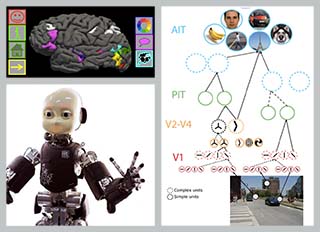
Brains, Minds and Machines Summer Course
52 lectures · Video
 Course
Neuroscience and Behavior
30 lectures · Video
 Course
Optics
29 lectures · Video