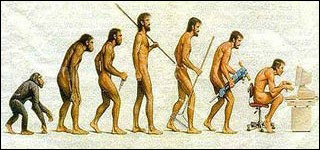
Course6.03430 lectures24 h 18 min
Artificial Intelligence
Patrick Henry Winston · Massachusetts Institute of Technology
About
This course introduces students to the basic knowledge representation, problem solving, and learning methods of artificial intelligence. Upon completion of 6.034, students should be able to develop intelligent systems by assembling solutions to concrete computational problems; understand the role of knowledge representation, problem solving, and learning in intelligent-system engineering; and appreciate the role of problem solving, vision, and language in understanding human intelligence from a computational perspective.
Lectures
Lecture Videos
- Lecture 1: Introduction and Scope
- Lecture 2: Reasoning: Goal Trees and Problem Solving
- Lecture 3: Reasoning: Goal Trees and Rule-Based Expert Systems
- Lecture 4: Search: Depth-First, Hill Climbing, Beam
- Lecture 5: Search: Optimal, Branch and Bound, A*
- Lecture 6: Search: Games, Minimax, and Alpha-Beta
- Lecture 7: Constraints: Interpreting Line Drawings
- Lecture 8: Constraints: Search, Domain Reduction
- Lecture 9: Constraints: Visual Object Recognition
- Lecture 10: Introduction to Learning, Nearest Neighbors
- Lecture 11: Learning: Identification Trees, Disorder
- Lecture 12A: Neural Nets
- Lecture 12B: Deep Neural Nets
- Lecture 13: Learning: Genetic Algorithms
- Lecture 14: Learning: Sparse Spaces, Phonology
- Lecture 15: Learning: Near Misses, Felicity Conditions
- Lecture 16: Learning: Support Vector Machines
- Lecture 17: Learning: Boosting
- Lecture 18: Representations: Classes, Trajectories, Transitions
- Lecture 19: Architectures: GPS, SOAR, Subsumption, Society of Mind
- Lecture 21: Probabilistic Inference I
- Lecture 22: Probabilistic Inference II
- Lecture 23: Model Merging, Cross-Modal Coupling, Course Summary
Mega-Recitation Videos
Syllabus and materials
At MIT OpenCourseWare, as the course publishes them.
Credits and licence
- Institution
- Massachusetts Institute of Technology
- Department
- Electrical Engineering and Computer Science
- Teacher
- Patrick Henry Winston
- Term
- Fall 2010
- Level
- Undergraduate
- Language
- English
- Subjects
- Computer science, Engineering
- Source
- MIT OpenCourseWare
- Licence
- CC BY-NC-SA 4.0, as MIT OpenCourseWare states it. Non-commercial use only. MIT OpenCourseWare's terms
- Attribution
- Patrick Henry Winston. Artificial Intelligence. Fall 2010. Massachusetts Institute of Technology: MIT OpenCourseWare, https://ocw.mit.edu/. License: Creative Commons BY-NC-SA.
- Who can watch
- MIT OpenCourseWare gives no rating. Invisible Network shows it to Tweens profiles and older, judged from what the source says about it. How courses are placed
More like this
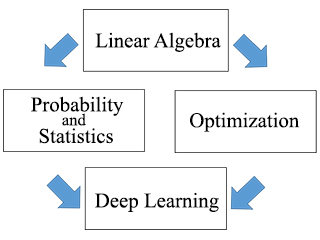 Course
Matrix Methods in Data Analysis, Signal Processing, and Machine Learning
34 lectures · Video
 Course
Computational Science and Engineering I
50 lectures · Video
 Course
Engineering Dynamics
223 lectures · Video
 Course
Becoming the Next Bill Nye: Writing and Hosting the Educational Show
132 lectures · Video
 Course
Introduction to Nuclear Engineering and Ionizing Radiation
34 lectures · Video
 Course
Thermodynamics of Materials
38 lectures · Video
 Course
Introduction to Solid-State Chemistry
38 lectures · Video
 Course
Introduction to Solid State Chemistry
62 lectures · Video
 Course
Symmetry, Structure, and Tensor Properties of Materials
43 lectures · Video
 Course
Computation Structures
35 lectures · Video
 Course
Introduction to Algorithms
47 lectures · Video
 Course
Introduction to Electrical Engineering and Computer Science I
54 lectures · Video