
Course6.00226 lectures21 h 24 min
Circuits and Electronics
Prof. Anant Agarwal · Massachusetts Institute of Technology
About
6.002 is designed to serve as a first course in an undergraduate electrical engineering (EE), or electrical engineering and computer science (EECS) curriculum. At MIT, 6.002 is in the core of department subjects required for all undergraduates in EECS.
The course introduces the fundamentals of the lumped circuit abstraction. Topics covered include: resistive elements and networks; independent and dependent sources; switches and MOS transistors; digital abstraction; amplifiers; energy storage elements; dynamics of first- and second-order networks; design in the time and frequency domains; and analog and digital circuits and applications. Design and lab exercises are also significant components of the course. 6.002 is worth 4 Engineering Design Points. The 6.002 content was created collaboratively by Profs. Anant Agarwal and Jeffrey H. Lang.
The course uses the required textbook Foundations of Analog and Digital Electronic Circuits. Agarwal, Anant, and Jeffrey H. Lang. San Mateo, CA: Morgan Kaufmann Publishers, Elsevier, July 2005. ISBN: 9781558607354.
Lectures
Video Lectures
- Lecture 1: Introduction and Lumped Abstraction
- Lecture 2: Basic Circuit Analysis Method
- Lecture 3: Superposition, Thévenin and Norton
- Lecture 4: The Digital Abstraction
- Lecture 5: Inside the Digital Gate
- Lecture 6: Nonlinear Analysis
- Lecture 7: Incremental Analysis
- Lecture 8: Dependent Sources and Amplifiers
- Lecture 9: Mosfet Amplifier Large Signal Analysis (part 1)
- Lecture 9: Mosfet Amplifier Large Signal Analysis (part 2)
- Lecture 10: Amplifiers - Small Signal Model
- Lecture 11: Small Signal Circuits
- Lecture 12: Capacitors and First-Order Systems
- Lecture 13: Digital Circuit Speed
- Lecture 14: State and Memory
- Lecture 15: Second-Order Systems (part 1)
- Lecture 15: Second-Order Systems (part 2)
- Lecture 16: Sinusoidal Steady State
- Lecture 17: The Impedance Model
- Lecture 18: Filters
- Lecture 19: The Operational Amplifier Abstraction
- Lecture 20: Operational Amplifier Circuits
- Lecture 21: Op Amps Positive Feedback
- Lecture 22: Energy and Power
- Lecture 23: Energy, CMOS
- Lecture 25: Violating the Abstraction Barrier
Syllabus and materials
At MIT OpenCourseWare, as the course publishes them.
Credits and licence
- Institution
- Massachusetts Institute of Technology
- Department
- Electrical Engineering and Computer Science
- Teacher
- Prof. Anant Agarwal
- Term
- Spring 2007
- Level
- Undergraduate
- Language
- English
- Subjects
- Computer science, Engineering
- Source
- MIT OpenCourseWare
- Licence
- CC BY-NC-SA 4.0, as MIT OpenCourseWare states it. Non-commercial use only. MIT OpenCourseWare's terms
- Attribution
- Prof. Anant Agarwal. Circuits and Electronics. Spring 2007. Massachusetts Institute of Technology: MIT OpenCourseWare, https://ocw.mit.edu/. License: Creative Commons BY-NC-SA.
- Who can watch
- MIT OpenCourseWare gives no rating. Invisible Network shows it to Tweens profiles and older, judged from what the source says about it. How courses are placed
More like this
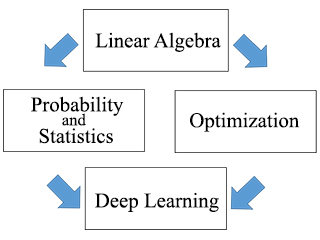 Course
Matrix Methods in Data Analysis, Signal Processing, and Machine Learning
34 lectures · Video
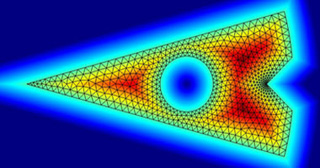 Course
Computational Science and Engineering I
50 lectures · Video
 Course
Engineering Dynamics
223 lectures · Video
 Course
Becoming the Next Bill Nye: Writing and Hosting the Educational Show
132 lectures · Video
 Course
Introduction to Nuclear Engineering and Ionizing Radiation
34 lectures · Video
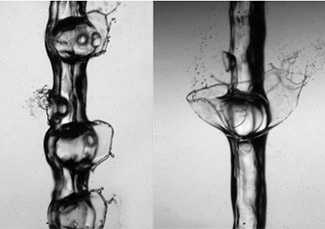 Course
Thermodynamics of Materials
38 lectures · Video
 Course
Introduction to Solid-State Chemistry
38 lectures · Video
 Course
Introduction to Solid State Chemistry
62 lectures · Video
 Course
Symmetry, Structure, and Tensor Properties of Materials
43 lectures · Video
 Course
Computation Structures
35 lectures · Video
 Course
Introduction to Algorithms
47 lectures · Video
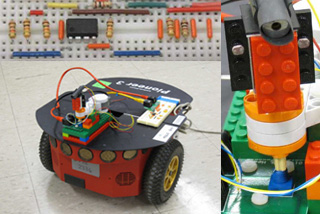 Course
Introduction to Electrical Engineering and Computer Science I
54 lectures · Video