Selections from Erasmus: Principally from his Epistles
Edited by P. S. Allen
"Selections from Erasmus: Principally from his Epistles" by P. S. Allen is a scholarly compilation of letters by Erasmus, an influential figure of the Renaissance, likely assembled in the early 20th century. This collection highlights Erasmus's thoughts and experiences, particularly focusing on English life and historical context during a transformative period in European history. The letters encompass various themes, including education, humanism, and social observations, providing glimpses into the lives of notable individuals of his time, such as Thomas More and John Colet. The beginning of the text introduces Erasmus of Rotterdam, detailing his early education and the environment shaped by the renewed interest in classical learning during the Renaissance. It explains how Erasmus, despite a challenging upbringing, cultivated a deep appreciation for language and scholarship, eventually rising to prominence as a thinker and writer. His journey through various educational institutions, including his time at Deventer and later experiences in Paris and England, sets the stage for his influential works and friendships. The opening portion captures Erasmus's intellectual curiosity and the different facets of his life that shaped him into a key figure in the history of education and literature.
Summary written by Project Gutenberg, by machine.
- Languages
- English, Latin (Latina)
- On Project Gutenberg since
- 1 June 2005
- Read in the last 30 days
- 550 times at Project Gutenberg
More by Desiderius Erasmus
See all: More by Desiderius Erasmus
A dialoge or communication of two persons
The Colloquies of Erasmus, Volume I.
Erasmus Against War
A Modest Meane to Mariage
One dialogue, or Colloquye of Erasmus (entituled Diuersoria)

Een twaalftal samenspraken
In Praise of Folly
De Lof der Zotheid
The Praise of Folly
Das Lob der Narrheit
The Education of Children
A Merry Dialogue Declaringe the Properties of Shrowde Shrews and Honest Wives
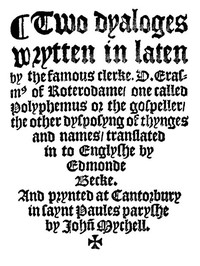
Two Dyaloges (c. 1549)
A Very Pleasaunt & Fruitful Diologe Called the Epicure
Encomium Artis Medicae: De Lof Der Geneeskunde