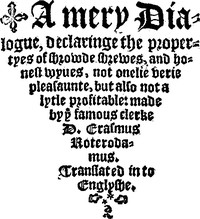
A Merry Dialogue Declaringe the Properties of Shrowde Shrews and Honest Wives
"A Merry Dialogue Declaringe the Properties of Shrowde Shrews and Honest Wives" by Desiderius Erasmus of Rotterdam is a humorous discourse written in the mid-16th century, likely around the 1550s. This dialogue fits within the genre of social commentary and satire, exploring marital dynamics and the contrasting tendencies of wives characterized as either 'shrowde shrews' or 'honest wives.' The text likely aims to entertain while also providing insights into the expected behaviors and roles within a marriage, reflecting the social norms of its time. The narrative unfolds through the conversations of two women, Eulalia and Xantippa, who exchange their experiences and perspectives on marriage and their husbands. Eulalia offers counsel to Xantippa, who complains about her husband's behavior and perceived shortcomings. The dialogue touches on themes of patience, understanding, and the dynamics of power and submission within the marital relationship. Through anecdotes and humor, the text conveys the idea that wives can influence their husbands' behavior through gentleness and domestic care while highlighting the challenges they face. It culminates in a comedic yet pointed commentary on marriage, suggesting that the ability to navigate these complexities is crucial for a harmonious relationship.
Summary written by Project Gutenberg, by machine.
- Language
- English
- On Project Gutenberg since
- 7 December 2004
- Read in the last 30 days
- 613 times at Project Gutenberg
More by Desiderius Erasmus
See all: More by Desiderius Erasmus
A dialoge or communication of two persons
The Colloquies of Erasmus, Volume I.
Erasmus Against War
A Modest Meane to Mariage

Selections from Erasmus: Principally from his Epistles
One dialogue, or Colloquye of Erasmus (entituled Diuersoria)

Een twaalftal samenspraken
In Praise of Folly
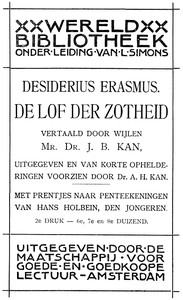
De Lof der Zotheid
The Praise of Folly
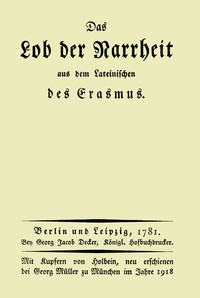
Das Lob der Narrheit
The Education of Children
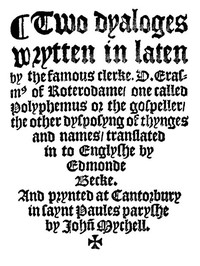
Two Dyaloges (c. 1549)

A Very Pleasaunt & Fruitful Diologe Called the Epicure
Encomium Artis Medicae: De Lof Der Geneeskunde