The Education of Children
Translated by Richard Sherry
"The Education of Children" by Desiderius Erasmus is a philosophical treatise written in the early 16th century. The text emphasizes the significance of nurturing children in virtue and learning from an early age, advocating for a thoughtful and comprehensive approach to education and upbringing. As one of the most renowned figures of the Renaissance, Erasmus reflects on the moral and intellectual development of children, addressing both parents and educators on their responsibilities. The opening of the work establishes a foundational argument for the careful schooling of young children, emphasizing that early education is crucial in shaping their character and intellect. Erasmus argues against the common belief that childhood is too immature for serious learning, insisting instead that the malleable mind of a child is highly receptive and should be cultivated immediately with the right teachings. He encourages parents to be diligent in selecting suitable educators while also engaging in their children's education themselves, stating that the cultivation of both body and mind is paramount in creating virtuous and capable individuals. Through various analogies, including comparisons to animals and the cultivation of plants, Erasmus illustrates that early and effective education lays the groundwork for a fruitful life, ultimately benefiting both families and society.
Summary written by Project Gutenberg, by machine.
- Language
- English
- On Project Gutenberg since
- 16 March 2009
- Read in the last 30 days
- 643 times at Project Gutenberg
More by Desiderius Erasmus
See all: More by Desiderius Erasmus
A dialoge or communication of two persons

The Colloquies of Erasmus, Volume I.
Erasmus Against War

A Modest Meane to Mariage

Selections from Erasmus: Principally from his Epistles

One dialogue, or Colloquye of Erasmus (entituled Diuersoria)

Een twaalftal samenspraken
In Praise of Folly
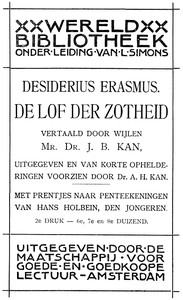
De Lof der Zotheid

The Praise of Folly
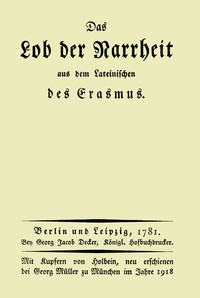
Das Lob der Narrheit
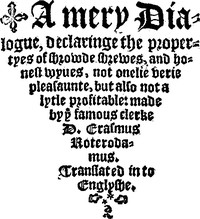
A Merry Dialogue Declaringe the Properties of Shrowde Shrews and Honest Wives
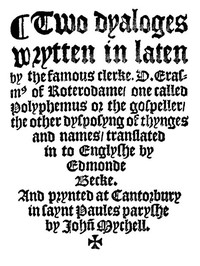
Two Dyaloges (c. 1549)

A Very Pleasaunt & Fruitful Diologe Called the Epicure

Encomium Artis Medicae: De Lof Der Geneeskunde