Window mode follows your eyes with your camera, in this browser only: no picture or position leaves your device.
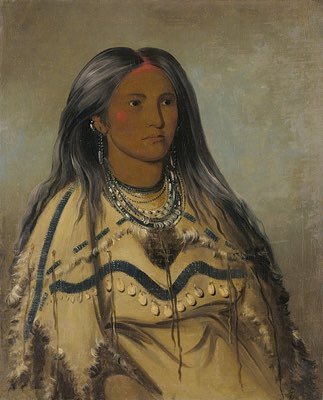
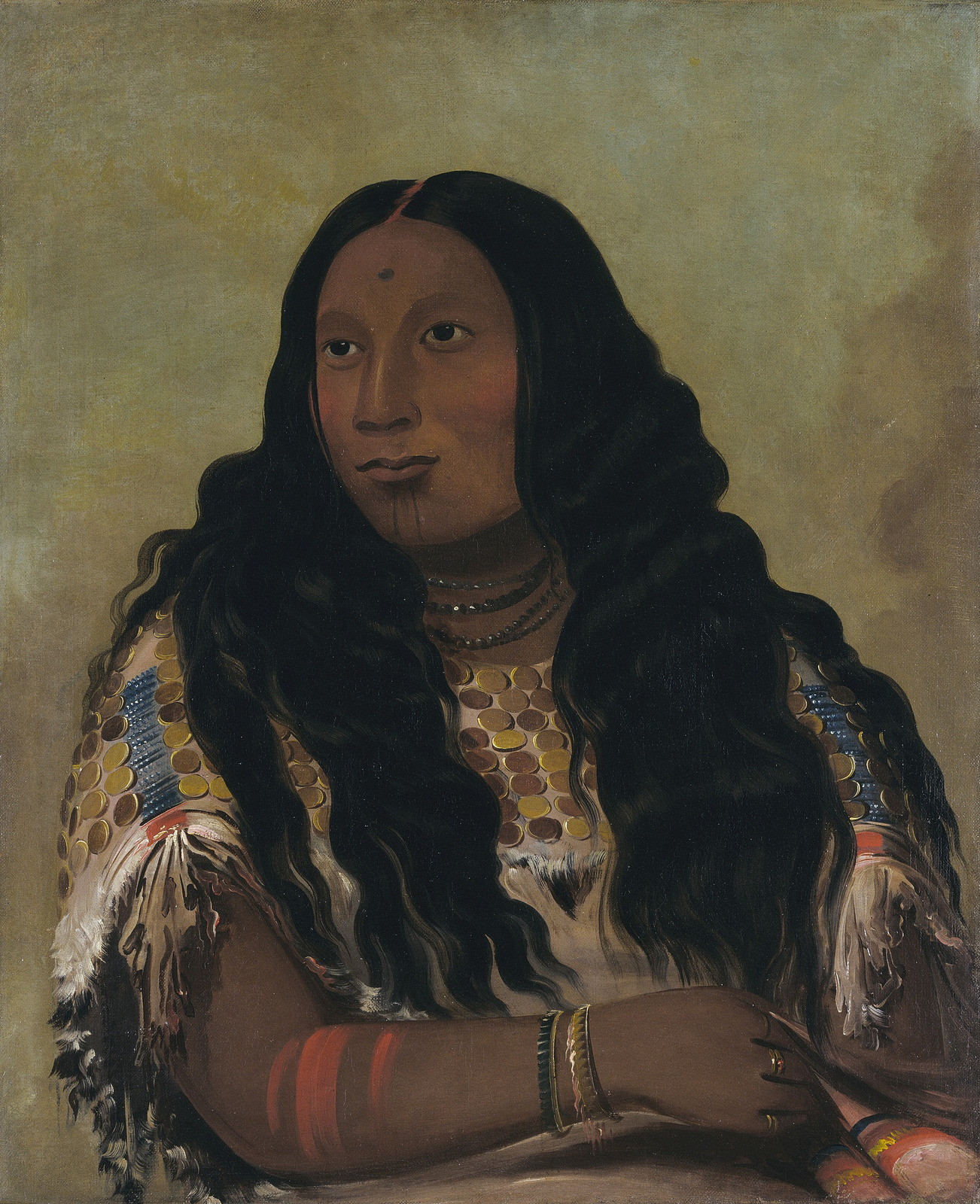
Tchón-su-móns-ka, Sand Bar, Wife of the Trader François Chardon
George Catlin (born Wilkes-Barre, PA 1796-died Jersey City, NJ 1872)
1832
- Medium
- oil on canvas
- Classification
- Paintings
- Dimensions
- 29 x 24 in. (73.7 x 60.9 cm)
- Culture
- Indians of North America
- Museum
- Smithsonian Institution, Smithsonian American Art Museum, Painting and Sculpture
- Credit line
- Smithsonian American Art Museum, Gift of Mrs. Joseph Harrison, Jr.
- Rights
- CC0 (Smithsonian Open Access), as the museum states it.
- Who can see it
- Tweens profiles and older: its subjects are known and suit older children. How works are placed
View at the Smithsonian Institution
About this work
George Catlin described Sand Bar as “very richly dressed, the upper part of her garment being almost literally covered with brass buttons; and her hair, which was inimitably beautiful and soft, and glossy as silk, fell over her shoulders in great profusion, and in beautiful waves, produced by the condition in which it is generally kept in braids, giving to it, when combed out, a waving form, adding much to its native appearance, which is invariably straight and graceless . . . This woman is at present the wife of a white man by the name of Chardon, a Frenchman, who has been many years in the employment of the American Fur Company, in the character of a Trader and Interpreter.” Catlin painted this portrait at Fort Pierre (in present-day South Dakota) in 1832. (Catlin, Letters and Notes , vol. 1, no. 27, 1841; reprint 1973)