Window mode follows your eyes with your camera, in this browser only: no picture or position leaves your device.
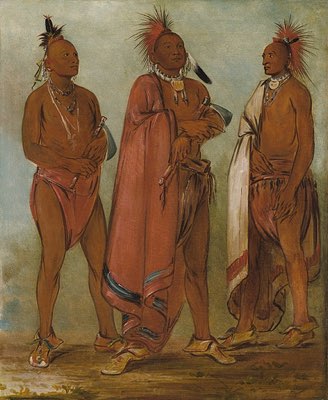
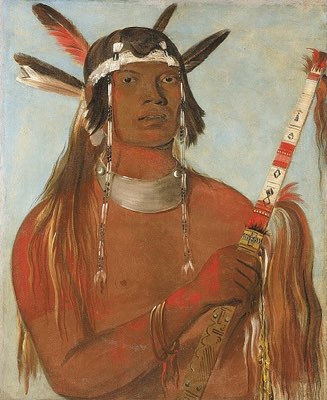
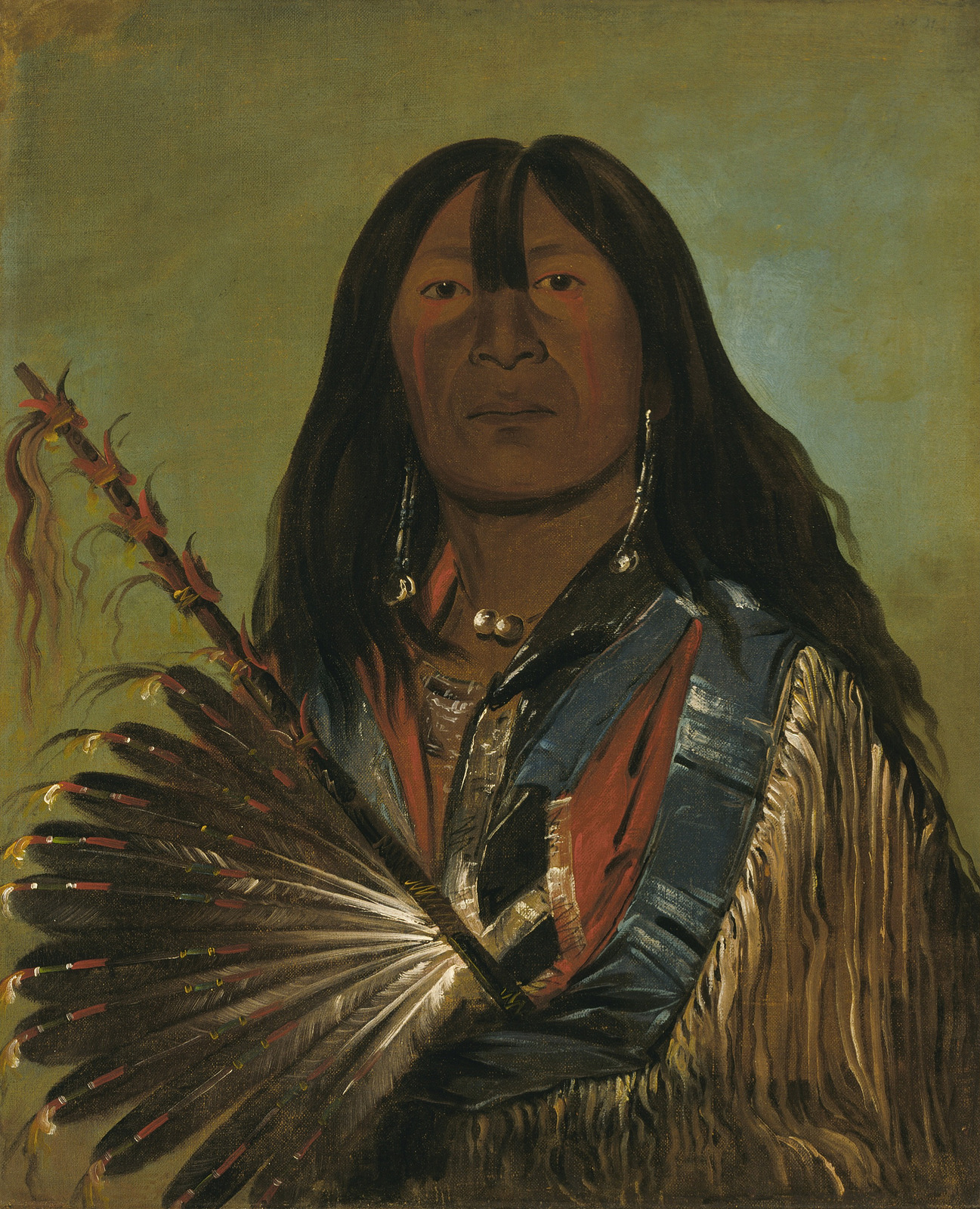
Shón-ka, The Dog, Chief of the Bad Arrow Points Band
George Catlin (born Wilkes-Barre, PA 1796-died Jersey City, NJ 1872)
1832
- Medium
- oil on canvas
- Classification
- Paintings
- Dimensions
- 29 x 24 in. (73.7 x 60.9 cm)
- Culture
- Indians of North America
- Museum
- Smithsonian Institution, Smithsonian American Art Museum, Painting and Sculpture
- Credit line
- Smithsonian American Art Museum, Gift of Mrs. Joseph Harrison, Jr.
- Rights
- CC0 (Smithsonian Open Access), as the museum states it.
- Who can see it
- Tweens profiles and older: its subjects are known and suit older children. How works are placed
View at the Smithsonian Institution
About this work
Little Bear, Steep Wind, and the Dog, who sat for George Catlin during his 1832 Missouri River trip, provided him with a story that dramatized the power of his painterly “medicine.” While Catlin was working on Little Bear’s portrait, a three-quarter view that concealed nearly half his face, the Dog stopped by and observed that Little Bear was “but half a man.” Catlin later described the tragedy sparked by the Dog’s insult: “[Little Bear’s] wife screamed; but it was too late. The gun was in his hand, and he sprang out of the door---both drew and simultaneously fired! The Dog fled uninjured; but the Little Bear lay weltering in his blood (strange to say!) with all that side of his face entirely shot away, which had been left out of the picture; and, according to the prediction of the Dog, ‘good for nothing;’ carrying away one half of the jaws, and the flesh from the nostrils and corner of the mouth, to the ear, including one eye, and leaving the jugular vein entirely exposed.” (Catlin, Letters and Notes, vol. 2, no. 55, 1841; reprint 1973)