Window mode follows your eyes with your camera, in this browser only: no picture or position leaves your device.
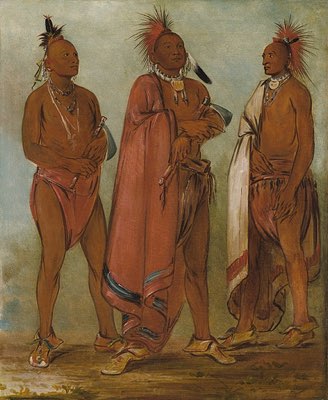
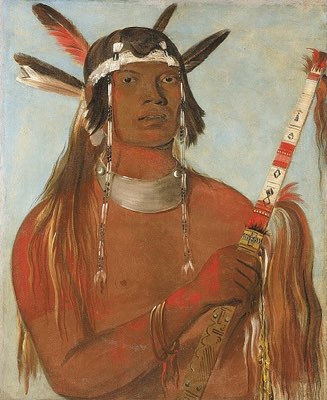
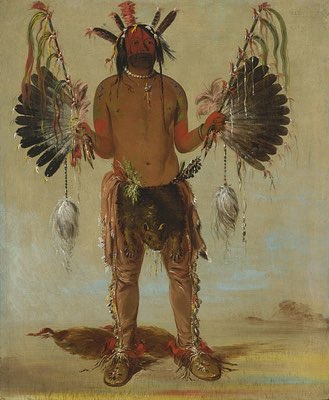
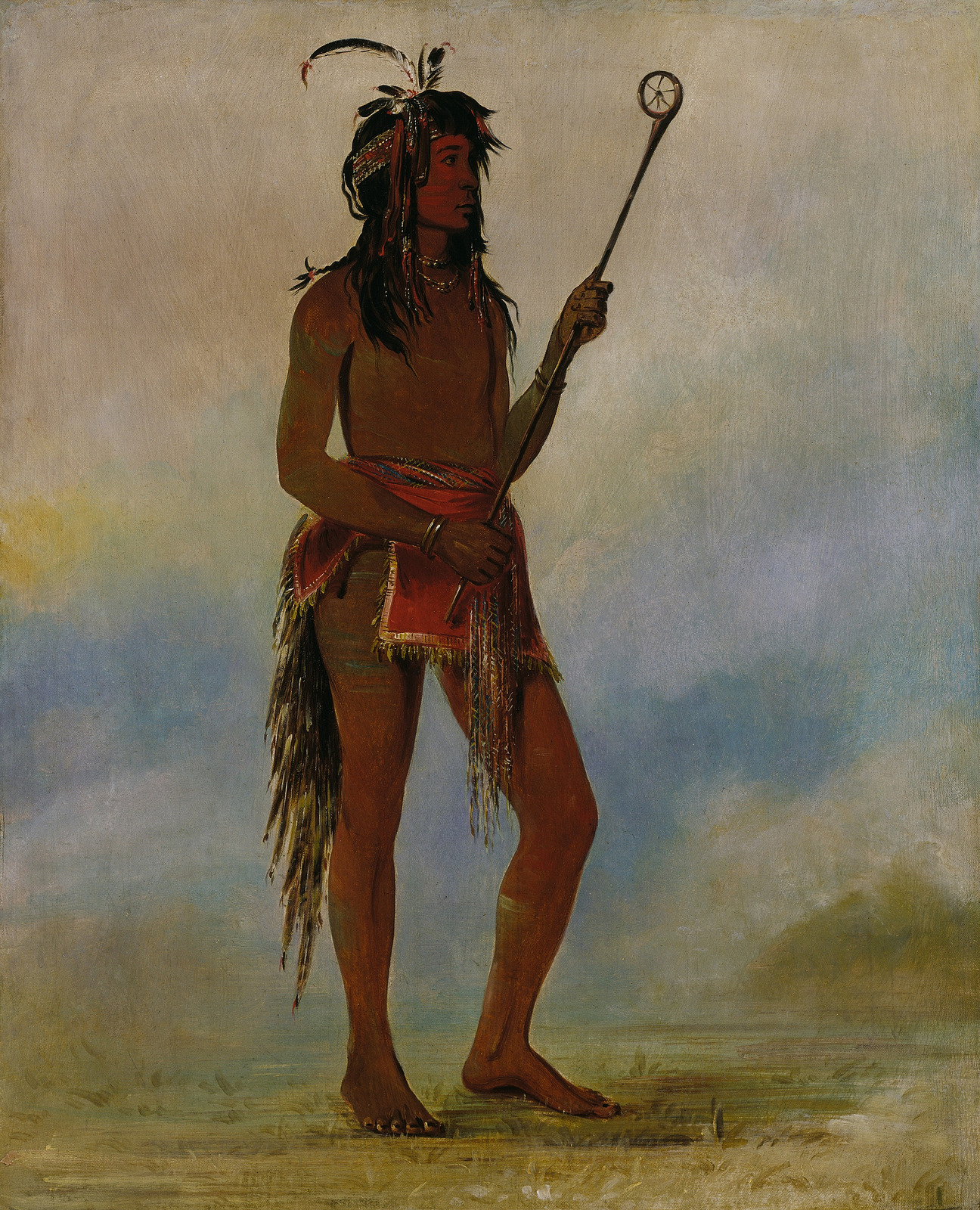
Ah-nó-je-nahge, He Who Stands on Both Sides, a Distinguished Ball Player
George Catlin (born Wilkes-Barre, PA 1796-died Jersey City, NJ 1872)
1835
- Medium
- oil on canvas
- Classification
- Paintings
- Dimensions
- 29 x 24 in. (73.7 x 60.9 cm)
- Culture
- Indians of North America
- Museum
- Smithsonian Institution, Smithsonian American Art Museum, Painting and Sculpture
- Credit line
- Smithsonian American Art Museum, Gift of Mrs. Joseph Harrison, Jr.
- Rights
- CC0 (Smithsonian Open Access), as the museum states it.
- Who can see it
- Tweens profiles and older: its subjects are known and suit older children. How works are placed
View at the Smithsonian Institution
About this work
“The two most distinguished ball-players in the Sioux tribe [see also 1985.66.75] . . . Both of these young men stood to me for their portraits, in the dresses precisely in which they are painted; with their ball-sticks in their hands, and in the attitudes of the play. We have had several very spirited plays here within the past few days; and each of these young men came from the ball-play ground to my painting-room, in the dress in which they had just struggled in the play.” George Catlin saw Sioux playing lacrosse at Fort Snelling in present-day Minnesota. The Sioux, he reported, played the game in much the same way as the Choctaw, the chief differences being the composition of their “tails,” which were made of quills rather than horsehair, and their use of one stick instead of two. (Catlin, <i>Letters and Notes</i>, vol. 2, no. 50, 1841; reprint 1973)