Window mode follows your eyes with your camera, in this browser only: no picture or position leaves your device.
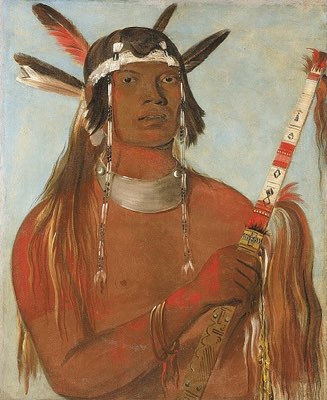
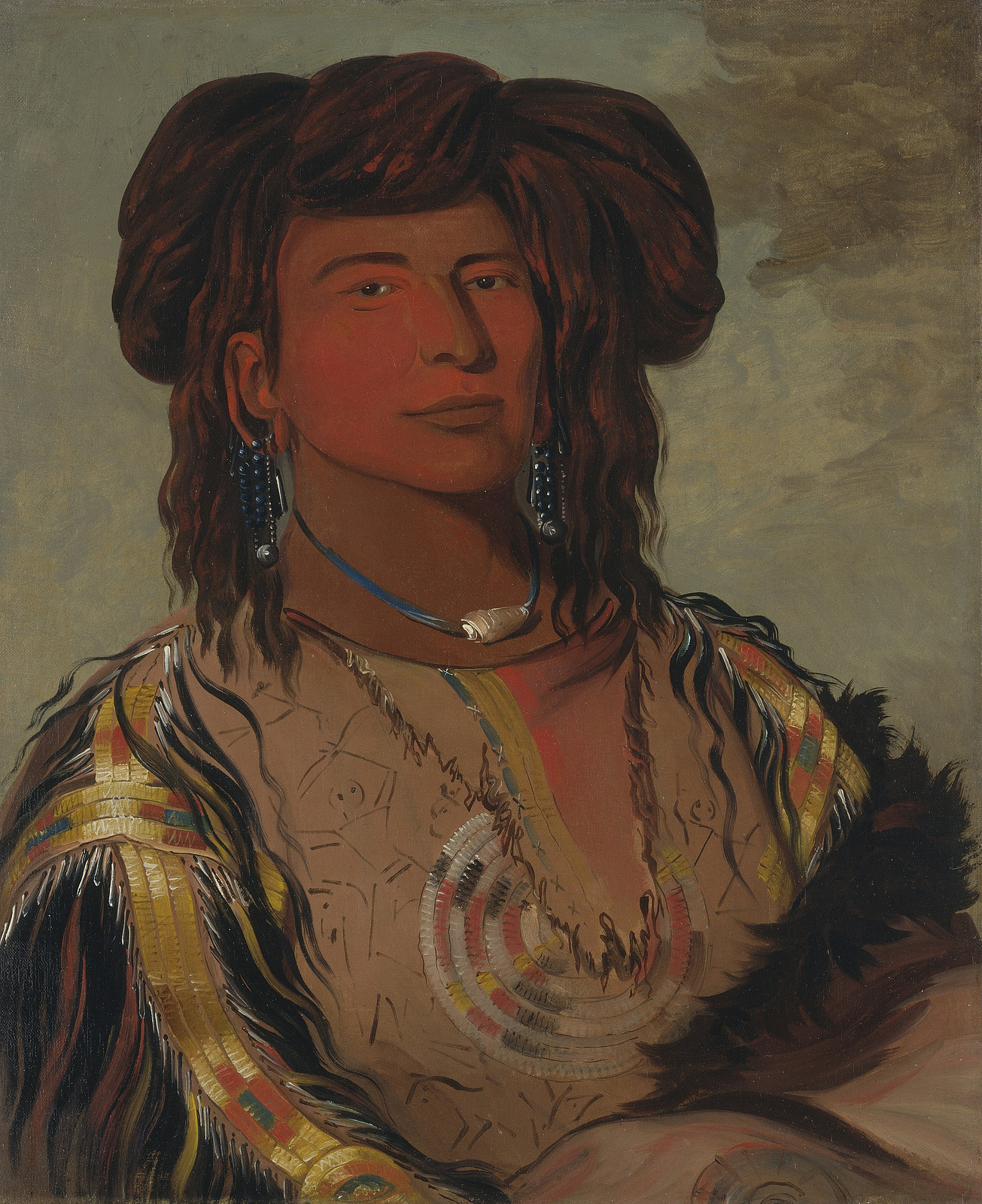
Ha-wón-je-tah, One Horn, Head Chief of the Miniconjou Tribe
George Catlin (born Wilkes-Barre, PA 1796-died Jersey City, NJ 1872)
1832
- Medium
- oil on canvas
- Classification
- Paintings
- Dimensions
- 29 x 24 in. (73.7 x 60.9 cm)
- Culture
- Indians of North America
- Museum
- Smithsonian Institution, Smithsonian American Art Museum, Painting and Sculpture
- Credit line
- Smithsonian American Art Museum, Gift of Mrs. Joseph Harrison, Jr.
- Rights
- CC0 (Smithsonian Open Access), as the museum states it.
- Who can see it
- Tweens profiles and older: its subjects are known and suit older children. How works are placed
View at the Smithsonian Institution
About this work
Among the first portraits George Catlin painted on his voyage up the Missouri River in 1832 were those of the Sioux encamped at Fort Pierre. Catlin described Ha-wón-je-tah as “A middle-aged man, of middling stature, with a noble countenance, and a figure almost equalling the Apollo, and I painted his portrait . . . He told me he took the name of ‘One Horn’ (or shell) from a simple small shell that was hanging on his neck, which descended to him from his father, and which, he said, he valued more than anything he possessed . . . This extraordinary man, before he was raised to the dignity of chief, was the renowned of his tribe for his athletic achievements. In the chase he was foremost; he could run down a buffalo, which he often had done, on his own legs, and drive his arrow to the heart. He was the fleetest in the tribe; and in the races he had run, he had always taken the prize. It was proverbial in his tribe, that Ha-won-je-tah's bow never was drawn in vain, and his wigwam was abundantly furnished with scalps that he had taken from his enemies' heads in battle.” (Catlin, Letters and Notes, vol. 1, nos. 26, 27, 1841, reprint 1973; Truettner, The Natural Man Observed, 1979)