Window mode follows your eyes with your camera, in this browser only: no picture or position leaves your device.
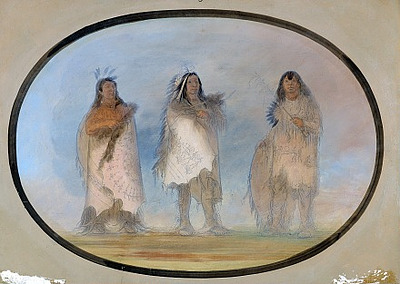
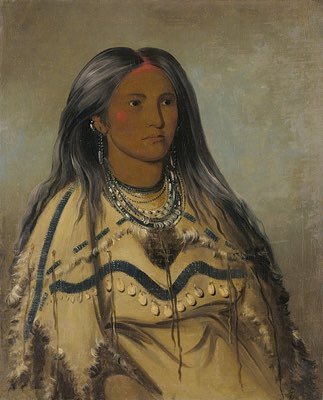
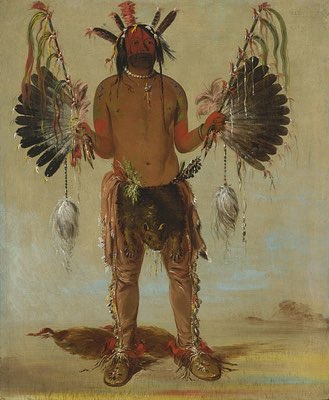
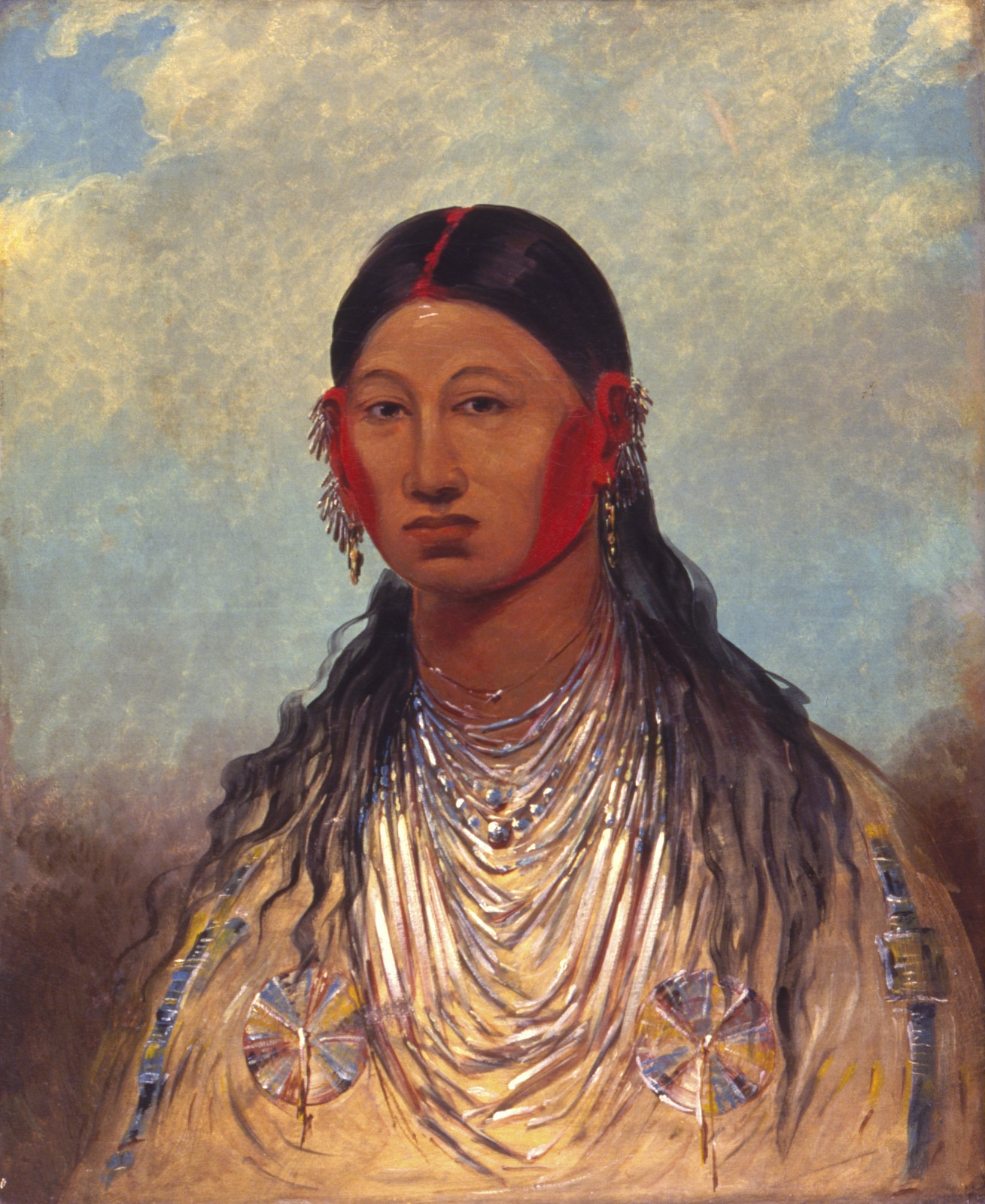
Koon-za-ya-me, Female War Eagle
George Catlin (born Wilkes-Barre, PA 1796-died Jersey City, NJ 1872)
1844
- Medium
- oil on canvas
- Classification
- Paintings
- Dimensions
- 29 x 24 in. (73.7 x 60.9 cm)
- Culture
- Indians of North America
- Museum
- Smithsonian Institution, Smithsonian American Art Museum, Painting and Sculpture
- Credit line
- Smithsonian American Art Museum, Gift of Mrs. Joseph Harrison, Jr.
- Rights
- CC0 (Smithsonian Open Access), as the museum states it.
- Who can see it
- Teens profiles and older: its subject is for older viewers (war, death, the Passion, drink or the like). How works are placed
View at the Smithsonian Institution
About this work
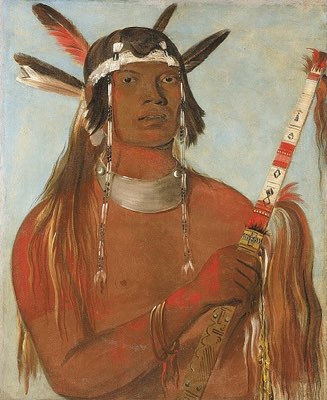
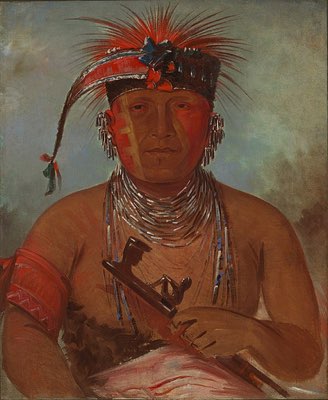
Strutting Pigeon, Pigeon on the Wing, and Female War Eagle were among the fourteen Iowa who joined George Catlin in London in the 1840s, during the artist’s trip to Europe to exhibit and promote his Indian Gallery. Catlin eventually added the visiting Indians to his show, in which they performed dances and songs. His addition of Native Americans was controversial from the start. Charged with exploiting simple, innocent people in an alien and overwhelming environment, Catlin responded that he was actually rescuing Indians brought overseas by unscrupulous promoters. But his constant addition of new acts, including demonstrations of riding, shooting, and tipi-building in London’s Vauxhall Gardens, undermined his credibility. These portraits of Iowa women were probably painted in London in 1844. (Gurney and Heyman, eds., George Catlin and His Indian Gallery, 2002)