Window mode follows your eyes with your camera, in this browser only: no picture or position leaves your device.
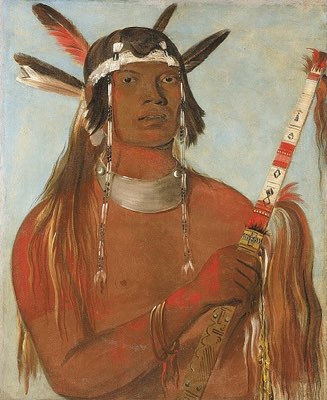
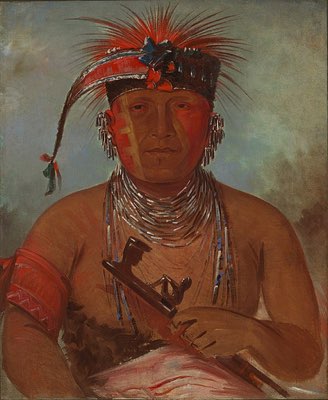
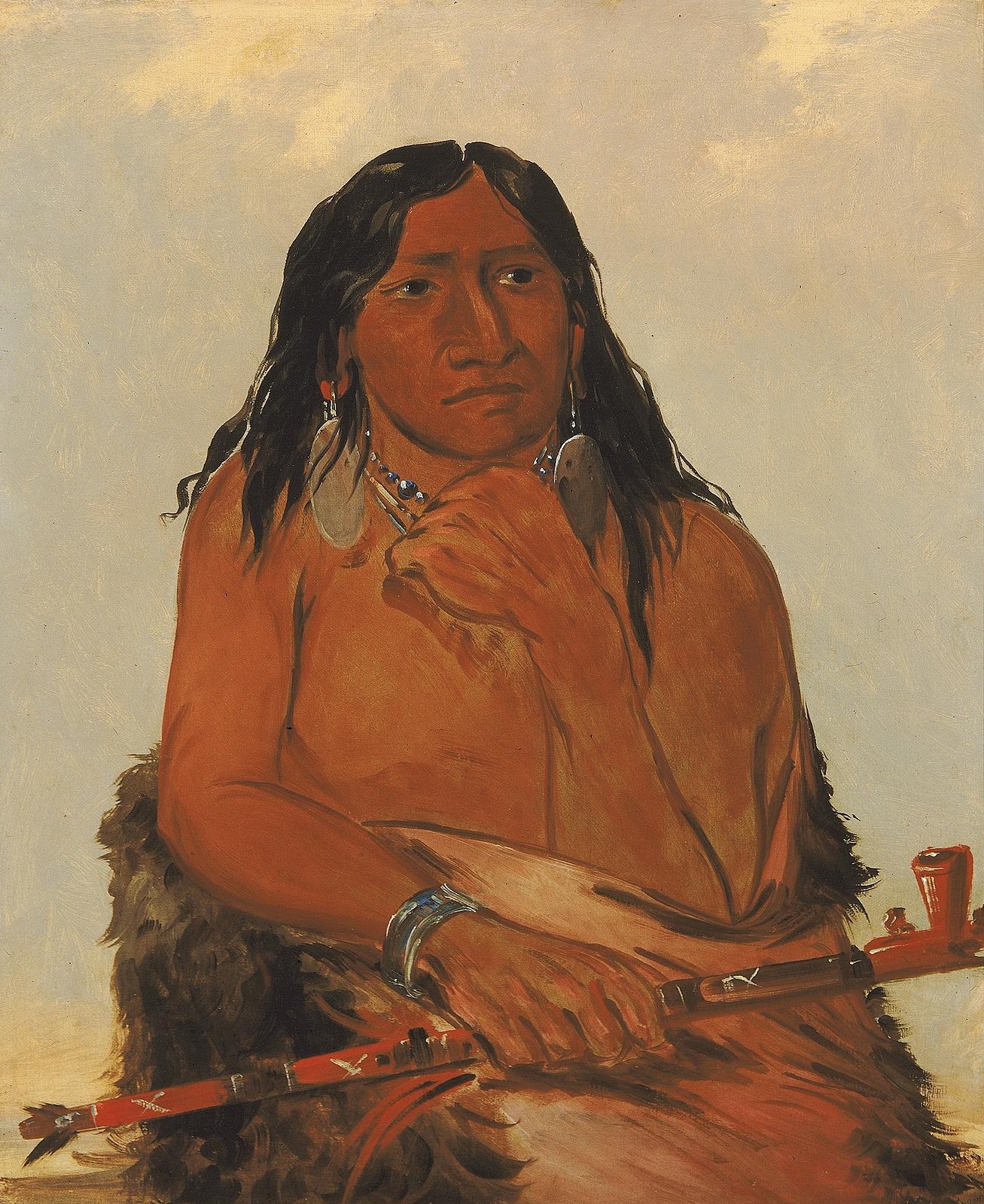
Is-sa-wáh-tám-ah, Wolf Tied with Hair, a Chief
George Catlin (born Wilkes-Barre, PA 1796-died Jersey City, NJ 1872)
1834
- Medium
- oil on canvas
- Classification
- Paintings
- Dimensions
- 29 x 24 in (73.7 x 60.9 cm)
- Culture
- Indians of North America
- Museum
- Smithsonian Institution, Smithsonian American Art Museum, Painting and Sculpture
- Credit line
- Smithsonian American Art Museum, Gift of Mrs. Joseph Harrison, Jr.
- Rights
- CC0 (Smithsonian Open Access), as the museum states it.
- Who can see it
- Tweens profiles and older: its subjects are known and suit older children. How works are placed
View at the Smithsonian Institution
About this work
George Catlin described the subject as holding a “pipe in his hand,” and went on to detail the intricate ritual of pipe-smoking among Native Americans: “As smoking is a luxury so highly valued by the Indians, they have bestowed much pains, and not a little ingenuity, to the construction of their pipes. Of these I have procured a collection of several hundreds, and have given facsimile outlines of a number of the most curious. The bowls of these are generally made of the red steatite, or ‘pipe-stone’ (as it is more familiarly called in this country), and many of them designed and carved with much taste and skill, with figures and groups in alto relievo, standing or reclining upon them.” Catlin painted this image of Wolf Tied with Hair at a Comanche village in 1834. (Catlin, Letters and Notes, vol. 1, no. 29, 1841, reprint 1973, and 1848 Catalogue, Catlin’s Indian Gallery, SAAM online exhibition)