Window mode follows your eyes with your camera, in this browser only: no picture or position leaves your device.
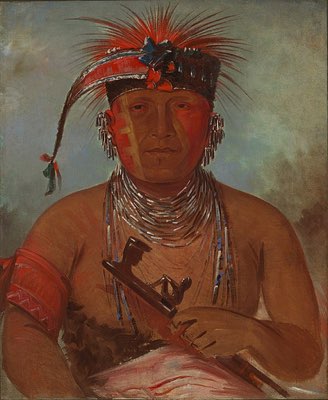
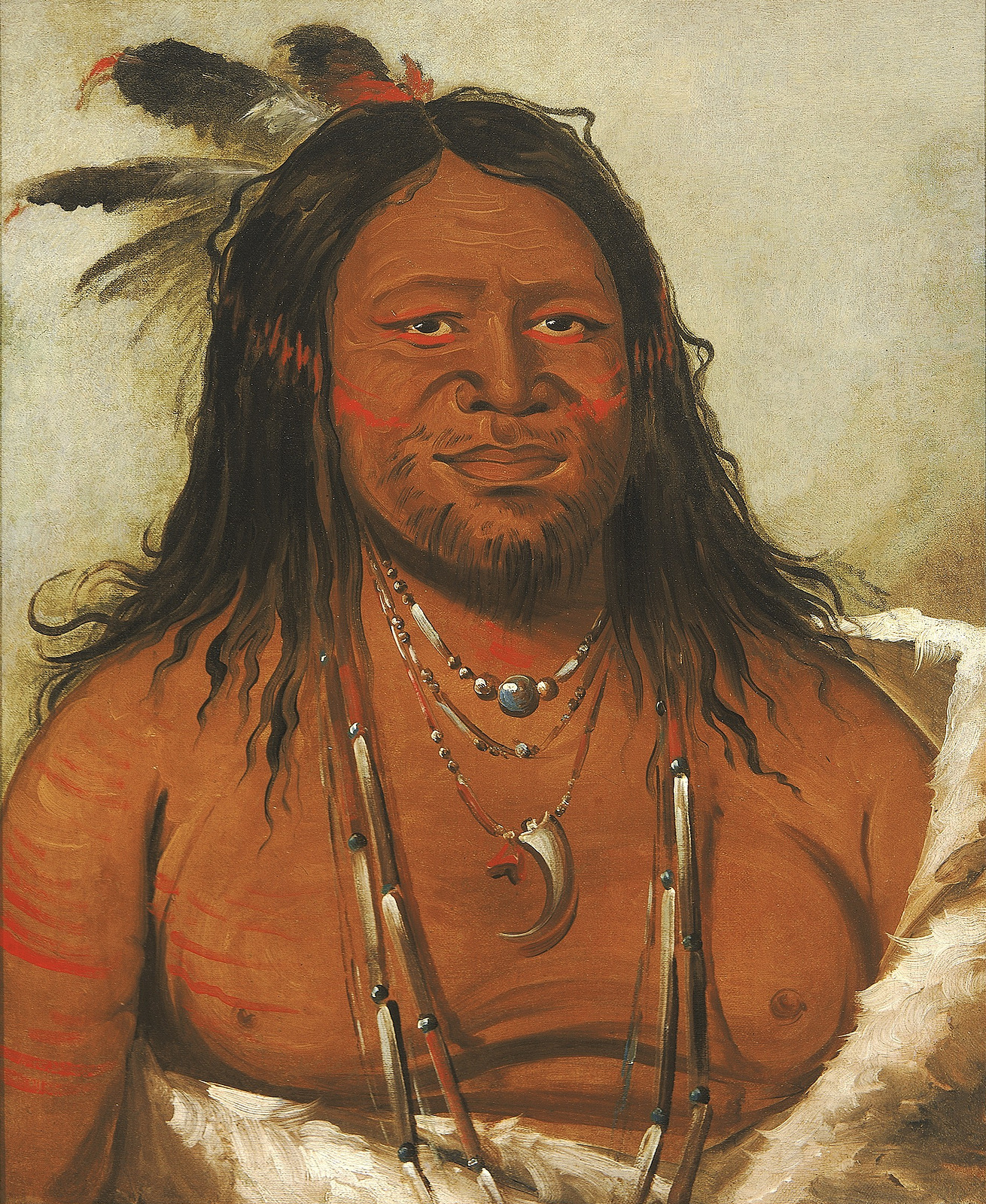
Ta-wáh-que-nah, Mountain of Rocks, Second Chief of the Tribe
George Catlin (born Wilkes-Barre, PA 1796-died Jersey City, NJ 1872)
1834
- Medium
- oil on canvas
- Classification
- Paintings
- Dimensions
- 29 x 24 in. (73.7 x 60.9 cm)
- Culture
- Indians of North America
- Museum
- Smithsonian Institution, Smithsonian American Art Museum, Painting and Sculpture
- Credit line
- Smithsonian American Art Museum, Gift of Mrs. Joseph Harrison, Jr.
- Rights
- CC0 (Smithsonian Open Access), as the museum states it.
- Who can see it
- Tweens profiles and older: its subjects are known and suit older children. How works are placed
View at the Smithsonian Institution
About this work
In 1834, George Catlin accompanied a regiment of United States Dragoons to visit the territory of the Comanche, Kiowa, and Wichita. Catlin later remembered being received by Comanche chief Mountain of Rocks “with great kindness at his village.” He described the chief as “the largest and fattest Indian I ever saw . . . A perfect personation of Jack Falstaff, in size and in figure, with an African face, and a beard on his chin of two or three inches in length. His name . . . he got from having conducted a large party of Camanchees through a secret and subterraneous passage, entirely through the mountain of granite rocks, which lies back of their village; thereby saving their lives from their more powerful enemy.” Ta-wáh-que-nah sat for his portrait at a Comanche village in 1834. (Catlin, Letters and Notes, vol. 2, no. 42, 1841, reprint 1973, and 1848 Catalogue, Catlin’s Indian Gallery, SAAM online exhibition)