Window mode follows your eyes with your camera, in this browser only: no picture or position leaves your device.
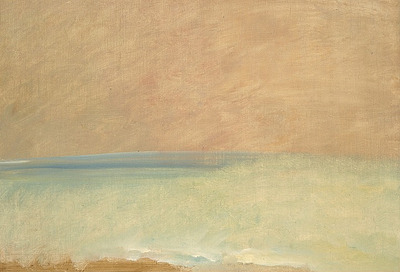
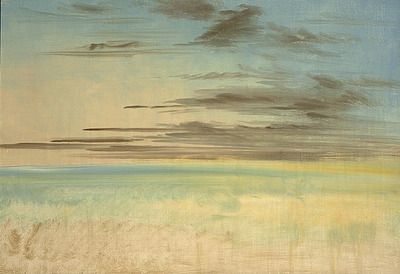
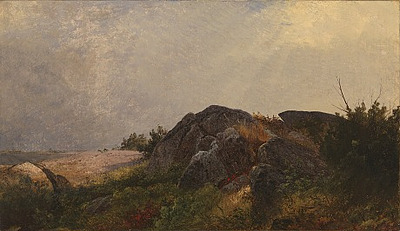
White Sand Bluffs, on Santa Rosa Island, Near Pensacola
George Catlin (born Wilkes-Barre, PA 1796-died Jersey City, NJ 1872)
1834-1835
- Medium
- oil on canvas
- Classification
- Paintings
- Dimensions
- 19 1/2 x 27 1/2 in. (49.6 x 69.9 cm)
- Culture
- Indians of North America
- Museum
- Smithsonian Institution, Smithsonian American Art Museum, Painting and Sculpture
- Credit line
- Smithsonian American Art Museum, Gift of Mrs. Joseph Harrison, Jr.
- Rights
- CC0 (Smithsonian Open Access), as the museum states it.
- Who can see it
- Tweens profiles and older: its subjects are known and suit older children. How works are placed
View at the Smithsonian Institution
About this work
George Catlin painted this scene in the winter of 1834-35, during his visit to Florida. “This sketch,” he later wrote, “was made on Santa Rosa Island, within a few miles of Pensacola . . . The hills of sand are as purely white as snow, and fifty or sixty feet in height, and supporting on their tops, and in their sides, clusters of magnolia bushes---of myrtle---of palmetto and heather, all of which are evergreens, forming the most vivid contrast with the snow-white sand in which they are growing. On the beach a family of Seminole Indians are encamped, catching and drying red fish, their chief article of food.” (Catlin, Letters and Notes, vol. 2, no. 36, 1841, reprint 1973; Truettner, The Natural Man Observed, 1979)