Window mode follows your eyes with your camera, in this browser only: no picture or position leaves your device.
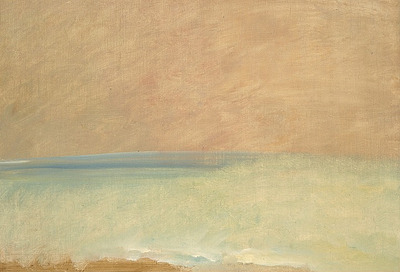
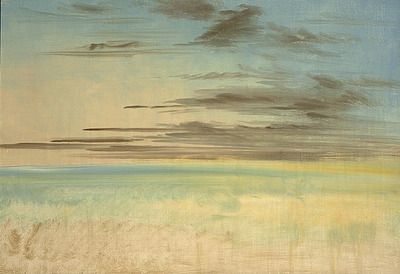
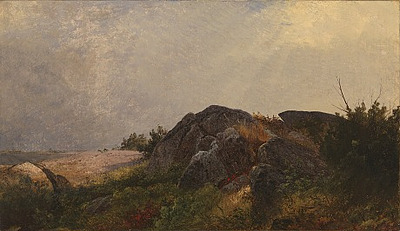
View on the Wisconsin River, Winnebago Shooting Ducks
George Catlin (born Wilkes-Barre, PA 1796-died Jersey City, NJ 1872)
1836-1837
- Medium
- oil on canvas
- Classification
- Paintings
- Dimensions
- 19 1/2 x 27 1/2 in. (49.6 x 70.0 cm)
- Culture
- Indians of North America
- Museum
- Smithsonian Institution, Smithsonian American Art Museum, Painting and Sculpture
- Credit line
- Smithsonian American Art Museum, Gift of Mrs. Joseph Harrison, Jr.
- Rights
- CC0 (Smithsonian Open Access), as the museum states it.
- Who can see it
- Teens profiles and older: its subject is for older viewers (war, death, the Passion, drink or the like). How works are placed
View at the Smithsonian Institution
About this work
In the summer of 1836, George Catlin made his final journey to the West, to visit the sacred Pipestone Quarry in present-day Minnesota, where Plains Indians harvested the red steatite to make their pipe bowls. He journeyed west by steamer from New York through Sault Ste. Marie and Green Bay, paddling down the Wisconsin River, where he sketched this image of Winnebago Indians hunting ducks. Although familiar with the West’s stunning landscape since beginning his travels in 1830, Catlin found the country’s beauty---and his enthusiasm for it---inexhaustible. He later described the Wisconsin River as what “the French most appropriately denominate ‘La belle riviere,’ [it] may certainly vie with any other on the Continent . . . for its beautifully skirted banks and prairie bluffs. It may justly be said to be equal to the Mississippi . . .” (Catlin, Letters and Notes, vol. 2, no. 54, 1841, reprint 1973; Truettner, The Natural Man Observed, 1979)