Window mode follows your eyes with your camera, in this browser only: no picture or position leaves your device.
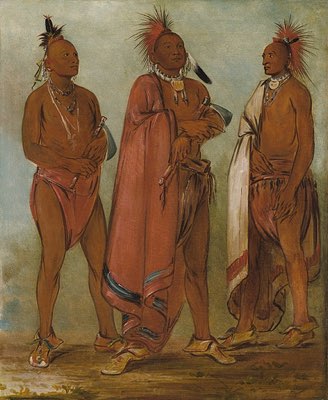
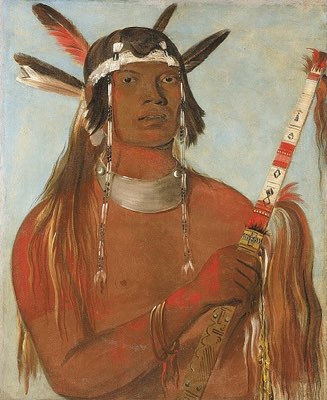
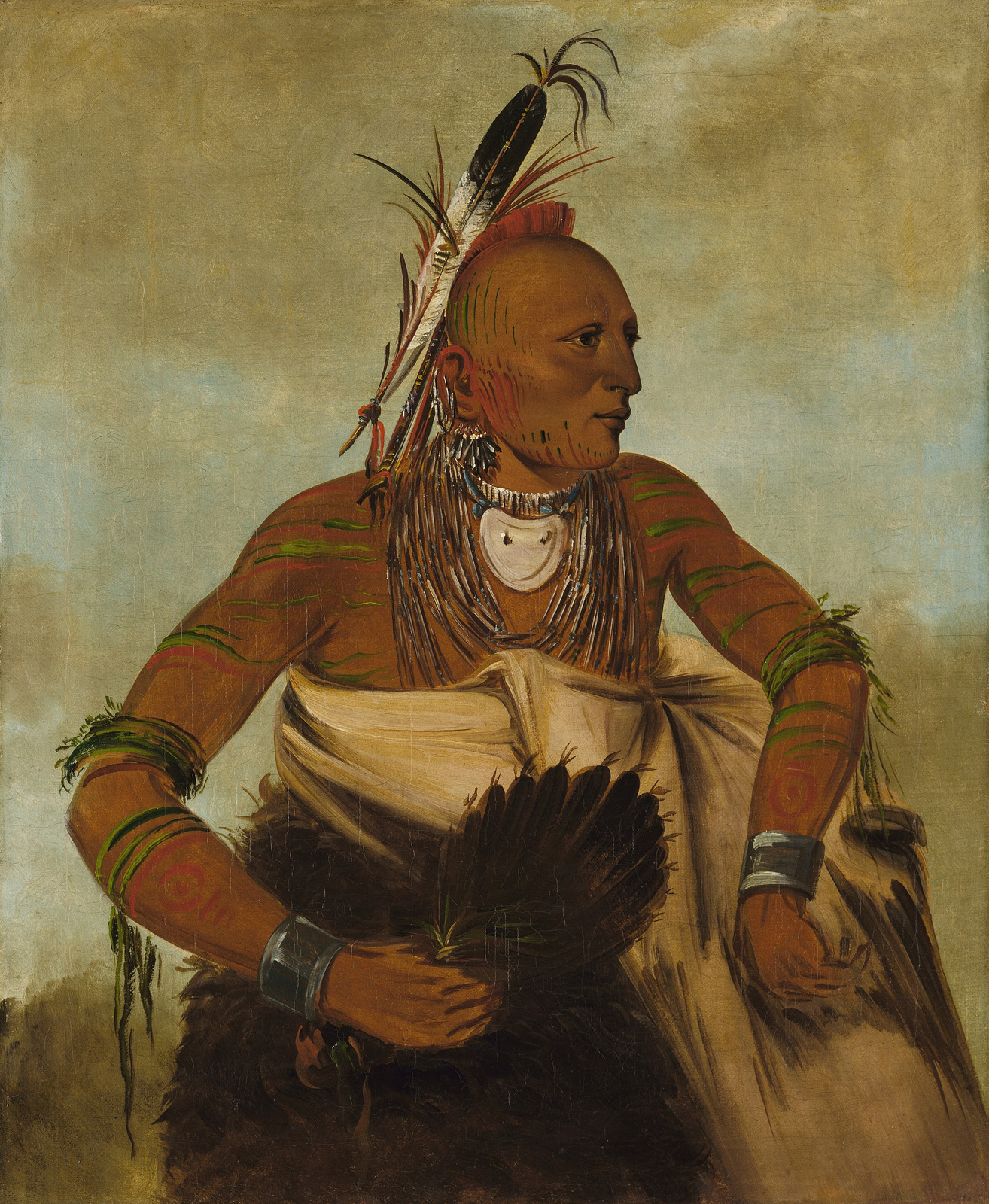
Wa-ho-béck-ee, a Handsome Brave
George Catlin (born Wilkes-Barre, PA 1796-died Jersey City, NJ 1872)
1834
- Medium
- oil on canvas
- Classification
- Paintings
- Dimensions
- 29 x 24 in. (73.7 x 60.9 cm)
- Culture
- Osage Indians
- Museum
- Smithsonian Institution, Smithsonian American Art Museum, Painting and Sculpture
- Credit line
- Smithsonian American Art Museum, Gift of Mrs. Joseph Harrison, Jr.
- Rights
- CC0 (Smithsonian Open Access), as the museum states it.
- Who can see it
- Tweens profiles and older: its subjects are known and suit older children. How works are placed
View at the Smithsonian Institution
About this work
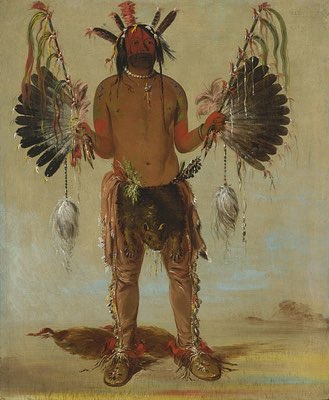
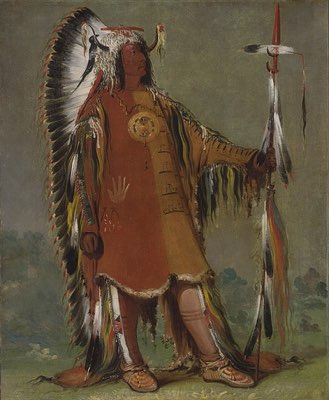
This member of the Osage tribe sat for his portrait in characteristic tribal markings, including a painted and shaved head as well as a painted upper body. George Catlin described Wa-ho-béck-ee as “a brave; said to be the handsomest man in the nation; with a profusion of wampum on his neck, and a fan in his hand made of the eagle's tail.” Wa-ho-béck-ee sat for his portrait at Fort Gibson (in present-day Oklahoma) in 1834. (Catlin, 1848 Catalogue, Catlin’s Indian Gallery, SAAM online exhibition)