Window mode follows your eyes with your camera, in this browser only: no picture or position leaves your device.
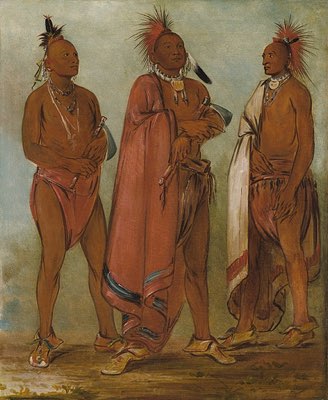
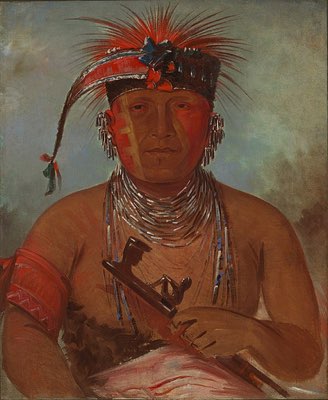
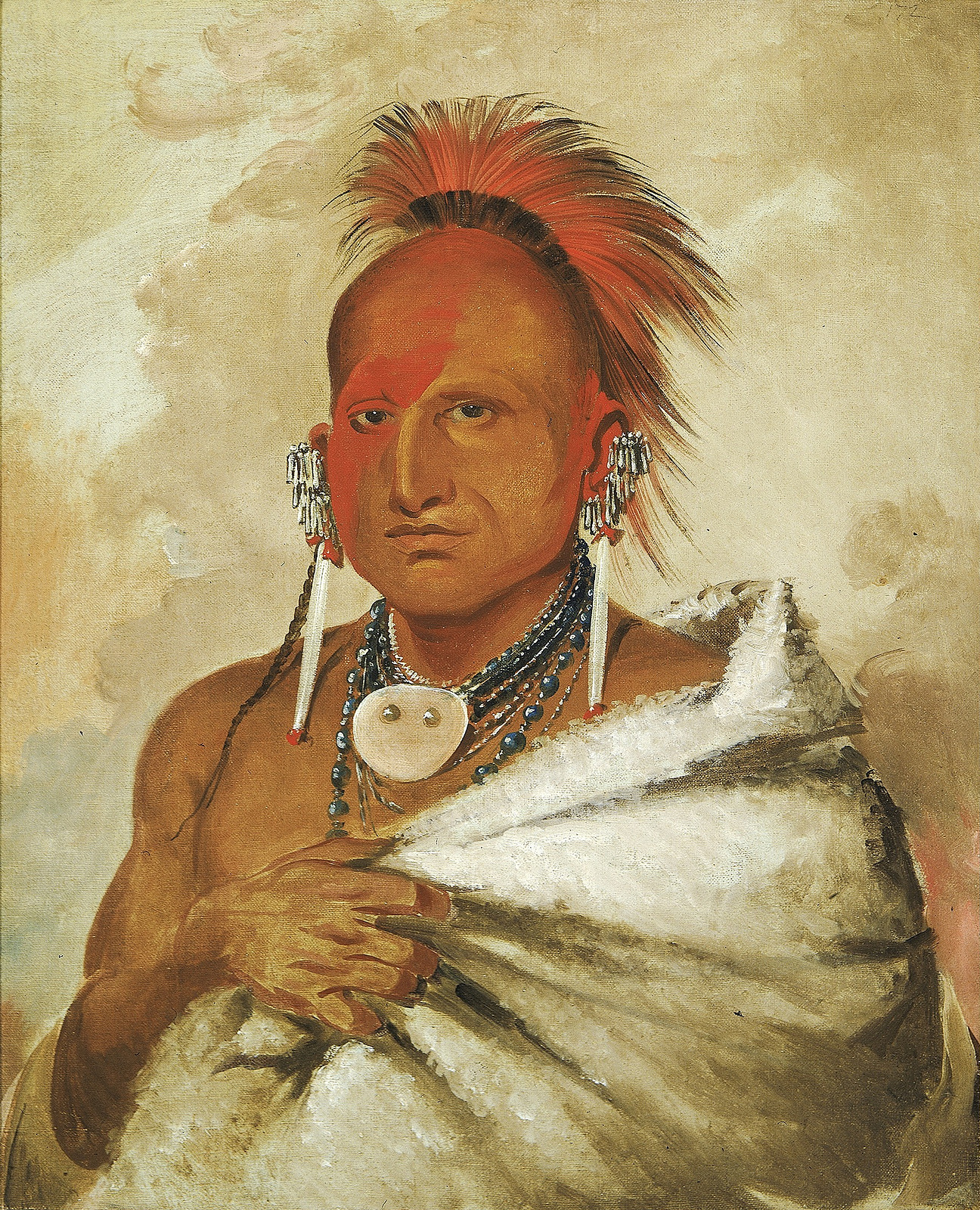
O-rón-gás-see, Bear-catcher, a Celebrated Warrior
George Catlin (born Wilkes-Barre, PA 1796-died Jersey City, NJ 1872)
1832
- Medium
- oil on canvas
- Classification
- Paintings
- Dimensions
- 29 x 24 in. (73.7 x 60.9 cm)
- Culture
- Indians of North America
- Museum
- Smithsonian Institution, Smithsonian American Art Museum, Painting and Sculpture
- Credit line
- Smithsonian American Art Museum, Gift of Mrs. Joseph Harrison, Jr.
- Rights
- CC0 (Smithsonian Open Access), as the museum states it.
- Who can see it
- Teens profiles and older: its subject is for older viewers (war, death, the Passion, drink or the like). How works are placed
View at the Smithsonian Institution
About this work
George Catlin probably painted this image of Bear-catcher, a warrior of the Kansas/Kaw tribe, at Fort Leavenworth (in today’s Kansas) in 1832. Catlin later described the warrior as having “hair . . . cut as close to the head as possible, except a tuft the size of the palm of the hand, on the crown of the head, which is left of two inches in length: and in the centre of which is fastened a beautiful crest made of the hair of the deer's tail (dyed red) and horsehair, and oftentimes surmounted with the war-eagle's quill.” (Catlin, Letters and Notes, vol. 2, no. 34, 1841; reprint 1973)