Window mode follows your eyes with your camera, in this browser only: no picture or position leaves your device.
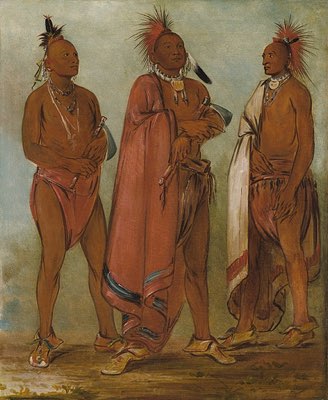
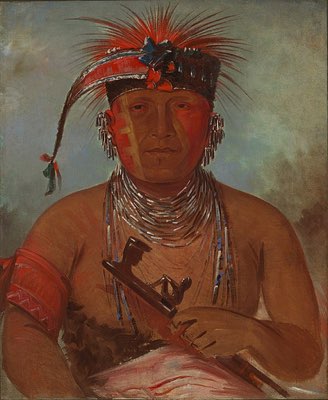
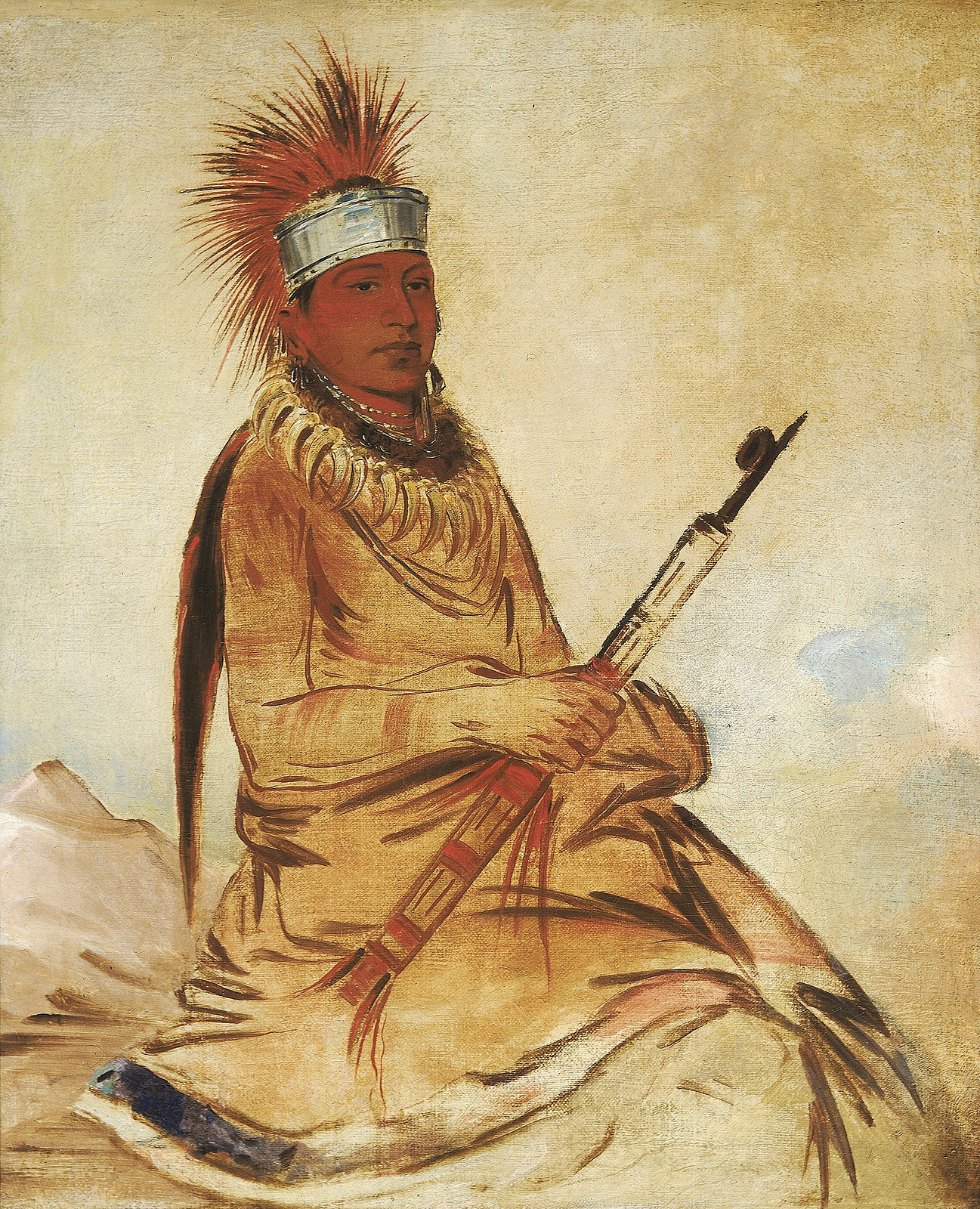
W'y-ee-yogh, Man of Sense, a Brave
George Catlin (born Wilkes-Barre, PA 1796-died Jersey City, NJ 1872)
1832
- Medium
- oil on canvas
- Classification
- Paintings
- Dimensions
- 29 x 24 in. (73.7 x 60.9 cm)
- Culture
- Indians of North America
- Museum
- Smithsonian Institution, Smithsonian American Art Museum, Painting and Sculpture
- Credit line
- Smithsonian American Art Museum, Gift of Mrs. Joseph Harrison, Jr.
- Rights
- CC0 (Smithsonian Open Access), as the museum states it.
- Who can see it
- Tweens profiles and older: its subjects are known and suit older children. How works are placed
View at the Smithsonian Institution
About this work
George Catlin described Man of Sense as “another of this tribe [Iowa], much distinguished for his bravery and early warlike achievements. His head was dressed with a broad silver band passing around it, and decked out with the crest of horsehair.” Catlin further described the subject as having “a handsome pipe in his hand, and bears' claw necklace on his neck.” He probably painted this work at Fort Leavenworth (in today’s Kansas) in 1832. (Truettner, The Natural Man Observed, 1979)