Window mode follows your eyes with your camera, in this browser only: no picture or position leaves your device.
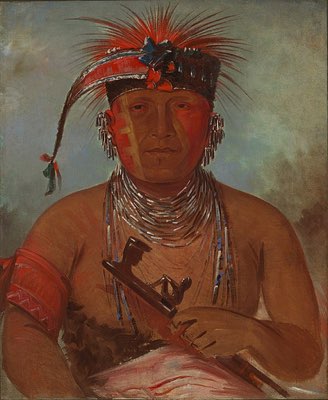
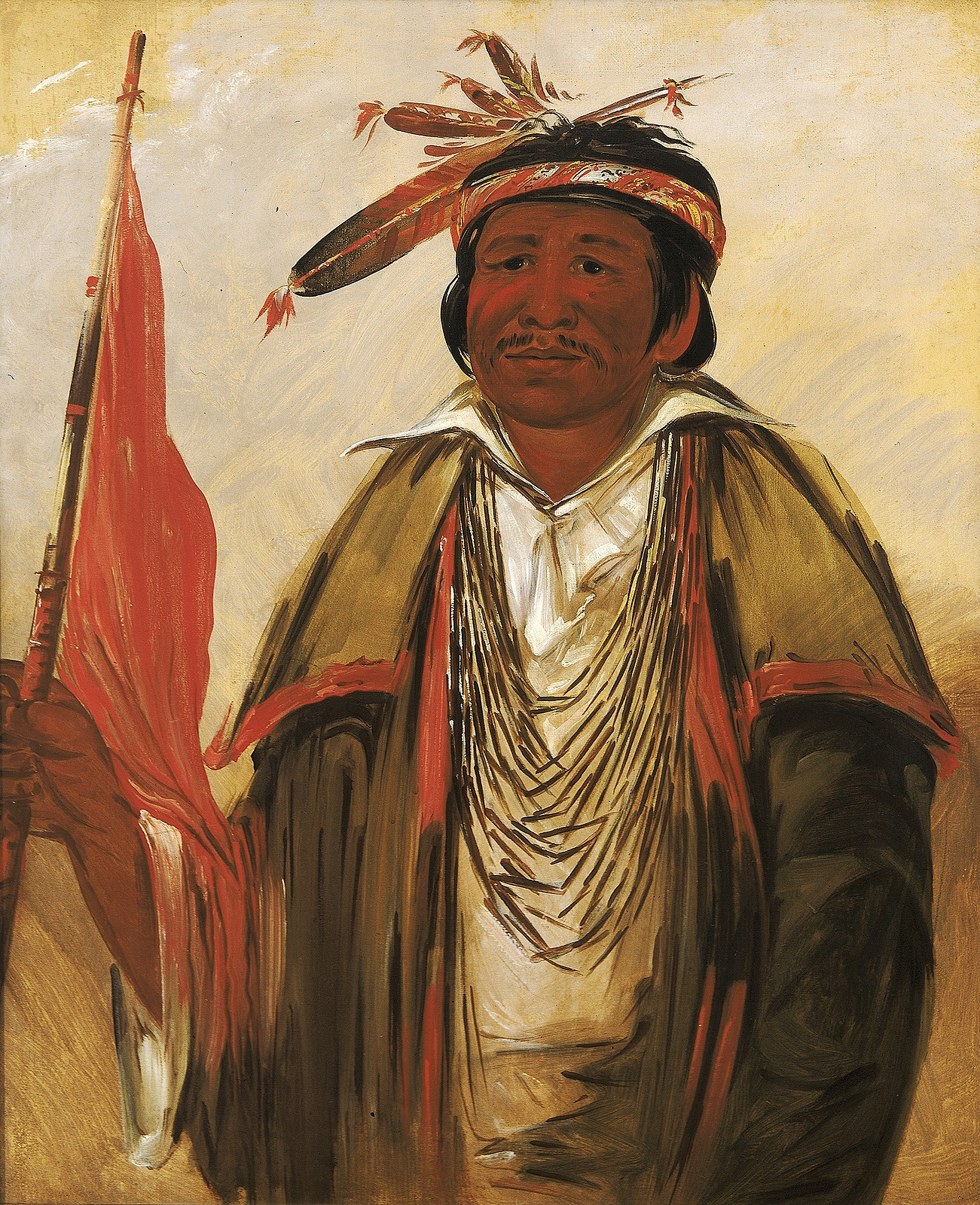
Ke-chím-qua, Big Bear
George Catlin (born Wilkes-Barre, PA 1796-died Jersey City, NJ 1872)
1830
- Medium
- oil on canvas
- Classification
- Paintings
- Dimensions
- 29 x 24 in. (73.7 x 60.9 cm)
- Culture
- Indians of North America
- Museum
- Smithsonian Institution, Smithsonian American Art Museum, Painting and Sculpture
- Credit line
- Smithsonian American Art Museum, Gift of Mrs. Joseph Harrison, Jr.
- Rights
- CC0 (Smithsonian Open Access), as the museum states it.
- Who can see it
- Tweens profiles and older: its subjects are known and suit older children. How works are placed
View at the Smithsonian Institution
About this work
George Catlin probably painted this portrait of Ke-chím-qua, a member of the Kickapoo tribe, at Fort Leavenworth (in today’s Kansas) in 1830, the same year he took portraits of the Delaware, Kaskaskia, Peoria, and other tribes. Catlin’s efforts from 1830 are generally considered his first attempts at Indian portraits in the West. In his 1848 Catalogue, where he offered notes and descriptions of all the paintings in his Indian Gallery, Catlin described Ke-chím-qua as having a “wampum on his neck, and red flag in his hand, the symbol of war or ‘blood.’” (Truettner, The Natural Man Observed, 1979)