Window mode follows your eyes with your camera, in this browser only: no picture or position leaves your device.
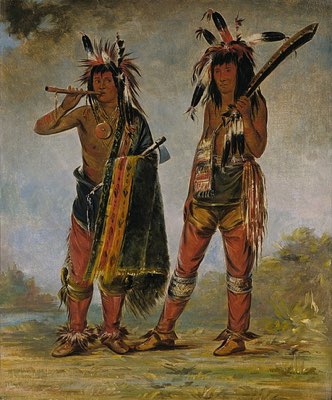
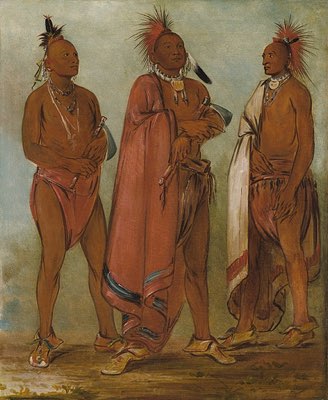
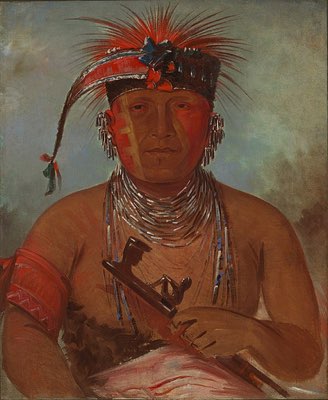
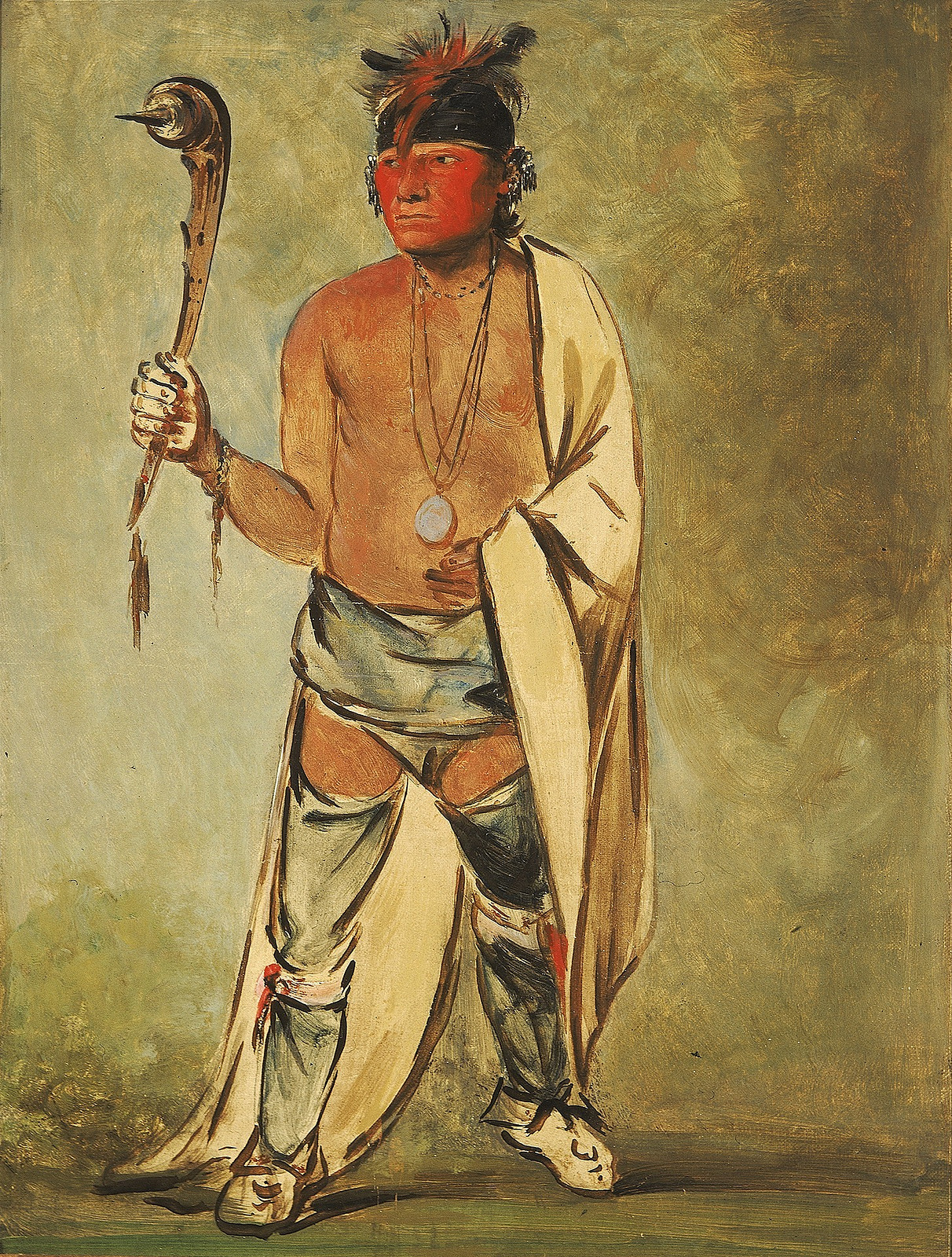
Naugh-háigh-hee-kaw, He Who Moistens the Wood
George Catlin (born Wilkes-Barre, PA 1796-died Jersey City, NJ 1872)
1828
- Medium
- oil on canvas
- Classification
- Paintings
- Dimensions
- 18 1/2 x 14 in. (47.0 x 35.7 cm)
- Culture
- Indians of North America
- Museum
- Smithsonian Institution, Smithsonian American Art Museum, Painting and Sculpture
- Credit line
- Smithsonian American Art Museum, Gift of Mrs. Joseph Harrison, Jr.
- Rights
- CC0 (Smithsonian Open Access), as the museum states it.
- Who can see it
- Tweens profiles and older: its subjects are known and suit older children. How works are placed
View at the Smithsonian Institution
About this work
Before George Catlin began his extensive travels in the West, he spent time in eastern cities, where he often saw visiting delegations of Native Americans and painted their portraits. Nine members of a Winnebago delegation, including He Who Breaks the Bushes and He Who Moistens the Wood, sat for him in Washington, D.C., in 1828. Three years later, also in the capital, the artist painted Menominee and Seneca delegations, including a portrait of the Menominee Másh-kee-wet, whom the artist called in his 1848 Catalogue, a “great beau, or dandy.” In the late 1820s, Catlin was still a conventional portrait painter who was looking for, as he later wrote, “some branch or enterprise of the art, on which to devote a whole life-time of enthusiasm,” and he found his “enterprise” in the delegations of Indians who came east. He thought them “arrayed and equipped in all their classic beauty . . . exactly for the painter’s palette!” (Catlin, Letters and Notes , vol. 1, no. 1, 1841; reprint 1973)