Window mode follows your eyes with your camera, in this browser only: no picture or position leaves your device.
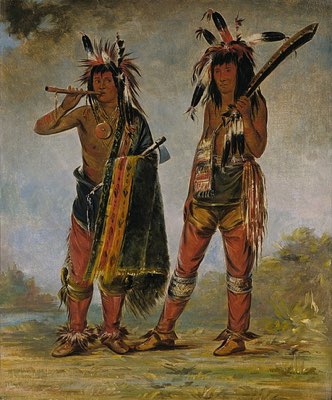
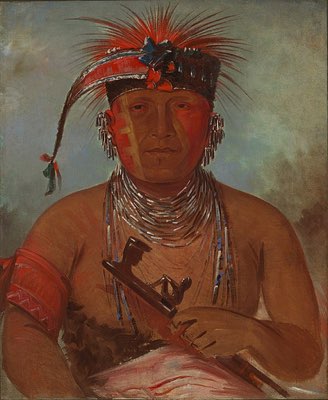
Span-e-o-née-kaw, The Spaniard
George Catlin (born Wilkes-Barre, PA 1796-died Jersey City, NJ 1872)
1828
- Medium
- oil on canvas
- Classification
- Paintings
- Dimensions
- 18 1/2 x 14 in. (47.0 x 35.7 cm)
- Culture
- Indians of North America
- Museum
- Smithsonian Institution, Smithsonian American Art Museum, Painting and Sculpture
- Credit line
- Smithsonian American Art Museum, Gift of Mrs. Joseph Harrison, Jr.
- Rights
- CC0 (Smithsonian Open Access), as the museum states it.
- Who can see it
- Tweens profiles and older: its subjects are known and suit older children. How works are placed
View at the Smithsonian Institution
About this work
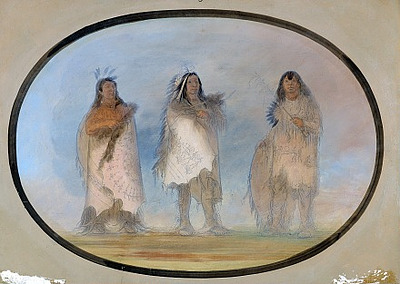
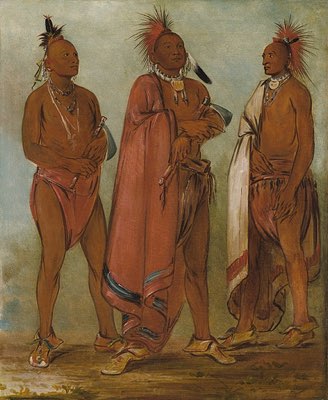
Before he began his extensive travels in the West, George Catlin found his first Indian subjects in the East. Nine members of a Winnebago delegation from present-day Wisconsin sat for him in Washington, D.C., in 1828. Catlin wrote that he had painted the portraits of “Won-de-tow-a (the wonder), Wa-kon-chash-kaw (he who comes on the thunder), Nau-naw-pay-ee (the soldier), Span-e-o-nee-kaw (the Spaniard) Hoo-wan-ee-kaw (the little elk), No-ah-choo-she-kaw (he who breaks the bushes), and Naugh-haigh-ke-kaw (he who moistens the wood), all distinguished men of the tribe; and all at full length, as they will be seen standing in my Collection.” (Catlin, Letters and Notes, vol. 2, no. 52, 1841; reprint 1973)