Window mode follows your eyes with your camera, in this browser only: no picture or position leaves your device.
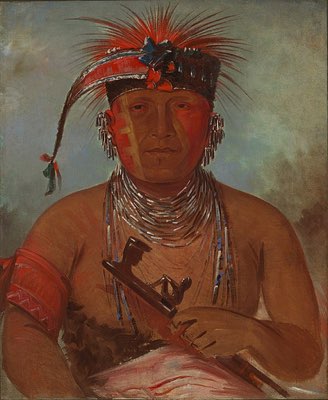
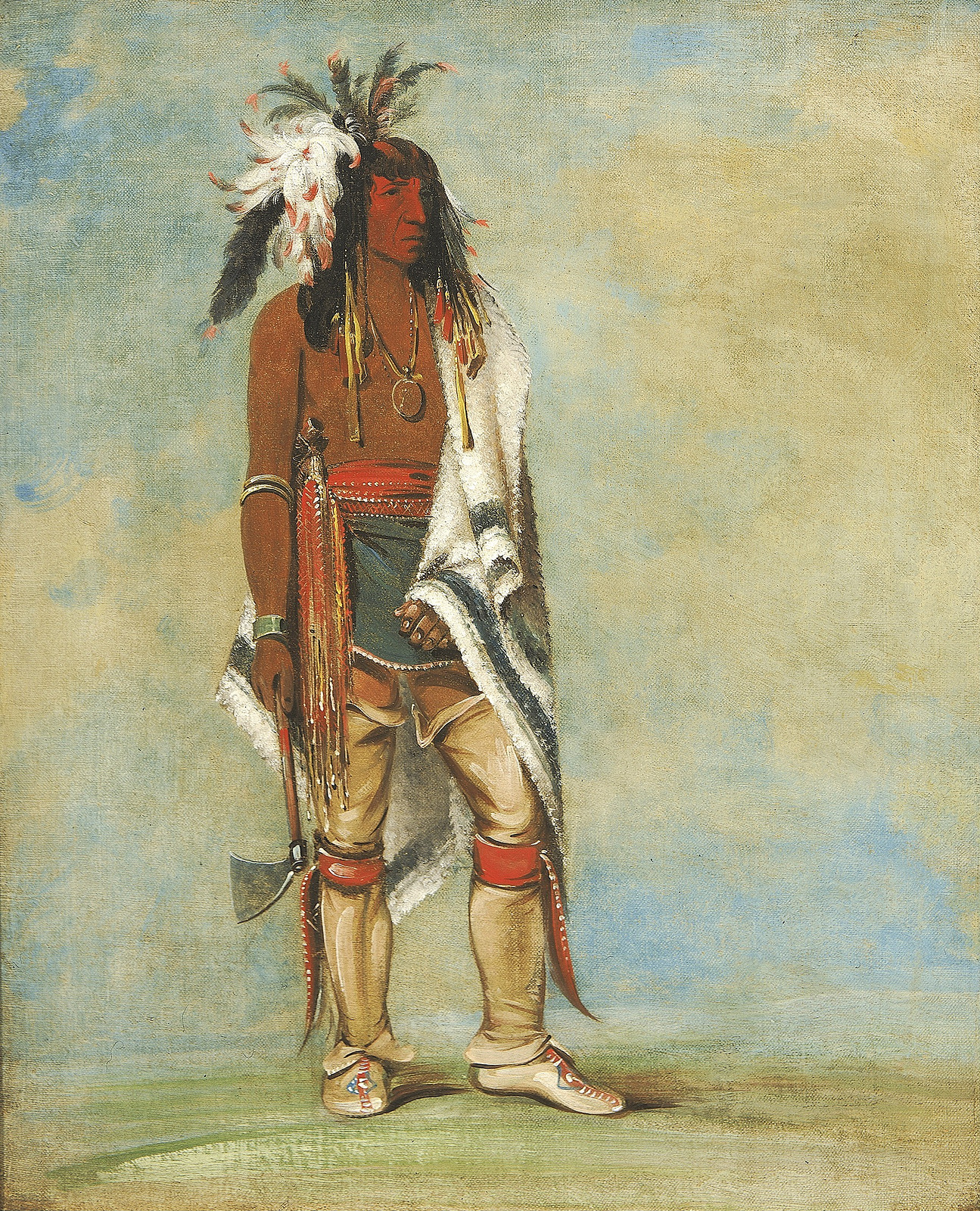
Nót-to-way, a Chief
George Catlin (born Wilkes-Barre, PA 1796-died Jersey City, NJ 1872)
1835-1836
- Medium
- oil on canvas
- Classification
- Paintings
- Dimensions
- 29 x 24 in. (73.7 x 60.9 cm)
- Culture
- Iroquois Indians
- Museum
- Smithsonian Institution, Smithsonian American Art Museum, Painting and Sculpture
- Credit line
- Smithsonian American Art Museum, Gift of Mrs. Joseph Harrison, Jr.
- Rights
- CC0 (Smithsonian Open Access), as the museum states it.
- Who can see it
- Tweens profiles and older: its subjects are known and suit older children. How works are placed
View at the Smithsonian Institution
About this work
“Of this tribe I have painted but one . . . This was an excellent man, and was handsomely dressed for his picture . . . He seemed to be quite ignorant of the early history of his tribe, as well as of the position and condition of its few scattered remnants, who are yet in existence . . . though he was an Iroquois, which he was proud to acknowledge to me . . . he wished it to be generally thought, that he was a Chippeway.” George Catlin’s notes imply that Nót-to-way was living with the Ojibwe, which would suggest that this portrait was painted either at Fort Snelling in 1835 or near Sault Ste. Marie in 1836. (Catlin, Letters and Notes, vol. 2, no. 47, 1841, reprint 1973; Truettner, The Natural Man Observed, 1979)