Window mode follows your eyes with your camera, in this browser only: no picture or position leaves your device.
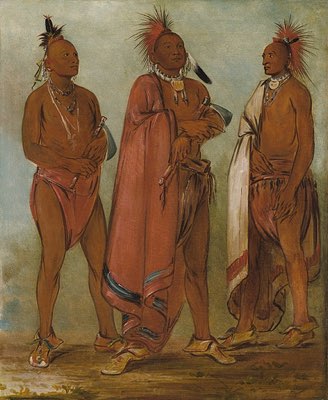
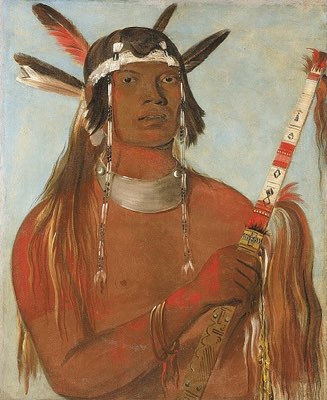
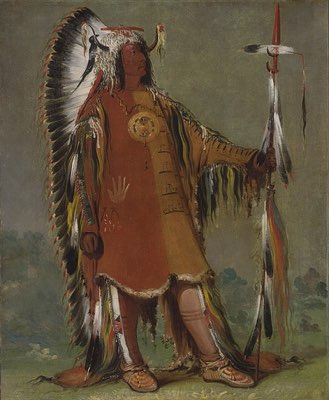
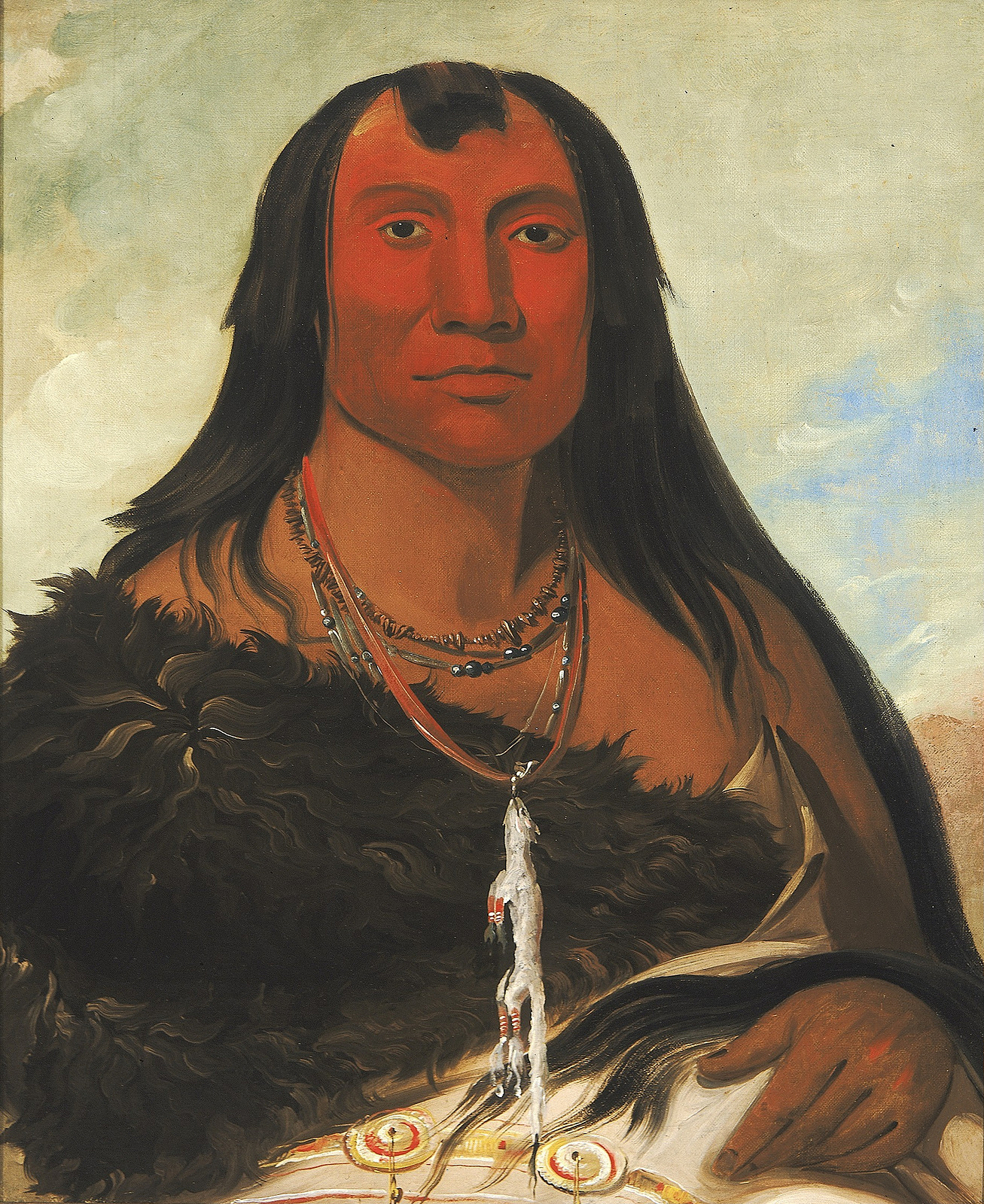
Cháh-ee-chópes, Four Wolves, a Chief in Mourning
George Catlin (born Wilkes-Barre, PA 1796-died Jersey City, NJ 1872)
1832
- Medium
- oil on canvas
- Classification
- Paintings
- Dimensions
- 29 x 24 in. (73.7 x 60.9 cm)
- Culture
- Indians of North America
- Museum
- Smithsonian Institution, Smithsonian American Art Museum, Painting and Sculpture
- Credit line
- Smithsonian American Art Museum, Gift of Mrs. Joseph Harrison, Jr.
- Rights
- CC0 (Smithsonian Open Access), as the museum states it.
- Who can see it
- Teens profiles and older: its subject is for older viewers (war, death, the Passion, drink or the like). How works are placed
View at the Smithsonian Institution
About this work
In 1830, Catlin accompanied William Clark, of the celebrated Lewis and Clark expedition, up the Mississippi River from St. Louis to Fort Crawford. Two years later, he began the first of several journeys deep into the western frontier, boarding the steamboat Yellowstone at St. Louis for a two-thousand-mile run up the Missouri River to Fort Union. The fort, an outpost maintained by the American Fur Company, brought Catlin in contact with the Blackfoot and Crow. Among the masterful portraits he made on that journey is this image of the Crow chief Four Wolves. The chief, Catlin later wrote, was “in mourning for a brother; and according to their custom, [he] cut off a number of locks of his long hair, which is as much as a man can well spare of so valued an ornament, which he has been for the greater part of his life cultivating.” (Catlin, Letters and Notes, vol. 1, no. 8, 1841, reprint 1973; Truettner, The Natural Man Observed, 1979)