Window mode follows your eyes with your camera, in this browser only: no picture or position leaves your device.
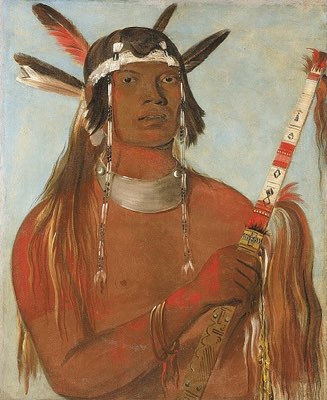
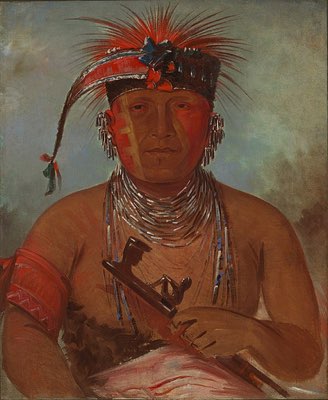
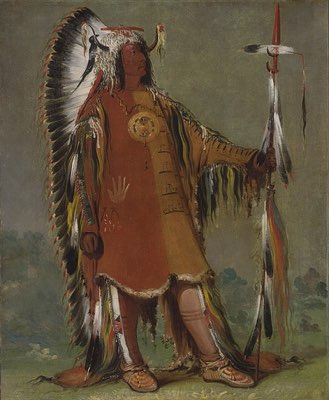
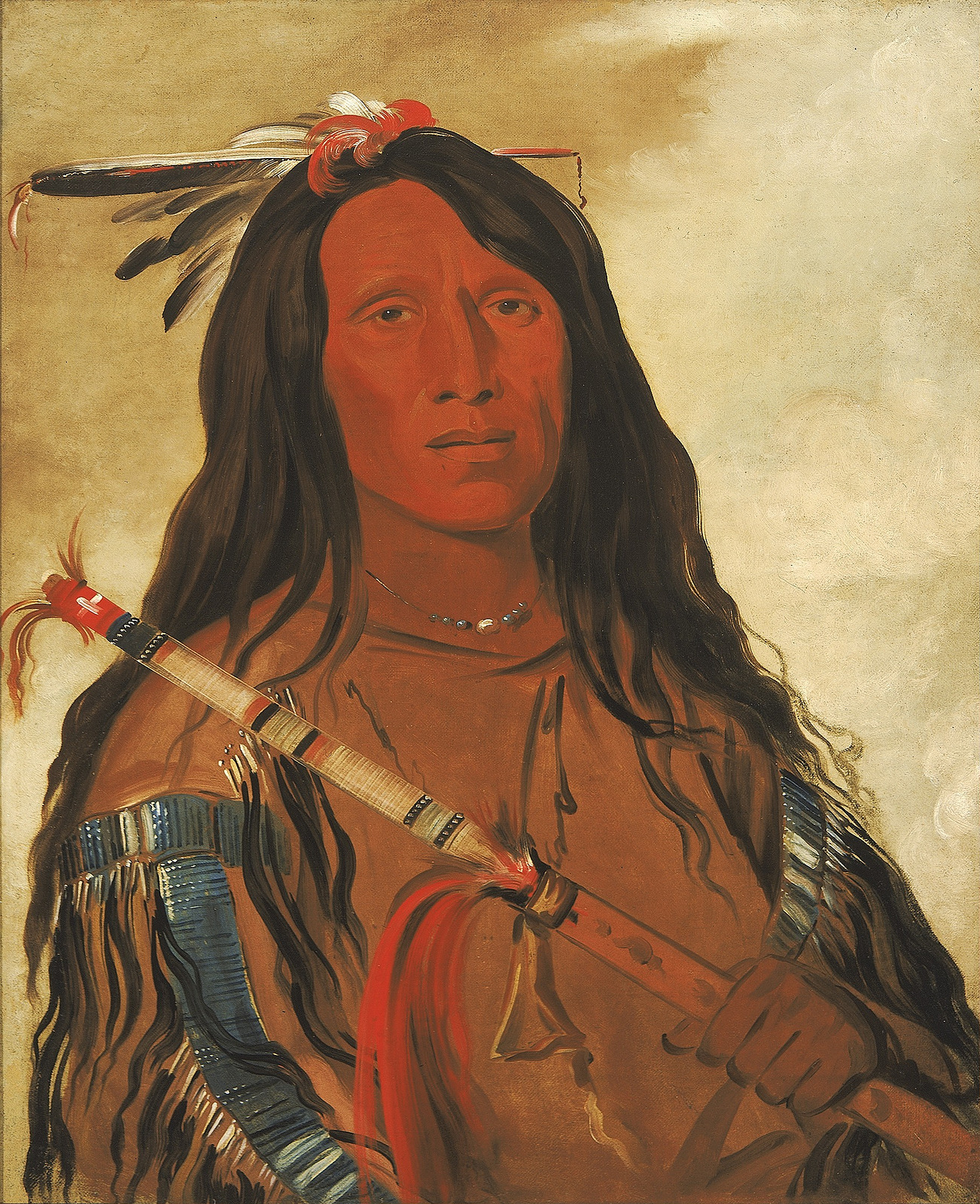
Né-hee-ó-ee-wóo-tis, Wolf on the Hill, Chief of the Tribe
George Catlin (born Wilkes-Barre, PA 1796-died Jersey City, NJ 1872)
1832
- Medium
- oil on canvas
- Classification
- Paintings
- Dimensions
- 29 x 24 in. (73.7 x 60.9 cm)
- Culture
- Indians of North America
- Museum
- Smithsonian Institution, Smithsonian American Art Museum, Painting and Sculpture
- Credit line
- Smithsonian American Art Museum, Gift of Mrs. Joseph Harrison, Jr.
- Rights
- CC0 (Smithsonian Open Access), as the museum states it.
- Who can see it
- Tweens profiles and older: its subjects are known and suit older children. How works are placed
View at the Smithsonian Institution
About this work
Cheyenne chief Wolf on the Hill, George Catlin explained, “was clothed in a handsome dress of deer skins, very neatly garnished with broad bands of porcupine quill-work down the sleeves of his shirt and his leggings, and all the way fringed with scalp-locks. His hair was very profuse, and flowing over his shoulders; and in his hand he held a beautiful Sioux pipe, which had just been presented to him by Mr. M’Kenzie, the Trader. This was one of the finest looking and most dignified men that I have met in the Indian country; and from the account given of him by the Traders a man of honour and strictest integrity.” Catlin painted this work at Fort Pierre (in present-day South Dakota) in 1832. (Catlin, Letters and Notes, vol. 2, no. 32, 1841; reprint 1973)