Frederik Hendrik’s Siege of ’s-Hertogenbosch, 1629
Pieter de Neyn · c. 1629 - c. 1639
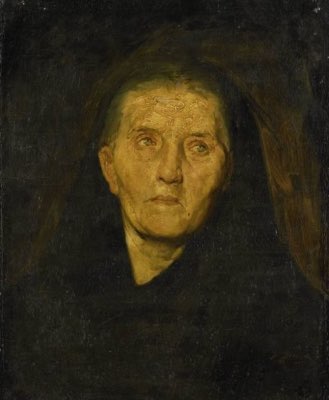
The Mourning Widow
The Mourning Widow
Diederik Franciscus Jamin · c. 1860 - c. 1865
Mary Magdalene
Mary Magdalene
Lourens Alma Tadema · 1854
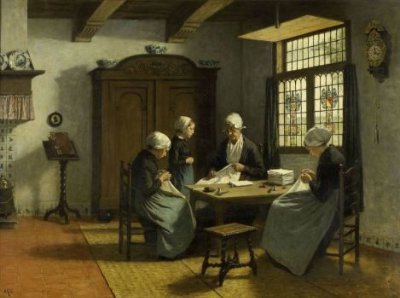
In the Orphanage at Katwijk-Binnen
David Adolph Constant Artz · c. 1875 - c. 1880
The Sculptor Jens Adolf Jerichau, the Artist's Husband
Elisabeth Jerichau Baumann · 1846
Woman and Two Children
Kubo Shunman · early 1900s
Portrait of a Young Woman in White
Anonymous Artist · c. 1798
Medaillonportret van Cornelis Speelman, Gouverneur-Generaal van Nederlands-Indië van 1681-1684.
Gerrit van Goor · 1680
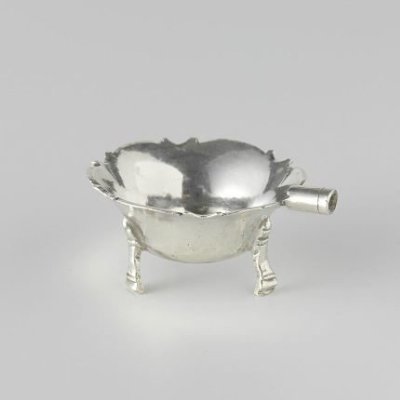
Schotel van zilver
Schotel van zilver
Wessel Jansen · after 1642 - before 1696
Schotel van zilver
Schotel van zilver
Wessel Jansen · after 1642 - before 1696
Fish
Fish
c. 1400
Listening to the Bamboo
Wen Zhengming · late 1400s-1500s
Tabakskomfoor
Tabakskomfoor
Arnoldus van Geffen · 1756
Tabakskomfoor
Tabakskomfoor
Jan Borduur · 1754
Arhat Vanavasin, One of the Sixteen Great Arhats, from a Set of Twenty-Three
Tibeto-Chinese · late 17th/early 18th century
Jatayu approaches Rama and Lakshmana who are wondering where Sita could be, folio 18 (verso) from a Chandana Malayagiri Varta (Story of King Chandana and Queen Malayagiri) of Karamachand
1744–45
Landscape with Woodcutters Returning Home
1200s
Monju Dressed in a Robe of Braided Grass (Nawa Monju)
Japanese · dated 1415
The son of the pious man slays the dragon, from a Tuti-nama (Tales of a Parrot): Fifty-second Night
c. 1560
The king gives his daughter in marriage to the pious man’s son, from a Tuti-nama (Tales of a Parrot): Fifty-second Night
c. 1560
The pious man’s son, now a king, reveals himself to his father; his nurse upbraids his unfaithful mother, from a Tuti-nama (Tales of a Parrot): Fifty-second Night
c. 1560
The hunter throws away the baby parrots, who pretend to be dead, and captures the mother, from a Tuti-nama (Tales of a Parrot): Fifth Night
Basavana · c. 1560
Khusrau, the King of Kings, pays homage to the pious daughter of Khassa, from a Tuti-nama (Tales of a Parrot): Fifty-first Night
c. 1560
The parrot addresses Khujasta at the beginning of the fifty-second night, from a Tuti-nama (Tales of a Parrot): Fifty-second Night
c. 1560
The bird of seven colors brings a sable to the pious man, from a Tuti-nama (Tales of a Parrot): Fifty-second Night
c. 1560
The pious man’s wife offers the seven-colored bird as food to her lover, but not finding its head, he breaks the pot and bowl in anger, from a Tuti-nama (Tales of a Parrot): Fifty-second Night
c. 1560
The king’s emissary being provided with gifts for his mission to Rum in order to seek the hand of the emperor’s daughter in marriage, from a Tuti-nama (Tales of a Parrot): Fiftieth Night
c. 1560
The merchant returns bringing a young slave who is really the son of the princess of Rum, now married to the king, from a Tuti-nama (Tales of a Parrot): Fiftieth Night
c. 1560
Khulasa, a vizier, sees the daughter of Khassa, another vizier, and covets her, from a Tuti-nama (Tales of a Parrot): Fifty-first Night
c. 1560
The parrot addresses Khujasta at the beginning of the fifty-first night, from a Tuti-nama (Tales of a Parrot): Fifty-first Night
c. 1560
The guard restores the son who falls at his mother’s feet, from a Tuti-nama (Tales of a Parrot): Fiftieth Night
c. 1560
The king places the talisman on his sleeping wife, from a Tuti-nama (Tales of a Parrot): Fiftieth Night
c. 1560
The young man of Baghdad reveals his true identity to the Hashimi, from a Tuti-nama (Tales of a Parrot: Forty-eighth Night
c. 1560
The young man of Baghdad reunited with his slave-girl, from a Tuti-nama (Tales of a Parrot): Forty-eighth Night
c. 1560
The parrot addresses Khujasta at the beginning of the forty-ninth night, from a Tuti-nama (Tales of a Parrot): Forty-Ninth Night
c. 1560
The eldest brother explains the reason for his youthful appearance, from a Tuti-nama (Tales of a Parrot): Forty-ninth Night
c. 1560
The parrot addresses Khujasta at the beginning of the fiftieth night, from a Tuti-nama (Tales of a Parrot): Fiftieth Night
c. 1560
Seven men disputing possession of a woman bring her before the Tree of Justice into which she is absorbed, from a Tuti-nama (Tales of a Parrot): Sixth Night
c. 1560
The Brahman gambler sees the daughter of the king of the jinns in a pit together with an old man and a cauldron of boiling oil, from a Tuti-nama (Tales of a Parrot: Seventh Night)
c. 1560
The dervish brings in as dowry an elephant laden with gold, from a Tuti-nama (Tales of a Parrot): Seventh Night
c. 1560
The king of Bahilistan offers his daughter to the King of Kings, from a Tuti-nama (Tales of a Parrot): Seventh Night
c. 1560
The dervish brings the King of Kings before the king of Bahilistan, from a Tuti-nama (Tales of a Parrot): Seventh Night
c. 1560
The Parrot Addresses Khujasta at the Beginning of the Seventh Night, from a Tuti-nama (Tales of a Parrot)
c. 1560
The vizier dissuades the king of Bahilistan from executing the dervish who asks for his daughter’s hand in marriage, from a Tuti-nama (Tales of a Parrot): Seventh Night
c. 1560
Damschijf
Damschijf
Daniël van Strant · 1756
Damschijf
Damschijf
Daniël van Strant · 1756
Damschijf
Damschijf
Daniël van Strant · 1756
Dambord/molenspel
Dambord/molenspel
Daniël van Strant · 1756