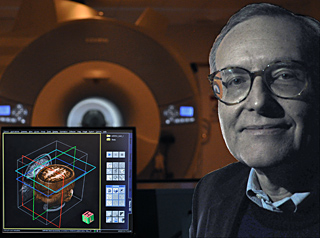
Course9.00SC160 lectures
Introduction to Psychology
Prof. John D. E. Gabrieli · Massachusetts Institute of Technology
About
This course is a survey of the scientific study of human nature, including how the mind works, and how the brain supports the mind. Topics include the mental and neural bases of perception, emotion, learning, memory, cognition, child development, personality, psychopathology, and social interaction. Students will consider how such knowledge relates to debates about nature and nurture, free will, consciousness, human differences, self, and society.
Course Format
This course has been designed for independent study. It includes all of the materials you will need to understand the concepts covered in this subject. The materials in this course include:
A full set of Lecture Videos by Prof. John Gabrieli.
Reading Assignments in several books, including one free online textbook and detailed notes on another book.
Assorted multiple choice and short answer questions to Check Yourself on the material in each session.
Supporting Discussion content that elaborates on the lectures and reading.
A rich collection of online resources for Further Study on each session’s topics.
A full set of Exams with solution keys, and extra practice questions for review.
Lectures
Introduction
- Lecture 1: Introduction
- Goals of the Course
- How Our Minds Make Our Worlds: Vision, Memory, Attention
- How Our Minds Make our Worlds: Hearing, Learning, Memory
- The Power and Peril of Automaticity
- How We Feel vs. How We Act
Science & Research
- Lecture 2: Science and Research
- Psychology and Science
- What Makes Something an Experiment?
- Psychology Experiments and the Real World
- Little Things Can Influence Behavior
- Folk Psychology and Scientific Psychology
Brain I: Structure and Functions
- Lecture 3: Brain I
- The Mind is What the Brain Does
- Brain Overview: Historical Viewpoints, Neurons, Gross Anatomy
- Localization of Mental Functions
- Hemispheric Specialization
Brain II: Methods of Research
- Lecture 4: Brain II
- Methods of Studying the Human Brain
- Lesion (Injury) and Stimulation Studies
- Recording Studies of Structure: CT, MR, DTI
- Recording Studies of Function: Electrical (EEG, MEG) & Metabolic (PET, fMRI)
- Sample Studies: Social Cognition (Empathy) & Vegetative States
Vision I
- Lecture 5: Vision I
- Introduction to Vision and the Brain
- Vision as Interpretation
- Brightness Constancy and Other Illusions
- The Mechanics of Vision: Pre-Visual Cortex
- The Mechanics of Vision: Visual Cortex
- What and Where Systems
- Brain Lesions and the Visual System
Vision II
- Lecture 6: Vision II
- Introduction to Recognition
- Problems With Object Recognition
- Recognizing Faces and Prosopagnosia
- The Development of Facial Recognition
- Word Recognition and Alexia
- Predisposition to Facial Recognition
- Race and Facial Recognition
- Recognizing Fear
Consciousness
- Lecture 8: Consciousness
- Causes and Description of Blindsight
- Perception in Blindsight Patients
- Attention and Neglect; Measures of Neglect
- Causes and Extent of Neglect
- Attention and Extinction to Certain Stimulation
- What Information From the Neglected Field can be Processed?
Attention
- Lecture 7: Attention
- What Do We Mean by "Attention"?
- Demonstrations of the Limits of Attention
- Hypnosis and the Stroop Effect
- Visual Search and Attentional Blink
- Object Tracking and Improving Attention
- Subliminal Perception
Discussion: Attention
Memory I
- Lecture 10: Memory I
- Short Term Memory
- Long Term or Secondary Memory
- Proactive and Retroactive Interference
- A Mnemonist's Memory
- Flashbulb and Repressed Memories
Learning
- Lecture 9: Learning
- Pavlov and Learning Through Conditioning
- Operant Conditioning, Thorndike's cat, and Little Albert
- Reinforcement and Learned Helplessness
- Limits of Conditioning
- Reward Value and Delayed Gratification
- Is Language Learning a Conditioned Skill?
Memory II: Amnesia and Memory Systems
- Lecture 11: Memory II: Amnesia and Memory Systems
- The Importance of Memory
- Anterograde Amnesia: Patient H.M. and the Role of the Hippocampus in Memory Formation
- Types of Memory and Q&A about Patient H.M.
- Retrograde Amnesia
- Neural Memory Systems and the Effect of Huntington's and Alzheimer's Diseases on Memory
Language
- Lecture 12: Language
- Language Basics: Sounds We Hear and Distinguish
- From Sound to Meaning: Syntax, Semantics, and Comprehension
- Problems with Language: Aphasia and the Neural Basis of Speech
- Language Acquisition: Infants, Bilingualism, and the Case of Genie
Discussion: Language
Thinking
- Lecture 13: Thinking
- Thinking Traps: Functional Fixedness, Problem Solving, and Creativity
- Judgement and Decision Making: Heuristics
- Influencing Decisions: Anchoring, Adjustment, and Framing
- Frontal Lobes and Thinking
Intelligence
- Lecture 14: Intelligence
- What is Intelligence?
- IQ Tests: Validity and Value
- Models of Intelligence and Underlying Neural Mechanisms
- Contributions from Nature and Nurture
- Racism, Acheivement Gaps, and the Stereotype Threat
- Interventions, Effort and Practice: Does Head Start Help?
Emotion & Motivation
- Lecture 15: Emotion & Motivation
- Studying Emotion: History and Overview
- Peripheral Bodily Events Influencing Emotion
- Universality of Emotions
- Brain Basis of Emotions
- Brain Imaging, Gender Differences, and Emotion
Personality
- Lecture 16: Personality
- Personality and How It's Tested
- Measures of Personality
- Origins of Personality
- Brain Correlates of Personality
Child Development
- Lecture 17: Child Development
- Introduction and Neotony
- How Babies Learn
- Piaget and the Sensorimotor Stage
- Piaget and the Preoperational Stage
- Theory of Mind
- Babies and Mathematicians
Adult Development
- Lecture 18: Adult Development
- Stages of Development
- Neurogenesis
- Brain Development: Cell Migration, Synaptic Formation, and Myelination
- "Good Memories of Bad Events in Infancy"
- How Development is Studied
- Cognitive Loss
- Attitudes, Emotions, and Aging
- Dopamine and Reward Systems
- The Creation of (False) Memories
- Risk Assessment and Loss Aversion
Stress
- Lecture 19: Stress
- Concepts of Stress
- Physical Stress Mechanism and Its Effects
- Psychological Modifiers of the Stress Response
- Embodied Cognition
- Stereotypes and Stress
Psychopathology I
- Lecture 20: Psychopathology I
- Modern and Historical Viewpoints on Psychopathology
- What is a Mental Disorder?
- How are Mental Disorders Diagnosed?
- Description of Schizophrenia and Genetic Factors
- Treatment of Schizophrenia
Psychopathology II
- Lecture 21: Psychopathology II
- Treatment Approaches: Behavioral and Medical
- Obsessive Compulsive Disorder (OCD)
- Depression: Diagnosis and Neural Basis
- Depression: Treatments and Studies
- ADHD: Diagnosis
- ADHD: Treatments and Studies
Social Psychology I
- Lecture 22: Social Psychology I
- What is Social Psychology?
- Fundamental Attribution Error and Cognitive Busyness
- Pfc. England
- Social Influence: Conformity, Compliance, and Obedience
- Milgram Obedience Study and Stanford Prison Experiment
- Bystanders and Helping: The Bystander Effect
Social Psychology II
- Lecture 23: Social Psychology II
- Self-serving Attributional Bias
- False Consensus and the Influence of Social Norms on Behavior
- Cognitive Dissonance
- First Impressions: How Powerful, How Accurate?
- Cultural Psychology
Conclusions: Evolutionary Psychology, Happiness
Syllabus and materials
At MIT OpenCourseWare, as the course publishes them.
- Instructor Insights
- Introduction
- Science & Research
- Brain I: Structure and Functions
- Brain II: Methods of Research
- Vision I
- Vision II
- Consciousness
- Attention
- Exam 1
- Memory I
- Learning
- Memory II: Amnesia and Memory Systems
- Language
- Thinking
- Intelligence
- Emotion & Motivation
- Exam 2
- Personality
- Child Development
- Adult Development
- Stress
- Psychopathology I
- Psychopathology II
Credits and licence
- Institution
- Massachusetts Institute of Technology
- Department
- Brain and Cognitive Sciences
- Teacher
- Prof. John D. E. Gabrieli
- Term
- Fall 2011
- Level
- Undergraduate
- Language
- English
- Subjects
- Psychology and the brain, Society and politics
- Source
- MIT OpenCourseWare
- Licence
- CC BY-NC-SA 4.0, as MIT OpenCourseWare states it. Non-commercial use only. MIT OpenCourseWare's terms
- Attribution
- Prof. John D. E. Gabrieli. Introduction to Psychology. Fall 2011. Massachusetts Institute of Technology: MIT OpenCourseWare, https://ocw.mit.edu/. License: Creative Commons BY-NC-SA.
- Who can watch
- MIT OpenCourseWare gives no rating. Invisible Network shows it to Teens profiles and older, judged from what the source says about it. How courses are placed
More like this
 Course
Becoming the Next Bill Nye: Writing and Hosting the Educational Show
132 lectures · Video
 Course
Brain Structure and Its Origins
35 lectures · Video
 Course
Brains, Minds and Machines Summer Course
52 lectures · Video
 Course
Neuroscience and Behavior
30 lectures · Video
 Course
Finance Theory I
29 lectures · Video
 Course
Principles of Microeconomics
26 lectures · Video
 Course
Theory of City Form
26 lectures · Video
 Course
Creating Video Games
26 lectures · Video
 Course
Industrial Organization I
26 lectures · Video
 Course
Animal Behavior
25 lectures · Video
 Course
Development Economics
25 lectures · Video
 Course
Principles of Macroeconomics
25 lectures · Video