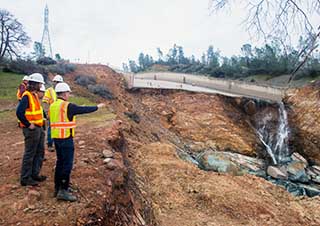
Course11.60116 lectures1 h 46 min
Introduction to Environmental Policy and Planning
Prof. Lawrence Susskind · Massachusetts Institute of Technology
About
This course focuses on national environmental and energy policy-making; environmental ethics; the techniques of environmental analysis; and strategies for collaborative environmental decision-making. The primary objective of the course is to help students formulate a personal theory of environmental planning practice. The course is taught comparatively, with constant references to examples from around the world. It is required of all graduate students pursuing an environmental policy and planning specialization in the Department of Urban Studies and Planning at MIT.
This course is the first subject in the Environmental Policy and Planning sequence. It reviews philosophical debates including growth vs. deep ecology, “command-and-control” vs. market-oriented approaches to regulation, and the importance of expertise vs. indigenous knowledge. Emphasis is placed on environmental planning techniques and strategies. Related topics include the management of sustainability, the politics of ecosystem management, environmental governance and the changing role of civil society, ecological economics, integrated assessment (combining environmental impact assessment (EIA) and risk assessment), joint fact finding in science-intensive policy disputes, environmental justice in poor communities of color, and environmental dispute resolution. Environmental Problem-Solving (Susskind et al., 2017, Anthem Press), a video-enhanced eBook, provides students with full access to all the assigned readings, faculty commentary on the readings, and examples of the best student performance on course assignments in previous years.
Lectures
Scenario 1
Scenario 3
Scenario 4
Scenario 5
Scenario 6
Scenario 7
Scenario 8
Scenario 9
- Cost Benefit Analysis in Environmental Policy Making
- Cost Benefit Analysis in Environmental Policy Making Cold Call
- Cost Benefit Analysis in Environmental Policy Making Student Presentation
Scenario 10
Scenario 11
Scenario 12
Scenario 13
Scenario 14
Syllabus and materials
At MIT OpenCourseWare, as the course publishes them.
Credits and licence
- Institution
- Massachusetts Institute of Technology
- Department
- Urban Studies and Planning
- Teacher
- Prof. Lawrence Susskind
- Term
- Fall 2016
- Level
- Graduate
- Language
- English
- Subjects
- Earth and environment, Society and politics
- Source
- MIT OpenCourseWare
- Licence
- CC BY-NC-SA 4.0, as MIT OpenCourseWare states it. Non-commercial use only. MIT OpenCourseWare's terms
- Attribution
- Prof. Lawrence Susskind. Introduction to Environmental Policy and Planning. Fall 2016. Massachusetts Institute of Technology: MIT OpenCourseWare, https://ocw.mit.edu/. License: Creative Commons BY-NC-SA.
- Who can watch
- MIT OpenCourseWare gives no rating. Invisible Network shows it to Teens profiles and older, judged from what the source says about it. How courses are placed
More like this
 Course
Engineering Dynamics
223 lectures · Video
 Course
Becoming the Next Bill Nye: Writing and Hosting the Educational Show
132 lectures · Video
 Course
Power Electronics
38 lectures · Video
 Course
Brains, Minds and Machines Summer Course
52 lectures · Video
 Course
Neuroscience and Behavior
30 lectures · Video
 Course
Finance Theory I
29 lectures · Video
 Course
Principles of Microeconomics
26 lectures · Video
 Course
Fundamentals of Photovoltaics
26 lectures · Video
 Course
Theory of City Form
26 lectures · Video
 Course
Creating Video Games
26 lectures · Video
 Course
Industrial Organization I
26 lectures · Video
 Course
Advanced Thermodynamics
25 lectures · Video