Window mode follows your eyes with your camera, in this browser only: no picture or position leaves your device.
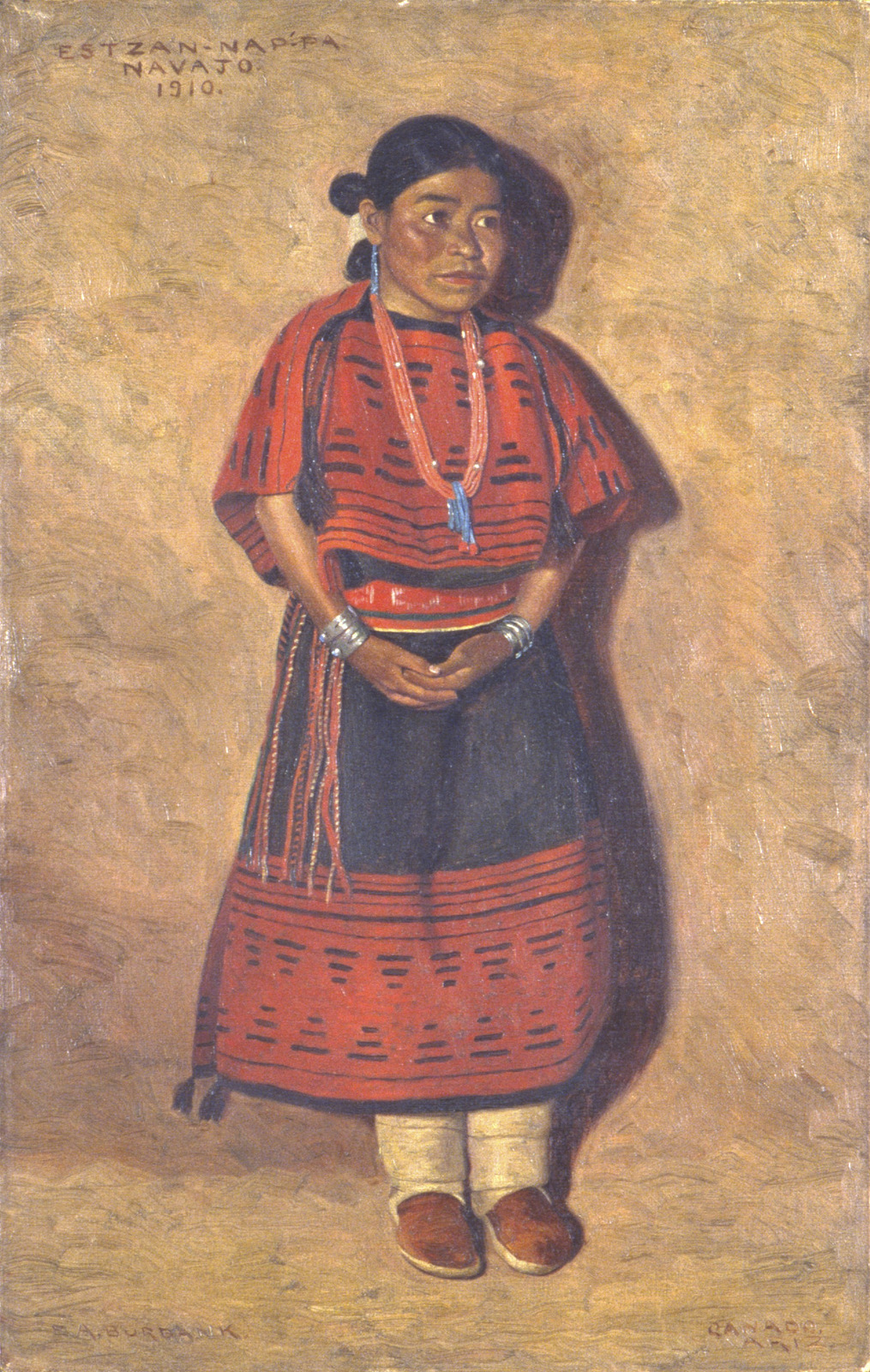
Estzan-Nap-Pa
Elbridge Ayer Burbank (born Harvard, IL 1858-died San Francisco, CA 1949)
1910
- Medium
- oil on canvas
- Classification
- Paintings
- Dimensions
- 19 1/8 x 12 1/4 in. (48.5 x 31.0 cm)
- Culture
- Indians of North America
- Museum
- Smithsonian Institution, Smithsonian American Art Museum, Painting and Sculpture
- Credit line
- Smithsonian American Art Museum, Bequest of Victor Justice Evans
- Rights
- CC0 (Smithsonian Open Access), as the museum states it.
- Who can see it
- Tweens profiles and older: its subjects are known and suit older children. How works are placed
View at the Smithsonian Institution
About this work
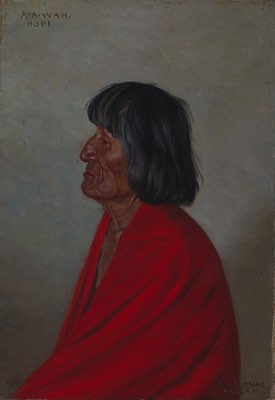
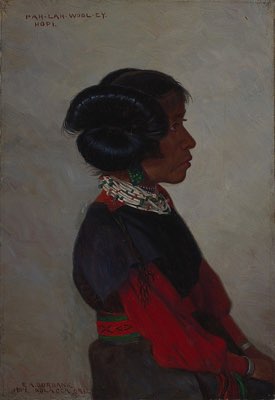
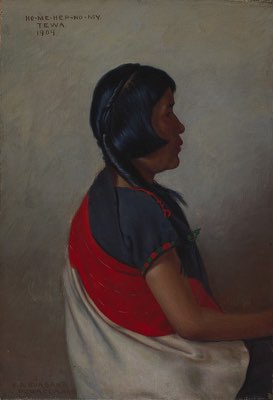
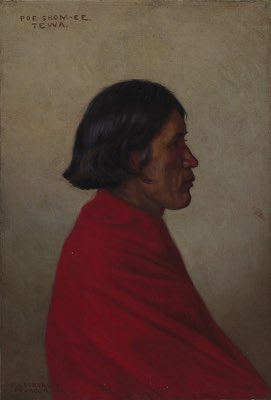
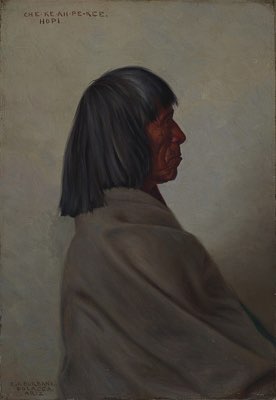
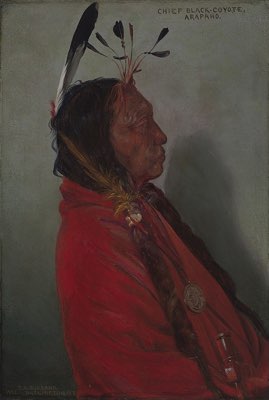
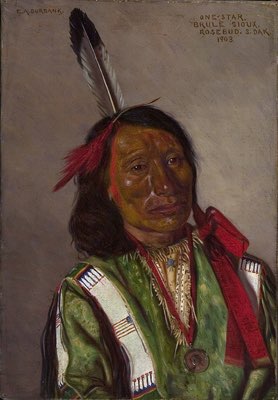
Elbridge Ayer Burbank created nearly one thousand paintings of Native Americans between 1897 and 1910. All of his portraits feature an indistinct background and either a bust-length or full-length view of his subject. Every choice he made was intended to document as much information about the subject’s outward appearance as possible. In this portrait of a Navajo woman, Burbank shows Estzan-Nap-Pa full length in order to display her dress. By turning her head just slightly to provide a three-quarter view of her face, Burbank also emphasized the woman’s features. Burbank was interested in systems of classification that categorized people’s behavior according to their appearance. He believed it was more important to preserve Native American “types” for future study than to capture his sitter’s personality. He wrote that his portraits “would be valuable to a Museum as it will not be long before [the Indians are] all gone forever.” (Wolfe, American Indian Portraits: Elbridge Ayer Burbank in the West (1897-1910), 2000)