Window mode follows your eyes with your camera, in this browser only: no picture or position leaves your device.
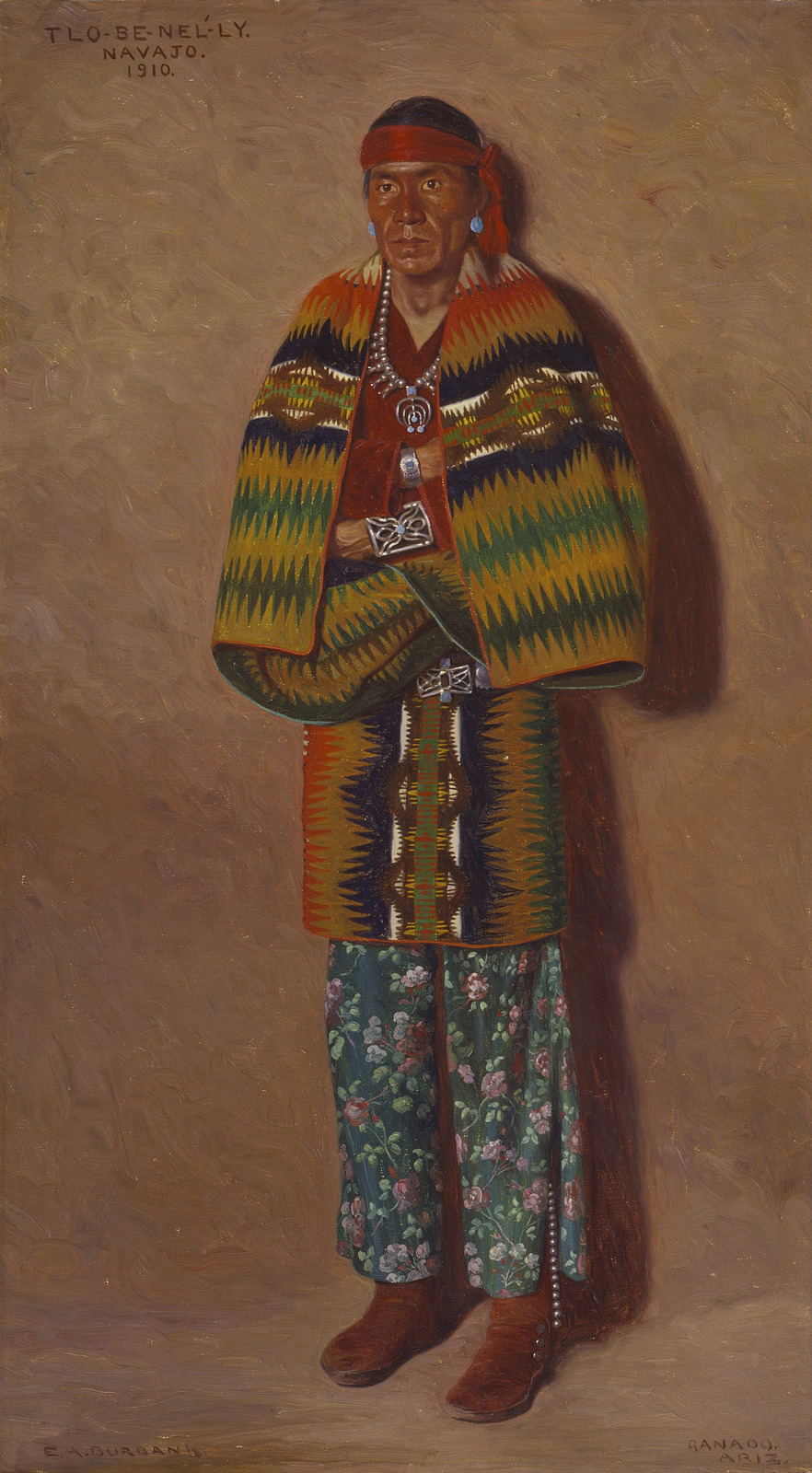
Tlo-be-nel-ly
Elbridge Ayer Burbank (born Harvard, IL 1858-died San Francisco, CA 1949)
1910
- Medium
- oil on canvas
- Classification
- Paintings
- Dimensions
- 30 1/4 x 17 1/2 in. (76.8 x 44.4 cm)
- Culture
- Indians of North America
- Museum
- Smithsonian Institution, Smithsonian American Art Museum, Painting and Sculpture
- Credit line
- Smithsonian American Art Museum, Bequest of Victor Justice Evans
- Rights
- CC0 (Smithsonian Open Access), as the museum states it.
- Who can see it
- Tweens profiles and older: its subjects are known and suit older children. How works are placed
View at the Smithsonian Institution
About this work
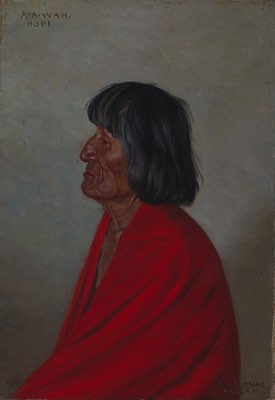
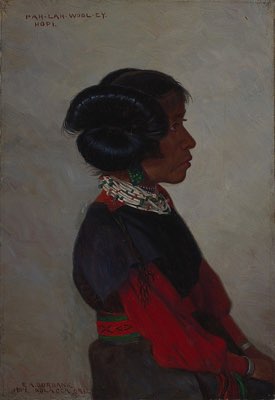
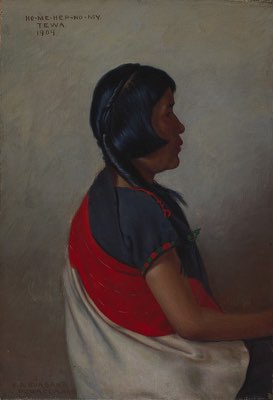
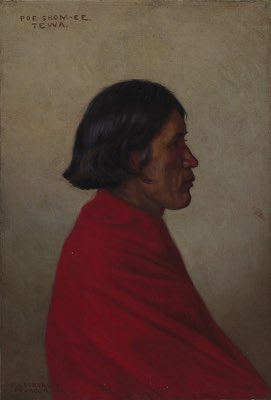
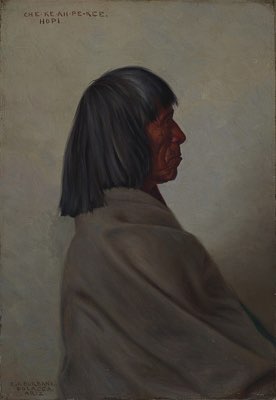
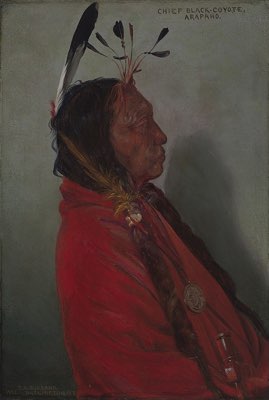
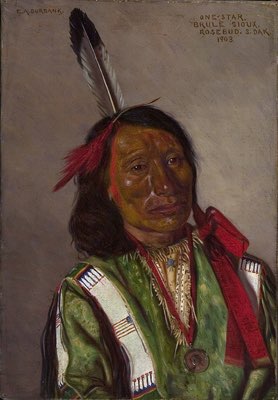
Elbridge Ayer Burbank wanted to portray as many American Indians as possible because he considered their very survival to be threatened. By 1914 he had created more than 1200 portraits that, displayed together, had the effect of turning his sitters into types instead of individuals. He dressed his subjects in costumes, weapons, and war paint for an “authentic” effect, yet most of Burbank’s sitters were fully assimilated into the modern world. For example, Tlo-be-nel-ly’s flowered trousers were likely mass-produced, but the artist masked this modern reality with a colorful array of handwoven blankets and jewelry.