Window mode follows your eyes with your camera, in this browser only: no picture or position leaves your device.
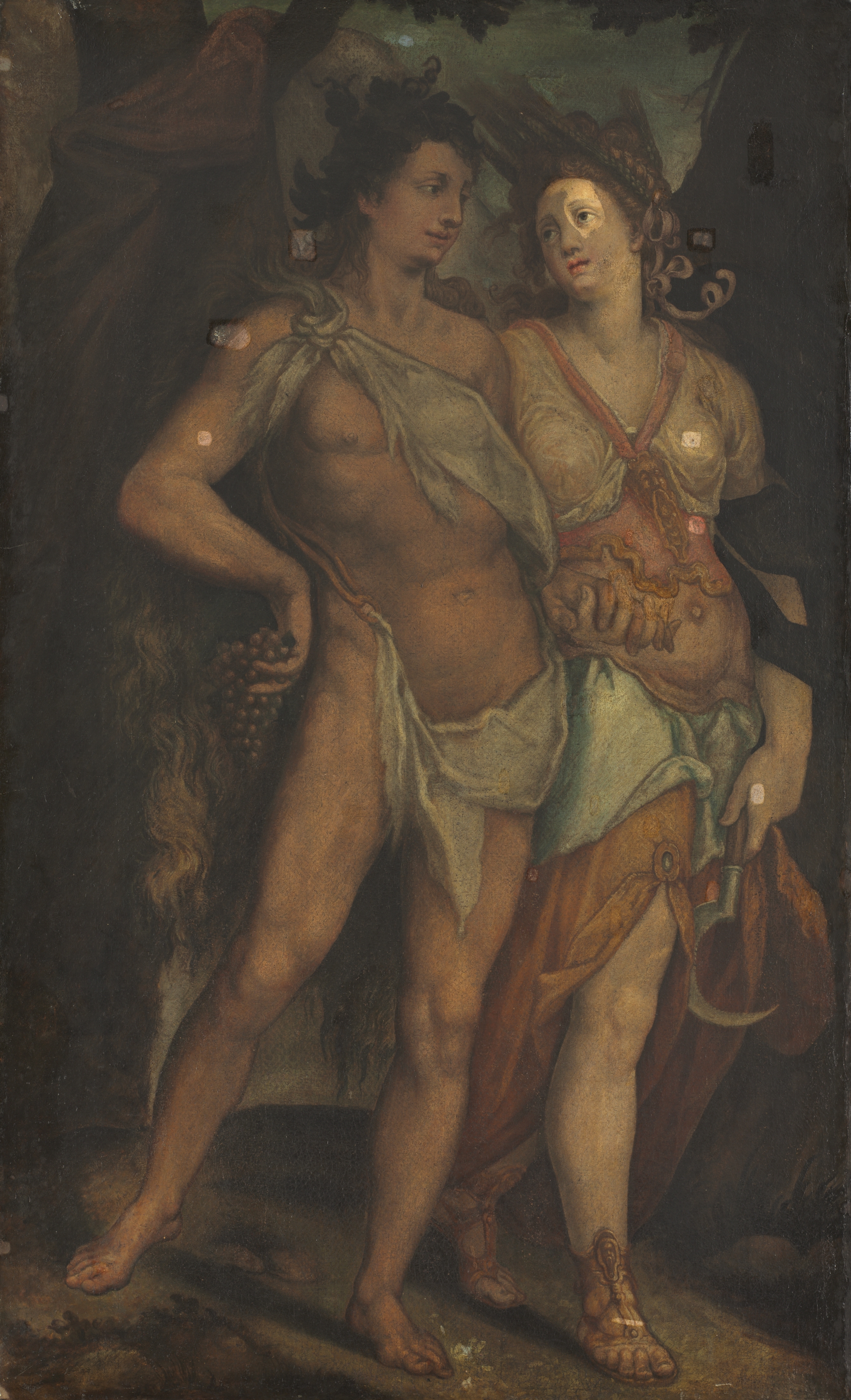
Ceres and Bacchus
copy after Bartholomaeus Spranger (Flemish, 1546–1611)
1600s
- Medium
- oil on canvas
- Classification
- Painting
- Dimensions
- Framed: 197.2 x 133.7 x 9.5 cm (77 5/8 x 52 5/8 x 3 3/4 in.); Unframed: 163.5 x 100 cm (64 3/8 x 39 3/8 in.)
- Culture
- Flanders
- Museum
- Cleveland Museum of Art, European Painting and Sculpture
- Credit line
- Holden Collection
- Rights
- Public domain (CC0), as the museum states it.
- Who can see it
- Teens profiles and older: its subject is for older viewers (war, death, the Passion, drink or the like). How works are placed
View at the Cleveland Museum of Art
About this work
This painting is a copy of a print by Jan Harmensz Muller (Dutch, 1571–1628), originally based on a painting by Spranger. Spranger often used the iconography of Ceres and Bacchus, two important agricultural deities. Muller's print has the Latin inscription Sine Cerere et Bacchio friget Venus, which translates to "without Ceres and Bacchus, Venus grows cold." The motto indicates that Love, represented by Venus, is impossible without the nourishment of food and drink, as the deities of grain and wine walk hand in hand.