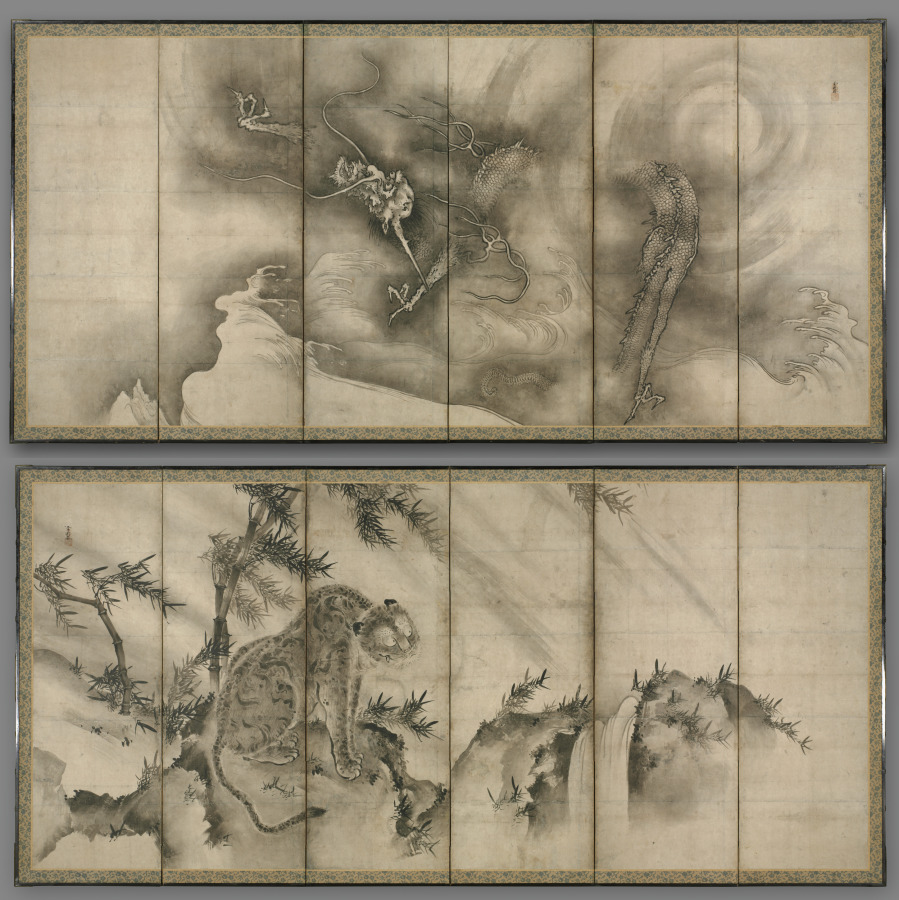
Dragon and Tiger
Sesson Shūkei (Japanese, c. 1492–c. 1577)
c. 1546–56
- Medium
- Pair of six-panel folding screens; ink on paper
- Classification
- Painting
- Dimensions
- Each: 157.3 x 339 cm (61 15/16 x 133 7/16 in.); Framed: 172.3 x 354 cm (67 13/16 x 139 3/8 in.)
- Culture
- Japan, Muromachi period (1392–1573) to Momoyama period (1573–1615)
- Museum
- Cleveland Museum of Art, Japanese Art
- Credit line
- Purchase from the J. H. Wade Fund
- Rights
- Public domain (CC0), as the museum states it.
- Who can see it
- Teens profiles and older: its subject is for older viewers (war, death, the Passion, drink or the like). How works are placed
View at the Cleveland Museum of Art
About this work
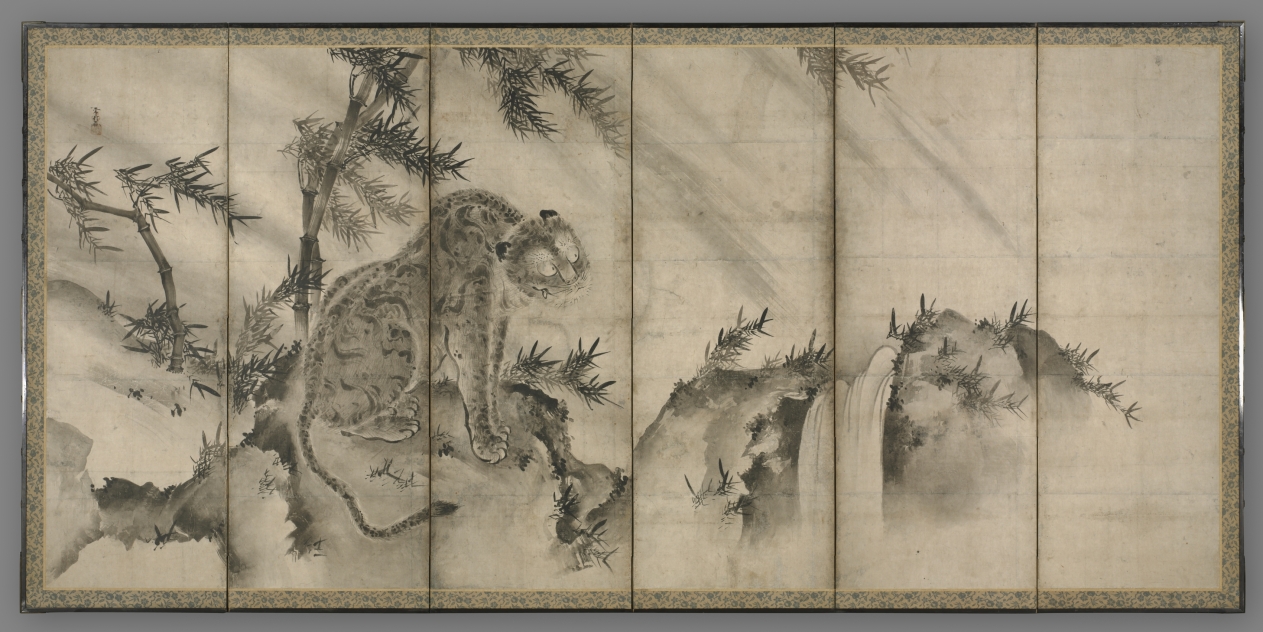
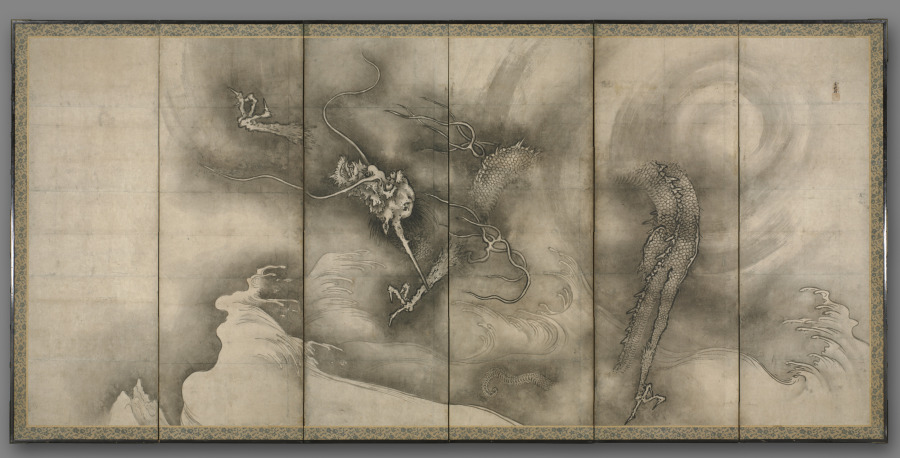
A tiger sits in a bamboo grove whipped with fierce wind, while a dragon claws through clouds above rough waves. Tiger and dragon are Chinese cosmological symbols of the balancing forces in the world, yin (the feminine aspect) and yang (the masculine aspect). The tiger's roar is also said to generate wind, and the dragon clouds. The screens may have originally been meant to express the fluctuating nature of the world as envisioned in the practice of military divination, or forecasting, based on the Yijing (Book of Changes).