Window mode follows your eyes with your camera, in this browser only: no picture or position leaves your device.
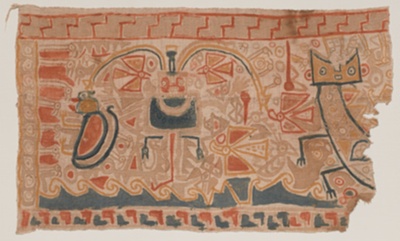
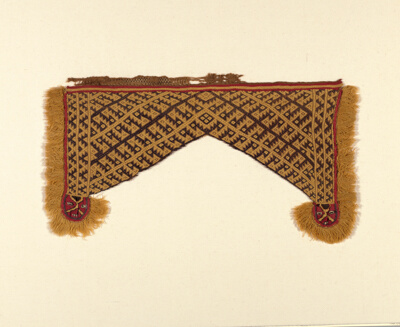
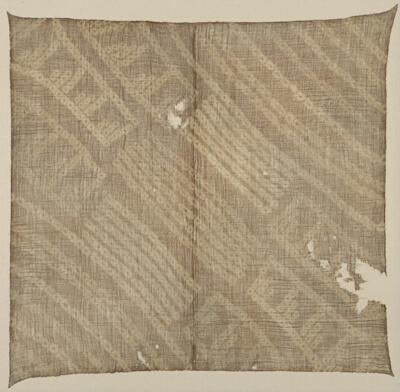
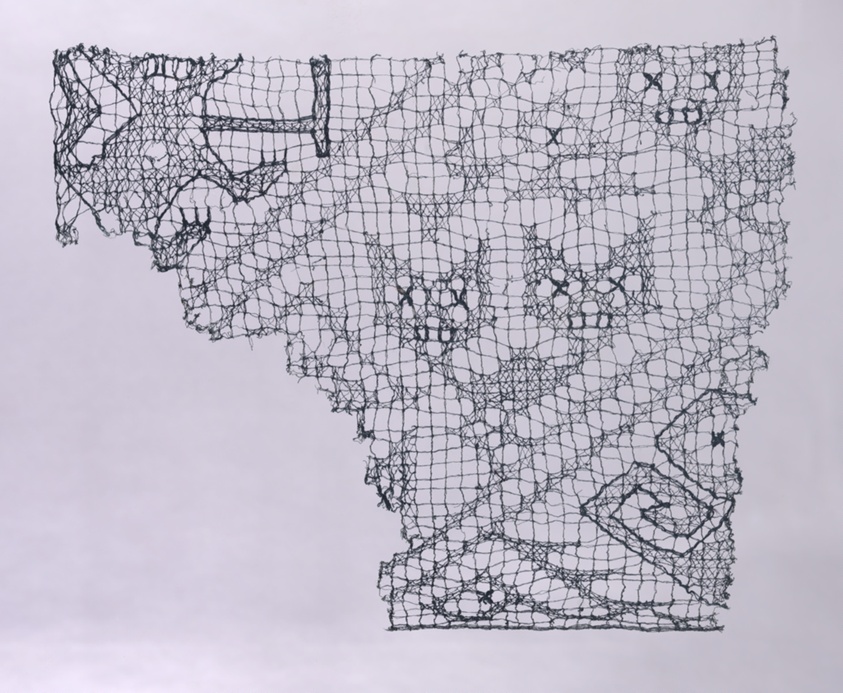
Headcloth Fragment
Chancay (Central coast, Peru)
11th-15th century
- Medium
- Over-twist cotton, gauze weave; embroidered with cotton in simple looping stitch
- Classification
- Textile
- Dimensions
- 32.4 × 39.4 cm (12 3/4 × 15 1/2 in.)
- Culture
- Peru
- Museum
- Art Institute of Chicago, Textiles
- Credit line
- Gift of Mrs. Chauncey B. Borland
- Rights
- Public domain (CC0), as the museum states it.
- Who can see it
- Little Ones profiles and older: it shows gentle subjects for the very young. How works are placed
View at the Art Institute of Chicago
About this work
This extraordinary fragment from a headcloth, with its fineness of thread and complex construction, exemplifies Chancay gauze weaving. In Chancay culture, gauze weave relates to the tradition of coastal fishing, as the art form likely grew out of techniques associated with the making of fishing nets. This fragment displays two feline heads linked to the same body. Peru is home to a variety of wild cats, including the jaguar, puma, and pampas cat. These predatory felines were feared as well as worshipped, and they are associated with a wide range of Peruvian beliefs pertaining to ceremonial practices, the supernatural realm, astronomy, and the power of rulers.
Description © Art Institute of Chicago, CC BY 4.0