Window mode follows your eyes with your camera, in this browser only: no picture or position leaves your device.
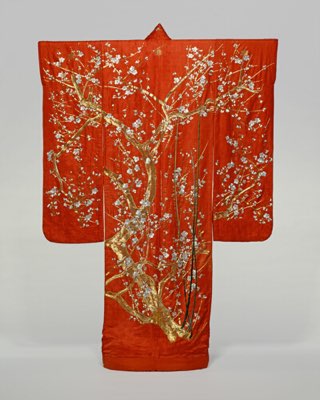
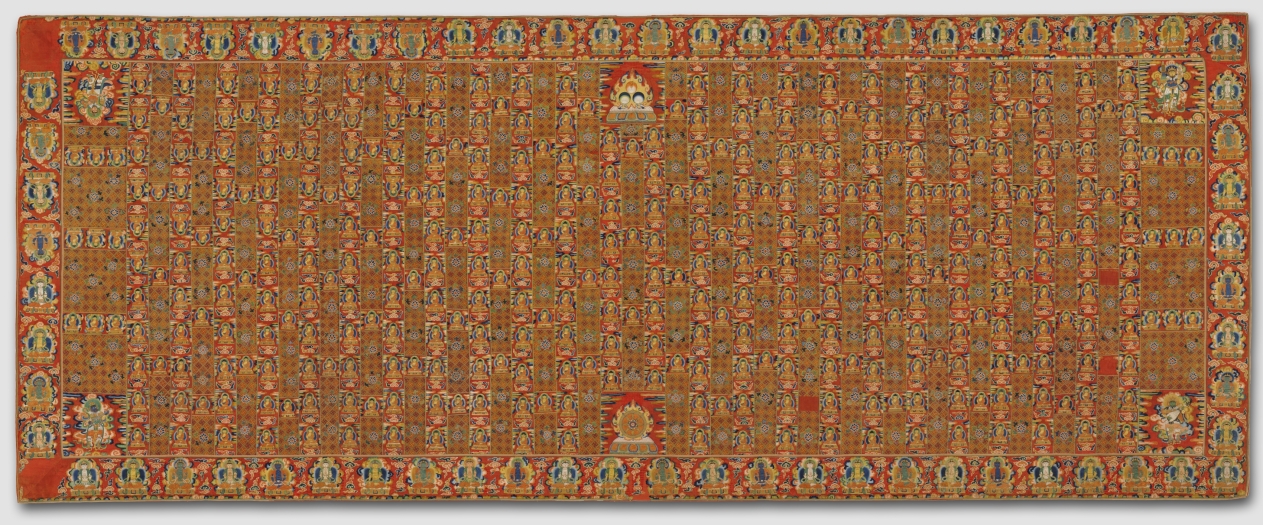
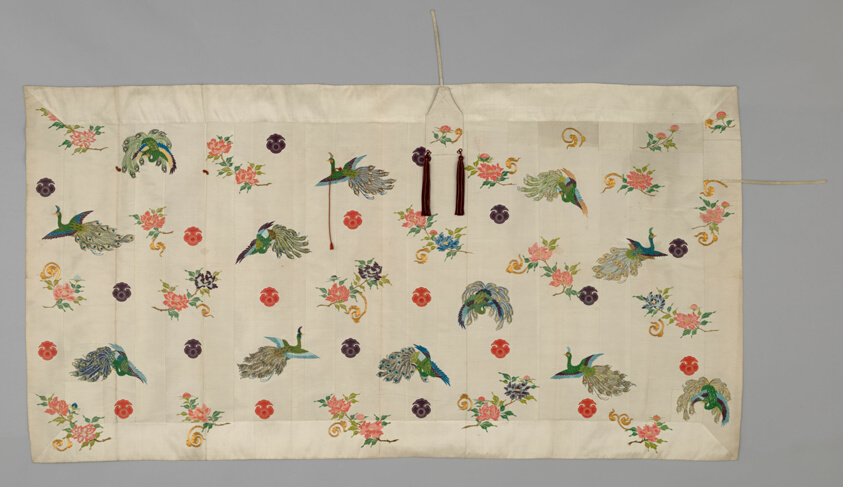
Kesa
Late 19th century, Meiji period (1868–1912)
- Medium
- Silk; plain weave, embroidered and appliqued with silk and gilt-paper-strip-wrapped silk; silk cord and tassels
- Classification
- Textile
- Dimensions
- 117.5 × 221 cm (46 1/4 × 87 in.)
- Culture
- Japan
- Museum
- Art Institute of Chicago, Textiles
- Credit line
- Gift of Mrs. Robert D. Graff
- Rights
- Public domain (CC0), as the museum states it.
- Who can see it
- Tweens profiles and older: its subjects are known and suit older children. How works are placed
View at the Art Institute of Chicago
About this work
Scattered across the off-white expanse of silk in this kesa are multiple versions of colorful embroidered peacocks, peonies, and scepters, which once served as a symbol of authority in connection with Chinese Buddhism. Much of the embroidery and appliqued gold crosses seams, indicating that the panel was completely assembled before the embroidery work began.
Description © Art Institute of Chicago, CC BY 4.0