Window mode follows your eyes with your camera, in this browser only: no picture or position leaves your device.
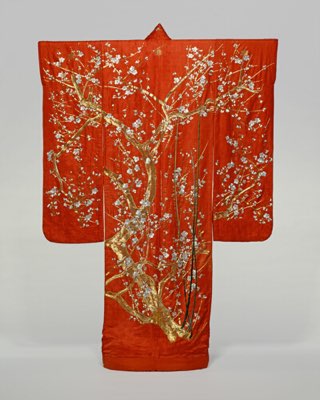
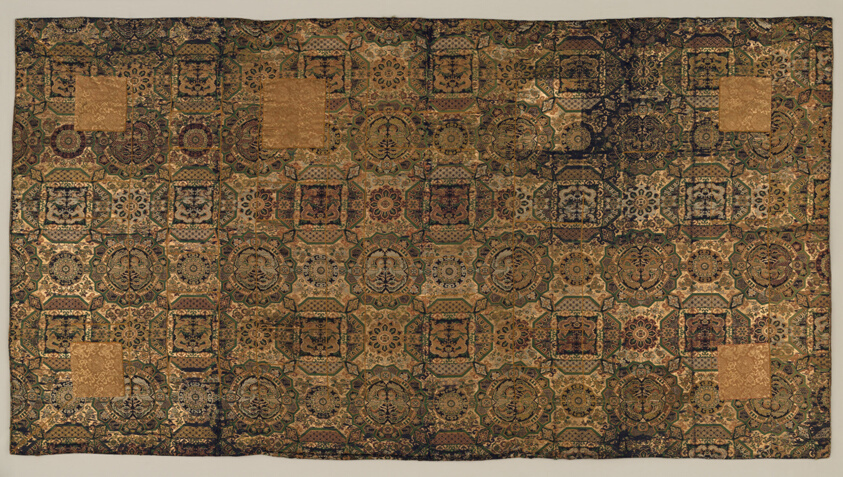
Kesa
18th century, Edo period (1615–1868)
- Medium
- Silk and gilt-paper strip; twill weave with secondary binding warps and supplementary patterning wefts, with couched plied silk
- Classification
- Textile
- Dimensions
- 116.5 × 216.5 cm (45 7/8 × 85 1/4 in.)
- Culture
- Japan
- Museum
- Art Institute of Chicago, Textiles
- Credit line
- Gift of Mr. and Mrs. Donald Eastman
- Rights
- Public domain (CC0), as the museum states it.
- Who can see it
- Tweens profiles and older: its subjects are known and suit older children. How works are placed
View at the Art Institute of Chicago
About this work
During the kesa's early history, the design of the garment was highly codified, based upon the standards and practices of individual sects. But during the Edo period, when Japan essentially closed its borders and artists looked inward for inspiration, innovations were introduced that challenged this rigid tradition. The columns of patches universal to kesas were now occasionally inferred by motifs that created the desired impression, such as lines drawn on the surface of the uncut fabric or, as here, the addition of cording, now incomplete owing to wear.
Description © Art Institute of Chicago, CC BY 4.0