Window mode follows your eyes with your camera, in this browser only: no picture or position leaves your device.
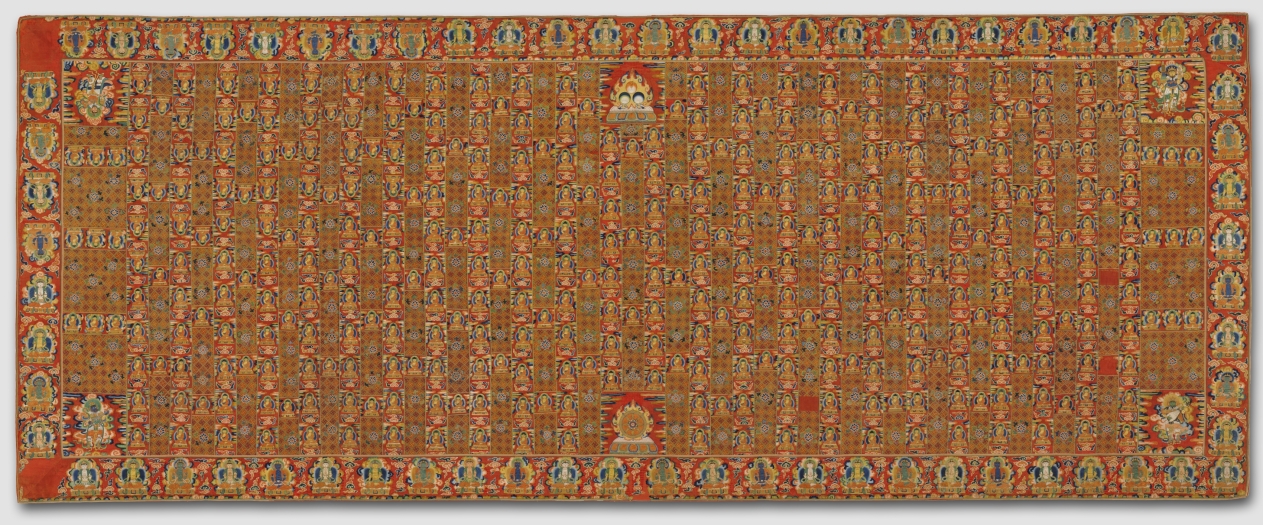
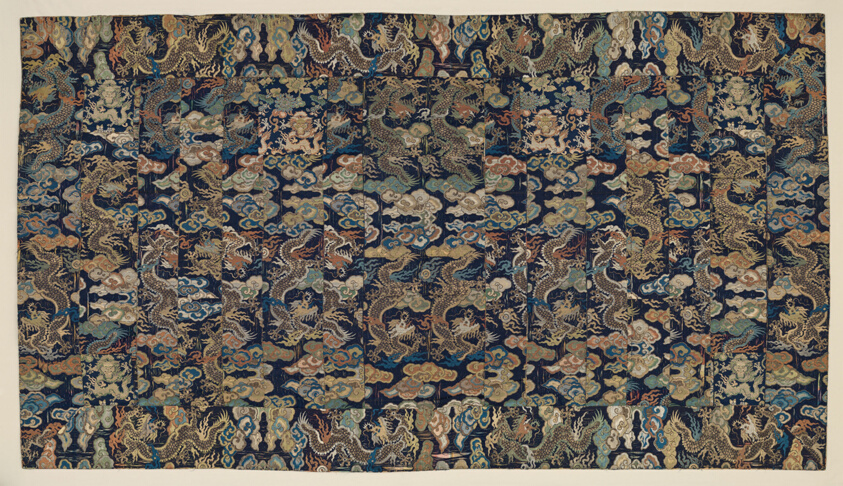
Kesa
1650/1700, Edo period (1615–1868)
- Medium
- Silk and gilt-paper strip; twill weave with secondary binding warp and supplementary patterning wefts
- Classification
- Textile
- Dimensions
- 119.4 × 210.5 cm (47 × 82 7/8 in.)
- Culture
- Japan
- Museum
- Art Institute of Chicago, Textiles
- Credit line
- Gift of Ralph E. Hays in memory of Mary Van Artsdalen Hays
- Rights
- Public domain (CC0), as the museum states it.
- Who can see it
- Tweens profiles and older: its subjects are known and suit older children. How works are placed
View at the Art Institute of Chicago
About this work
Given that Buddhism was introduced into Japan from China, and many Japanese priests and monks visited China as part of their training, it is understandable that the influence of China continued to be felt in Japan for centuries. Even during the Edo period, when Japan was all but closed to the outside world, there was still a reverence for things Chinese, as exemplified by the use of treasured Chinese fabric, perhaps once part of a robe, in this striking kesa. The five-clawed dragon indicates Chinese imperial production.
Description © Art Institute of Chicago, CC BY 4.0