Window mode follows your eyes with your camera, in this browser only: no picture or position leaves your device.
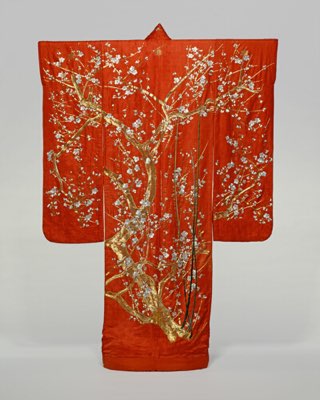
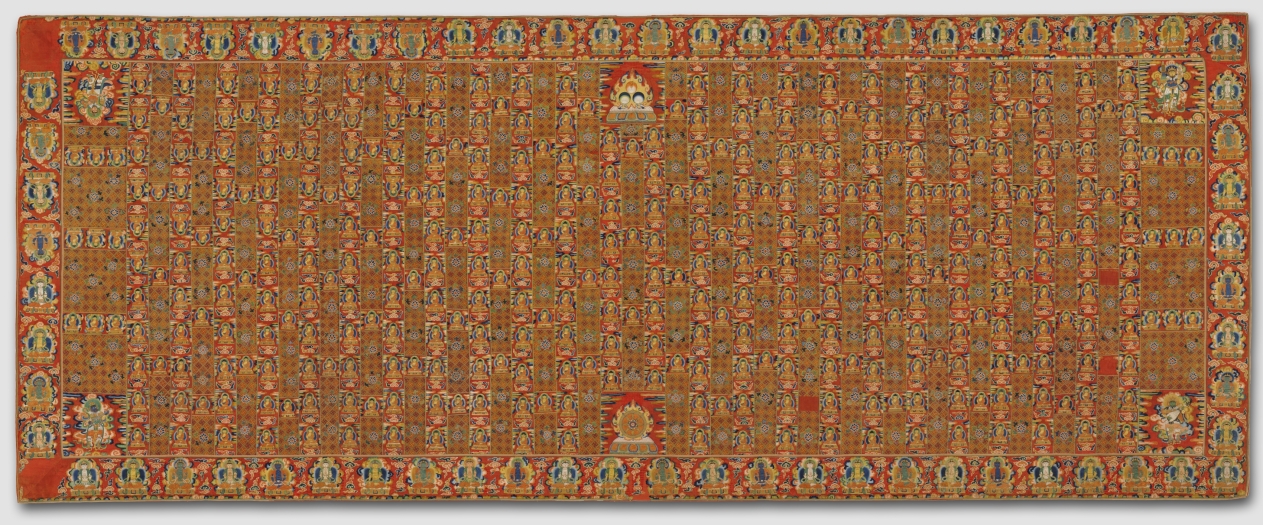
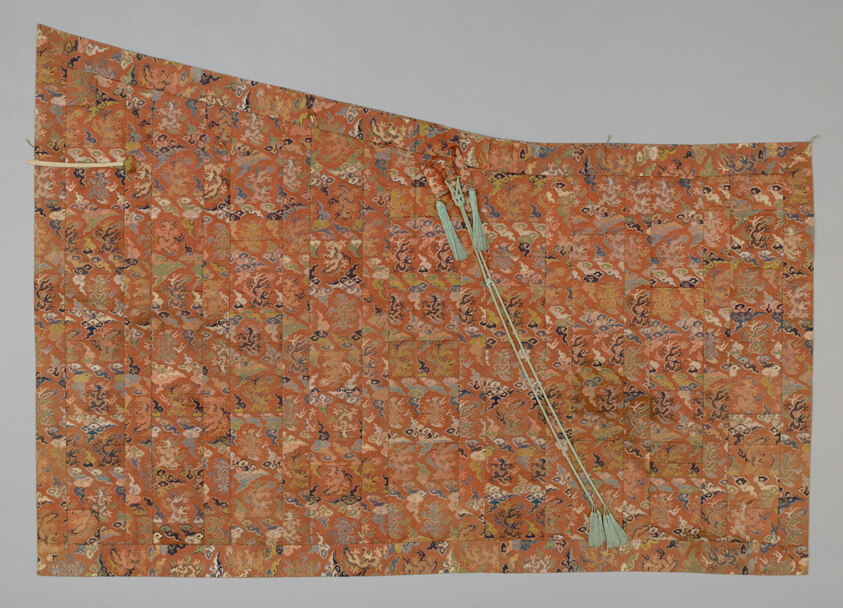
Kesa
First half of the 19th century, Late Edo period (1789–1868)
- Medium
- Silk and gilt-paper strip; twill weave with secondary binding warps and supplementary patterning wefts; silk tassels
- Classification
- Textile
- Dimensions
- 150.4 × 213.3 cm (59 1/4 × 84 in.)
- Culture
- Japan
- Museum
- Art Institute of Chicago, Textiles
- Credit line
- Gift of Ralph E. Hays in memory of Mary Van Artsdalen Hays
- Rights
- Public domain (CC0), as the museum states it.
- Who can see it
- Tweens profiles and older: its subjects are known and suit older children. How works are placed
View at the Art Institute of Chicago
About this work
The fabric for this trapezoidal robe made for the Jodo sect is a famous type known in Japan as nishiki kinran a brocade that combines silk in various rich colors (nishiki) with flat gilt-paper thread (kinran). The pattern combines two types of dragons with two types of cloud designs in a Chinese manner. An inscription on the lining records that the robe was donated to the temple on February 14th (no year cited) by the presiding priest, a member of the 23rd generation of the family that owned the temple.
Description © Art Institute of Chicago, CC BY 4.0