Window mode follows your eyes with your camera, in this browser only: no picture or position leaves your device.
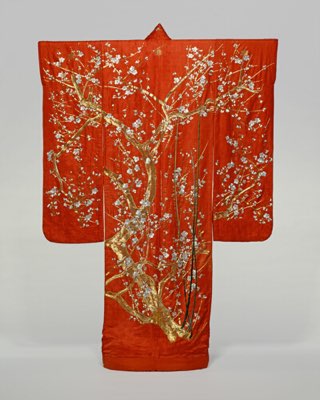
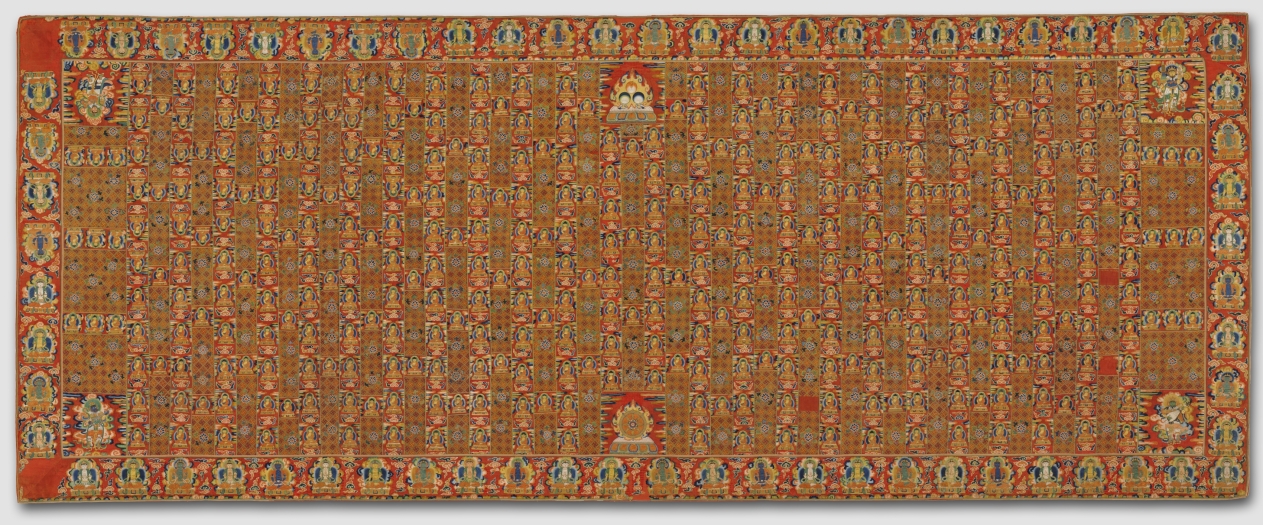
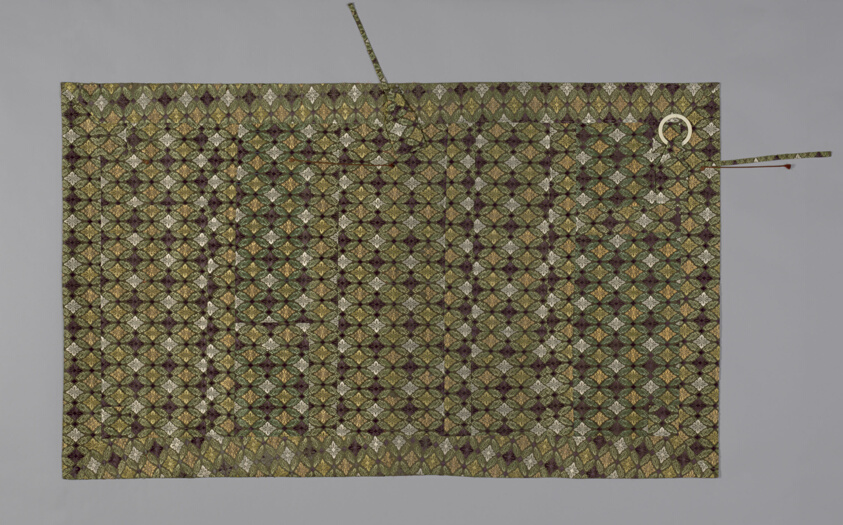
Kesa
Second half of the 18th century, Late Edo period (1789–1868)
- Medium
- Silk; plain weave, embroidered with silk and gilt-paper-strip-wrapped silk
- Classification
- Textile
- Dimensions
- 112.8 × 186.5 cm (44 3/8 × 73 3/8 in.)
- Culture
- Japan
- Museum
- Art Institute of Chicago, Textiles
- Credit line
- Gift of Ralph E. Hays in memory of Mary Van Artsdalen Hays
- Rights
- Public domain (CC0), as the museum states it.
- Who can see it
- Teens profiles and older: its museum says too little about what it shows to place it for younger viewers. How works are placed
View at the Art Institute of Chicago
About this work
This garment is exceptional in two ways. It is unusually well-presrved, with its ivory ring and all straps and cords in place, thus allowing its presentation on a form, over a robe, in a way that correctly simulates the way it was worn. Also, it was made from an uwagi, a formal over-robe worn only by woman of the highest social standing during the Edo period. Its decoration of rows of lozenges based on floral forms is entirely embroidered in silk and gilt-paper-wrapped thread.
Description © Art Institute of Chicago, CC BY 4.0