Window mode follows your eyes with your camera, in this browser only: no picture or position leaves your device.
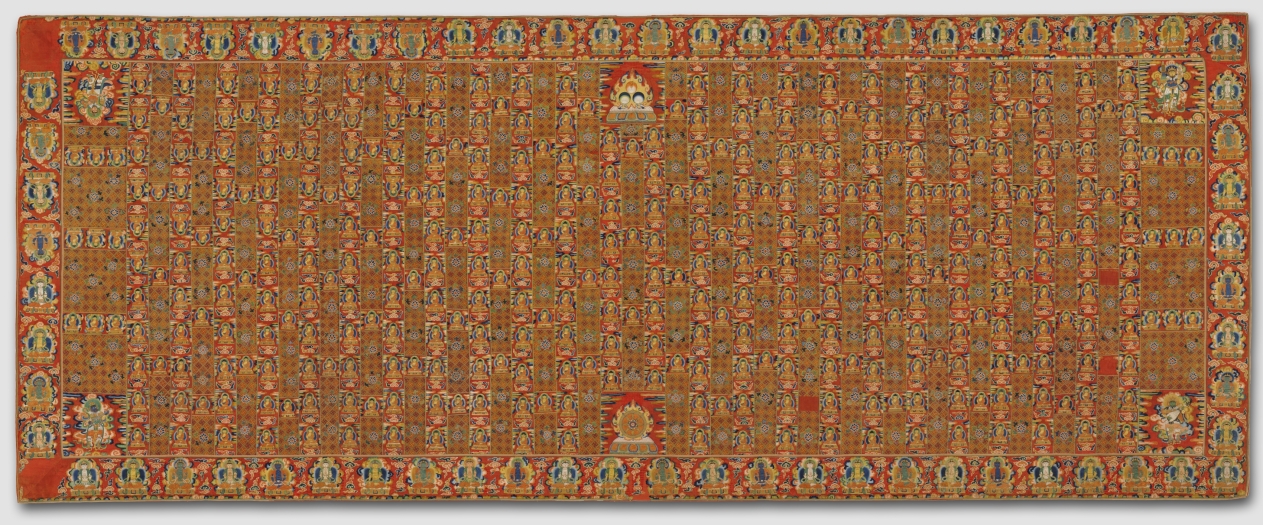
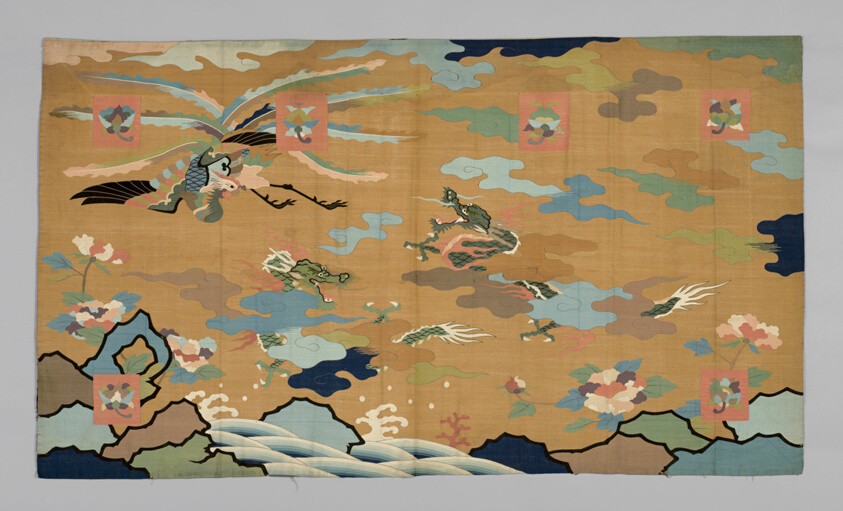
Kesa
Edo period (1615–1868), Late 18th century
- Medium
- Silk, gilt-paper-strip-wrapped silk, and peacock-feather-wrapped silk; tapestry weave
- Classification
- Textile
- Dimensions
- 117.4 × 206.5 cm (46 1/4 × 81 1/4 in.)
- Culture
- Japan
- Museum
- Art Institute of Chicago, Textiles
- Credit line
- Gift of Gaylord Donnelley in memory of Frances Gaylord Smith
- Rights
- Public domain (CC0), as the museum states it.
- Who can see it
- Tweens profiles and older: its subjects are known and suit older children. How works are placed
View at the Art Institute of Chicago
About this work
During the Edo period, artists took liberties with some of the long-established traditions related to kesa. For example, the patchwork process was sometimes ignored in favor of a single uncut fabric with seams implied by inwoven lines or added cording. The preferred technique for these uncut pictorial panels was tapestry weave. In this example, which is particularly Chinese in style and subject, no such lines have been added, suggesting it was used as a hanging for meditation purposes in the monastery.
Description © Art Institute of Chicago, CC BY 4.0