CourseBENG 10025 lectures
Frontiers of Biomedical Engineering
W. Mark Saltzman · Yale University
About
The course covers basic concepts of biomedical engineering and their connection with the spectrum of human activity. It serves as an introduction to the fundamental science and engineering on which biomedical engineering is based. Case studies of drugs and medical products illustrate the product development-product testing cycle, patent protection, and FDA approval. It is designed for science and non-science majors.
Lectures
- What Is Biomedical Engineering?
- What Is Biomedical Engineering? (cont.)
- Genetic Engineering
- Genetic Engineering (cont.)
- Cell Culture Engineering
- Cell Culture Engineering (cont.)
- Cell Communication and Immunology
- Cell Communication and Immunology (cont.)
- Biomolecular Engineering: Engineering of Immunity
- Biomolecular Engineering: Engineering of Immunity (cont.)
- Biomolecular Engineering: General Concepts
- Biomolecular Engineering: General Concepts (cont.)
- Cardiovascular Physiology
- Cardiovascular Physiology (cont.)
- Cardiovascular Physiology (cont.)
- Renal Physiology
- Renal Physiology (cont.)
- Biomechanics and Orthopedics
- Biomechanics and Orthopedics (cont.)
- Bioimaging
- Bioimaging (cont.)
- Tissue Engineering
- Tissue Engineering (cont.)
- Biomedical Engineers and Cancer
- Biomedical Engineers and Artificial Organs
Syllabus and materials
At Open Yale Courses, as the course publishes them.
Credits and licence
- Institution
- Yale University
- Department
- Biomedical Engineering
- Teacher
- W. Mark Saltzman
- Term
- Spring 2008
- Level
- Undergraduate
- Language
- English
- Subjects
- Engineering
- Source
- Open Yale Courses
- Licence
- CC BY-NC-SA 3.0 US, as Open Yale Courses states it. Non-commercial use only. Open Yale Courses's terms
- Attribution
- Open Yale Courses, Yale University. Licensed under a Creative Commons Attribution-NonCommercial-ShareAlike 3.0 licence; third-party material in the lectures is not.
- Who can watch
- Open Yale Courses gives no rating. Invisible Network shows it to Teens profiles and older, judged from what the source says about it. How courses are placed
More like this
TED
Talk
The future we're building -- and boring
Source's player
TED
Talk
Why don't perpetual motion machines ever work?
Source's player
TED
Talk
Elon Musk talks Twitter, Tesla and how his brain works — live at TED2022
Source's player
 Course
History 7b Spring 2006 UC Berkeley (History 7B US History: from Civil War to Present)
39 lectures · Audio
 Course
Nuclear Engineering 101 001 Fall 2009 UC Berkeley Nuclear Reactions and Radiation (Nuclear Engineering 101, 001|Fall 2009|UC Berkeley (Nuclear Reactions and Radiation))
29 lectures · Audio
 Course
Electrical Engineering 240 001 Spring 2010 UC Berkeley Advanced Analog Integrated Circuits (Electrical Engineering 240, 001|Spring 2010|UC Berkeley (Advanced Analog Integrated Circuits))
26 lectures · Audio
 Course
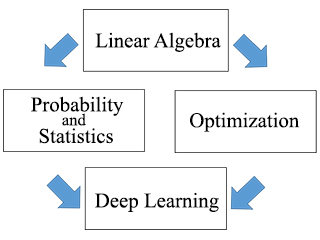
Matrix Methods in Data Analysis, Signal Processing, and Machine Learning
34 lectures · Video
 Course
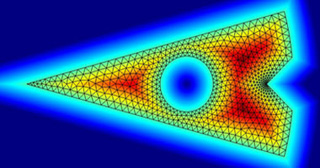
Computational Science and Engineering I
50 lectures · Video
 Course
Engineering Dynamics
223 lectures · Video
 Talk
Helen Graham – Crossing Borders:The Spanish Civil War and transnational mobilisation
Audio
Stanford SEEEE261
Course
The Fourier Transform and its Applications
30 lectures · Video
 Talk
Protesting in a time of cuts: a clampdown on civil liberties?
Audio
Course
Matrix Methods in Data Analysis, Signal Processing, and Machine Learning
34 lectures · Video
Course
Computational Science and Engineering I
50 lectures · Video
Course
Engineering Dynamics
223 lectures · Video